Building a Portfolio at Any Age:
From Beginner to Art School Ready
Top animation programs accept as few as 1 in 10 applicants — and the portfolio is the single biggest factor. Here's what schools like Ringling, Full Sail, and CalArts actually want to see, why most applicants get it wrong, and how students at any age can start building one today.
📖 14 min read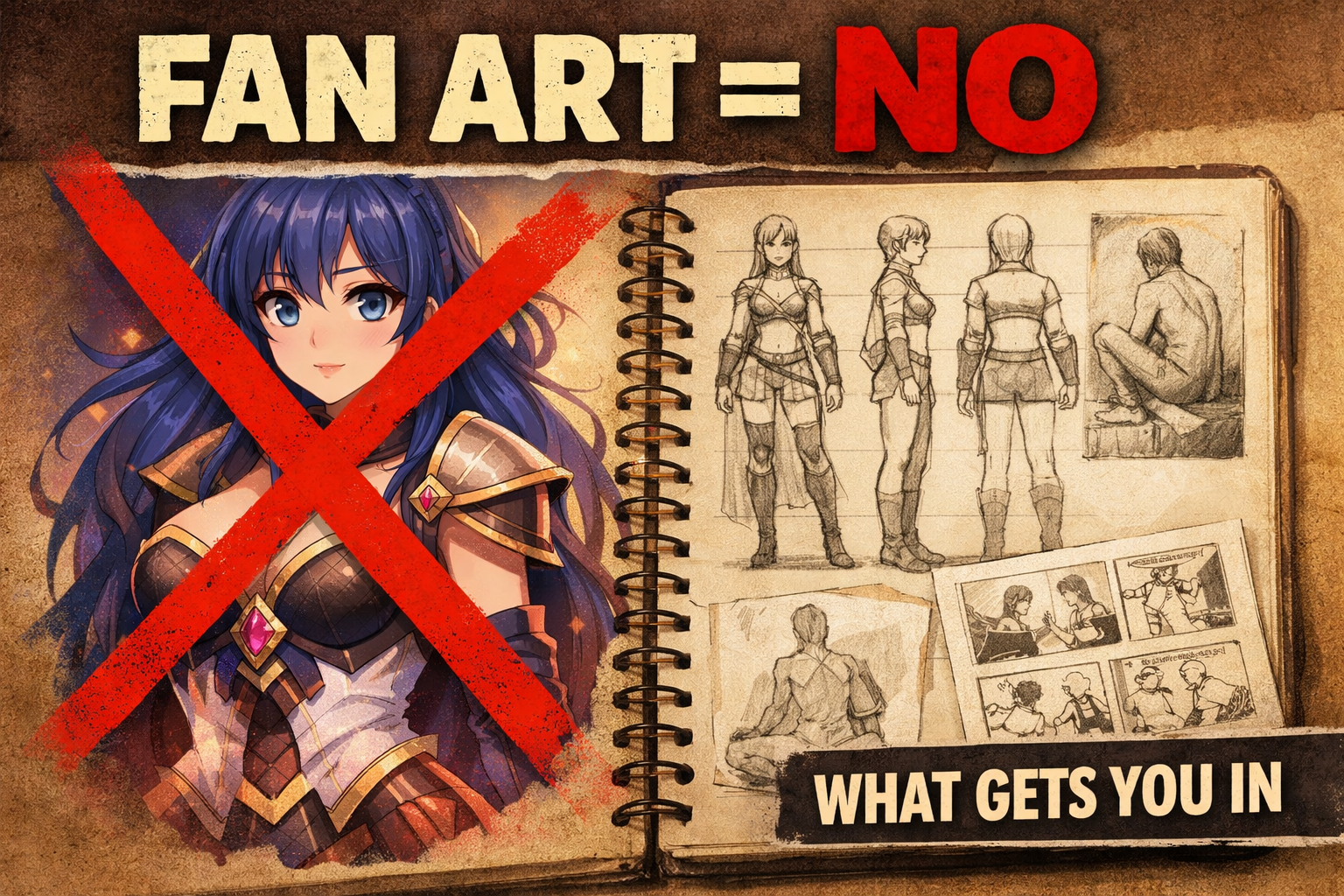
Let's get something out of the way immediately.
If you're a parent researching animation schools for your kid, or a teenager dreaming about making the next great animated film, or even an adult who's been sketching in notebooks for years and wondering if it's too late — there is one thing that matters more than your GPA, your test scores, or your extracurriculars when it comes to getting into a top animation program.
It's your portfolio.
At Sheridan College in Canada — widely considered the Harvard of animation programs — the acceptance rate for the animation track hovers around 10%. That's more competitive than most Ivy League schools. And the single biggest factor in whether you get in? Your portfolio score.
Here at Elite Animation Academy, our instructors — former Disney Feature Animation artists who worked on films like Mulan, Tarzan, and Brother Bear — have spent over a decade guiding students of all ages through this exact process. And the patterns are remarkably consistent: the students who succeed aren't necessarily the most "talented." They're the ones who start early, build the right foundational skills, and understand what admissions committees are actually looking for.
Here are 9 things we wish every aspiring animator — and their parents — understood about building a portfolio that actually gets you in.
Your Portfolio Matters More Than Your GPA
This surprises a lot of parents. At most competitive animation programs, the portfolio carries more weight than your academic transcript, your SAT scores, or your recommendation letters combined.
At Ringling College of Art and Design — consistently ranked among the top animation schools in the country — the admissions page is blunt about it: the portfolio helps determine your potential to succeed, and they evaluate your creativity as much as, if not more than, your technical skills. Their minimum GPA requirement? A 2.0. The portfolio is where the real selection happens.
Sheridan Animation
Animators (BLS 2024)
Ringling requires
At UCF's School of Visual Arts and Design, the portfolio review accounts for 50% of the evaluation to enter their Character Animation track. At Full Sail University, applicants to Computer Animation must submit art samples demonstrating observational art skills — and if your initial submission misses the mark, they'll give you feedback and two more chances to resubmit.
The #1 Mistake: Filling It With Fan Art
This is the single most common portfolio mistake, and it knocks out applicants every single year.
Students who love animation naturally spend years drawing their favorite characters — Goku, Naruto, Spider-Man, Disney princesses. They get really good at it. Then they fill their portfolio with those drawings and wonder why they got rejected.
Here's the problem: nearly every major animation program explicitly discourages or prohibits fan art.
Ringling says it directly on their portfolio prep page: avoid fan art of existing IP and show them who you are as an artist, storyteller, and designer. Pratt Institute warns applicants to avoid replicating anime drawings, cartoons, or video game character designs. Sheridan's requirements state clearly that the program does not accept any existing cartoon characters in any part of the portfolio.
This doesn't mean anime-inspired work is off limits. It means your original characters can be inspired by any style you love — but they need to come from your imagination. They need to have personalities, backstories, and designs that are uniquely yours. That's what admissions committees are looking for: creative voice, not copying ability.
Foundational Drawing Is the Gatekeeper
If there is one single theme that echoes across every major animation program's admissions page, it's this: we want to see that you can draw from life.
Not from photos. Not from screenshots. From real, three-dimensional life in front of your eyes.
Ringling's portfolio prep page emphasizes observational drawing repeatedly — draw your room, your desk, the outside of your house, buildings, cars, plants. They want to see evidence that you understand form, perspective, light, and proportion by working from the real world. Full Sail's Computer Animation program director puts it plainly: students need to understand that 3D art starts with observational art, and that foundations in sketching, sculpting, and painting are crucial to the 3D art creation process.
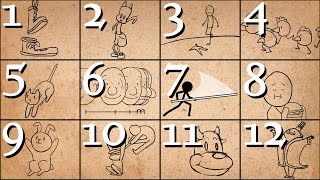
Before you animate anything, you need to understand the 12 Principles of Animation — developed by Disney's legendary "Nine Old Men" and codified in the 1981 book The Illusion of Life. These principles — squash and stretch, anticipation, staging, follow-through, timing — are the grammar of animation. Without them, even the most technically proficient software user creates lifeless work.
This is exactly why our curriculum at Elite Animation Academy begins with Foundational Drawing before students ever touch a digital tablet. Our instructors — trained by Glen Keane and other Disney legends — know from decades of experience that the students who build the strongest portfolios are the ones who master pencil and paper first.
What Top Animation Schools Actually Want to See
After reviewing the portfolio requirements from Ringling, Sheridan, CalArts, Full Sail, UCF, and Pratt, the required components boil down to a consistent core. Every serious animation portfolio should contain these elements:
Original Character Design: Characters from your imagination with turnaround sheets (front, side, back views), expression studies, and action poses. Show personality, not just anatomy.
Storyboard Sequences: A visual narrative that demonstrates your understanding of camera angles, pacing, composition, and storytelling flow.
Environment / Background Art: Interior and exterior spaces that demonstrate perspective drawing and the ability to create atmosphere.
Personal Creative Work: Paintings, illustrations, sketchbook pages, or short animations that show your unique interests and artistic voice.
Notice what's not on this list: mastery of Maya, proficiency in After Effects, or experience with Photoshop. Schools don't expect incoming students to know software — they teach that during the program. What they can't teach you is how to see, how to think visually, and how to tell a story with images. That's what your portfolio proves.
Character Design: Show Personality, Not Just Skill
Character design is where most students either make or break their portfolio. And the mistake is almost always the same: they design characters that look technically competent but feel dead.
A strong character design isn't just a well-proportioned figure. It's a person (or creature, or object) with a visible personality. Their posture should tell you something about their confidence. Their clothing should hint at their lifestyle. Their expression should make you curious about their story.
As Escape Studios puts it: don't just design characters — give them personalities, emotions, and stories. Let your drawings suggest who they are before they say a word. A shy character should be visible in their hunched posture and averted gaze. A battle-worn warrior should show it in their scars and stance.
For your portfolio, aim to present 1–3 original characters with turnaround sheets (front, 3/4, side, and back views), a range of facial expressions, and multiple action poses that show the character moving in ways consistent with their personality. This is the format professional animation studios use — and demonstrating that you understand it signals to admissions committees that you're thinking like a working artist.
Your Portfolio?
Elite Animation Academy's Portfolio Class is taught by former Disney animators who've helped students get accepted into Ringling, Full Sail, and beyond. Online and in-studio options available.
Explore Our CoursesIn-Studio (Orlando) & Online · Ages 8–Adult · (407) 459-7959 · [email protected]
Storyboarding: The Skill Nobody Expects to Need
Most aspiring animators think about characters and movement. Very few think about storytelling through sequential images — and that's exactly why storyboarding catches so many applicants off guard.
At Sheridan, storyboarding is a required portfolio section. You're given a scenario and asked to draw a series of panels that tell a visual story — demonstrating your understanding of camera angles, composition, pacing, and emotional flow. Your drawings don't need to be polished. The storytelling skill is what they're evaluating, not the rendering quality.
This is also one of the most in-demand skills in the professional animation industry. Every animated film and series begins with thousands of storyboard panels before a single frame is animated. Sony Pictures Animation's own portfolio tips page includes a dedicated storyboarding checklist for applicants.
Start Earlier Than You Think (Way Earlier)
This one is specifically for parents of younger students, and it might be the most important section of this entire article.
According to The Animation Tutor — a portfolio prep organization with years of data on successful applicants — many of the students who score perfect marks started taking their learning seriously for at least a year prior to submitting their portfolio. Students who decide to apply less than 6 months out typically don't produce competitive work.
for top portfolio scores
competitive programs
training can begin
But here's the good news: you don't have to wait until high school to start building portfolio-ready skills. Our youngest students at Elite Animation Academy start at age 8. They aren't building portfolios yet — they're developing the foundational drawing skills, creative thinking habits, and observational abilities that will make portfolio creation natural when the time comes.
A 14-year-old who's been drawing from life for three years has a massive advantage over a 17-year-old who just discovered they want to pursue animation six months before applications are due. The former has thousands of hours of visual problem-solving stored in their hands and brain. The latter is scrambling to learn fundamentals while simultaneously trying to produce portfolio-quality work.
Ages 13–15: Character design, storyboarding, figure drawing, developing artistic voice.
Ages 16–17: Focused portfolio development, school-specific requirements, demo reel creation.
Adults: Accelerated path — same skills, compressed timeline, often with more life experience to draw from.
AI Won't Build Your Portfolio for You
This needs to be said clearly in 2026, because the temptation is everywhere: AI-generated artwork is not accepted in animation portfolios.
Sheridan's 2024-25 portfolio requirements explicitly state that applicants are not allowed to use AI or machine learning tools for written or visual components of portfolio submissions. Any breach results in a zero grade for the entire portfolio. This isn't a suggestion — it's an academic integrity policy with real consequences.
And this isn't just a Sheridan rule. The broader animation industry is navigating a massive conversation about AI right now. A study commissioned by the Animation Guild found that roughly 21% of film, television, and animation jobs — approximately 118,500 positions — could be consolidated, replaced, or eliminated by generative AI in the U.S. by 2026.
of AI disruption by 2026
market value 2026
in school portfolios
But here's the counterpoint that every credible source in the industry is making: AI replaces tasks, not artists. It automates in-betweening, rotoscoping, and other repetitive technical work. What it cannot do is conceive an original character, tell an emotionally resonant story, or make the creative decisions that give animation its soul.
As one industry analysis from 2026 puts it: by now, fundamentals separate operators from creators. The industry no longer rewards just knowing a tool really well — it rewards artistic vision, storytelling instinct, and the kind of deep foundational skill that only comes from years of drawing, observing, and creating by hand.
This is exactly why learning traditional animation fundamentals has become more valuable, not less. The students who will thrive in a world of AI tools are the ones who understand the principles underneath — and can direct, supervise, and elevate what AI produces.
The Guided Path: Why Portfolio Classes Change Everything
Here's what we see consistently at Elite Animation Academy — and what the data from portfolio prep organizations confirms: students who receive structured guidance and professional feedback produce dramatically stronger portfolios than those who go it alone.
The Animation Tutor's analysis of successful applicants found several consistent traits among high scorers: they showed up consistently, they prioritized portfolio work over less relevant extracurriculars, they sought feedback regularly, and they thought less about what kind of art they personally liked making and more about what kind of artwork an animated production actually needs.
That shift in thinking — from "what do I want to draw?" to "what does the industry need me to be able to draw?" — is one of the biggest mindset jumps students can make. And it's hard to make it alone. You need someone who's been on the other side of the admissions table, or better yet, someone who's been on the production floor of a major studio.
At Elite Animation Academy, that's exactly who teaches. Our lead instructor, Woody Woodman, animated on Disney's Mulan, Tarzan, and Brother Bear. Our founder, Todd West, developed the curriculum specifically to build the path from beginner to portfolio-ready. And our relationships with schools like Ringling College of Art and Design, Full Sail University, and the DAVE School mean our instructors know exactly what those programs are looking for — because they've trained artists who are working there now.
Step 2 — Character Design: Create original characters with personality, backstory, and visual identity.
Step 3 — Storyboarding: Learn visual storytelling, camera language, and narrative pacing.
Step 4 — Digital Skills: Adobe Photoshop, Maya, digital painting — applied to the foundation you've already built.
Step 5 — Portfolio Assembly: Curate, refine, and present your best work in a cohesive, professional package.
Your Portfolio Is Your Superpower
The animation industry is projected to be worth $492 billion in 2026. Median salaries for animators sit just under $100K. Studios like Disney, Pixar, DreamWorks, Sony, Netflix, and dozens of game studios are hiring constantly. And Toy Story 5 — releasing June 19, 2026 — carries the tagline "Toy meets Tech," a reminder that even in a world of advancing technology, the human creative spark is what makes the magic happen.
Getting into this industry starts with one thing: a portfolio that proves you can see, think, create, and tell stories with images. It doesn't matter if you're 10 or 40. The fundamentals are the same. The path is the same. What matters is that you start — and that you start with guidance from people who've already walked it.
Stop waiting. Start drawing.


Disney Animators
Whether you're 10 or 40 — Elite Animation Academy's curriculum takes you from first pencil stroke to portfolio-ready. In-studio in Orlando or online from anywhere.
Start Your Journey3107 Edgewater Drive, Orlando FL 32804 · (407) 459-7959 · [email protected]


