Anime Studios Are Apologizing for Using AI in 2026 – Here’s What That Means If Your Kid Loves Manga
Anime Studios Are Apologizing for Using AI in 2026 — Here's What That Means If Your Kid Loves Manga
WIT Studio just replaced an opening sequence. Toei walked back AI plans. Beloved mangaka are leaving social platforms. And yet the anime/manga market more than doubled in five years to over $30 billion. Here's the real story underneath the headlines — and what aspiring manga artists actually need to learn now.
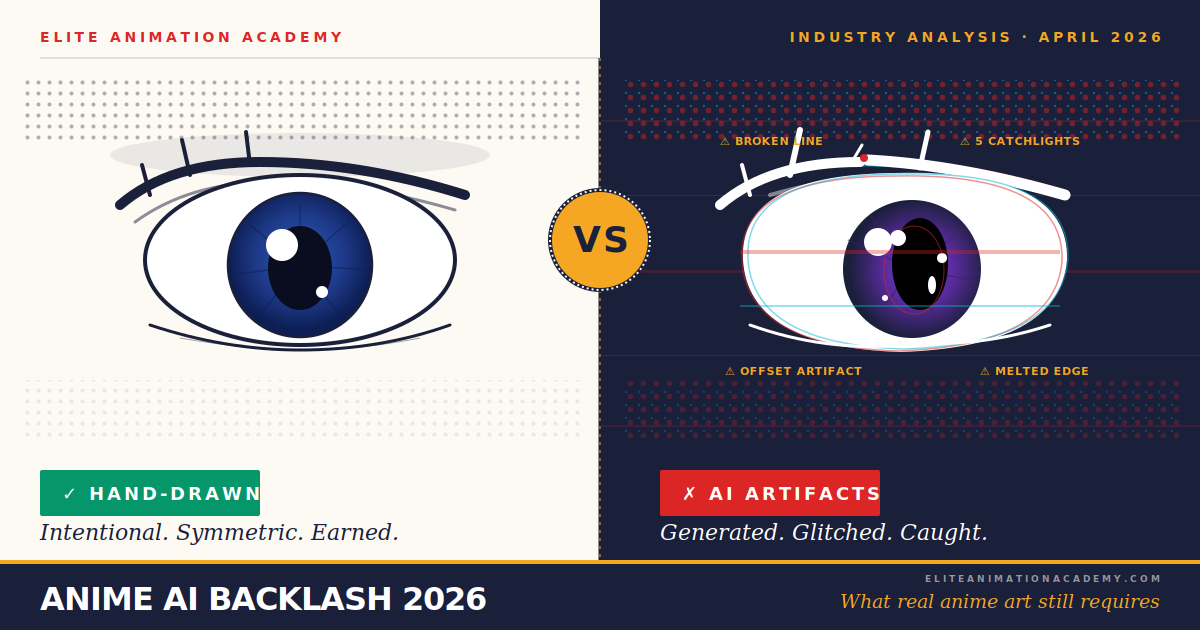
In April 2026, WIT Studio — makers of Attack on Titan and other beloved anime — publicly apologized and replaced an entire opening sequence after fans caught generative AI in Ascendance of a Bookworm Season 4.[1] They're not alone: Toei Animation faced backlash over AI plans, mangaka Boichi left X over AI scraping, and 38% of Japanese animation professionals fear AI job losses while 64% of global fans say they worry about losing human emotion in designs.[2] Meanwhile the industry has more than doubled to $30+ billion globally. For kids and teens who love anime/manga and want to draw it themselves, the takeaway is direct: the human craft is more valuable than ever — but only if you build it right.
Prefer to listen? Pip the Pencil breaks it down.
The 2,400-word version is below. The 6-minute audio breakdown — anime AI controversy, the four diagnostic AI tells, and what aspiring manga artists should actually be learning right now — is in the player. Same thesis, faster delivery, hosted by EAA's mascot Pip the Pencil.
What just happened at WIT Studio
On April 4, 2026, the long-anticipated fourth season of Ascendance of a Bookworm debuted on Crunchyroll and major streaming platforms. The animation was being handled for the first time by WIT Studio — the team behind Attack on Titan, Vivy: Fluorite Eye's Song, and Moonrise — one of the most respected anime studios in Japan.[1]
Within a week, fans noticed something was off about the opening sequence. Specific frames showed the telltale artifacts of generative AI: melted background details, inconsistent line weights, geometry that didn't quite line up between frames. The accusations spread quickly across X, Reddit's r/anime, and Japanese fan communities.
WIT Studio's response was unusually direct. They confirmed that generative AI had been used for certain background cuts in the opening, took full responsibility for the oversight, and — most strikingly — replaced the entire opening sequence with a new version that did not use AI.[1] The studio also publicly stated that they "do not authorize the use of generative AI in any of their works" going forward.
An anime studio in 2026 had to apologize and re-do an opening because fans could SEE the AI in the work. That's the story.
For an industry that built its global reputation on obsessive craft and hand-drawn artistry, this was a watershed moment. WIT Studio didn't just acknowledge a production shortcut. They publicly declared a position: generative AI is not authorized in their creative process. The opening they replaced wasn't from a no-name production — it was from a studio at the top of the industry, on a beloved franchise, with millions of viewers watching.
This isn't isolated — the pattern across 2026
The WIT Studio apology is one data point in a much larger story. Across 2026, the anime and manga industries have been wrestling publicly with AI in ways that would have been unthinkable two years ago.
2026 AI Controversies — Anime & Manga Industry
The pattern: nearly every major studio, mangaka, and IP holder is now defining a public position on AI. Some are saying "yes, with disclosure." Some are saying "absolutely not in our work." Almost none are quiet anymore. That's a sea change from even 18 months ago, when the industry was experimenting silently.
The $30B paradox — why this matters
While the AI controversies dominate fan discourse, the broader anime/manga market is in the strongest growth period in its history. The numbers tell two stories at once:
Global anime/manga industry has more than doubled in five years. Driven by international streaming, merchandise, theatrical releases, and a generation that grew up with the medium.[2]
of Japanese animation professionals fear AI job losses. Only 12% of voice actors feel their likeness is meaningfully protected from AI cloning.[6]
of global anime fans are worried about losing human emotion in AI-touched designs. 52% think AI could improve technical animation quality — but the trade-off scares them.[6]
Look at the same two trends side by side: a market that's exploding, and a workforce that's nervous. That's the paradox. And it's exactly why this is the wrong moment to be a casual hobbyist hoping to "go pro someday." The studios that win the next decade will be the ones with clearly differentiated human craft. The artists who win will be the ones who can prove, on the page, that they bring something a prompt can't.
For kids and teens who already love drawing manga in their notebooks every day, this is the most consequential moment of their creative lives. Not because the industry is in danger — it isn't — but because the path between "I draw a lot" and "I can work professionally" is being reshaped right now. The kids who build real fundamentals over the next two summers will have a structural advantage. The kids who only use AI tools to "do" art for them will have nothing.
Anime AI Tells Decoder — what trained eyes catch
Six anime-specific giveaways. Different from generic AI image tells because anime has its own conventions — and AI gets those conventions almost right, which is exactly what makes the failures so visible to trained viewers. Click any card to learn what to look for.
Interactive · Click to Learn
6 Anime AI Tells Every Trained Viewer Catches
These come from real diffusion-model failure modes — the kind only anime fundamentals reveal.
Eyes & Pupils
The most diagnostic tell in anime. Real mangaka draw eyes with intentional asymmetry that reads as expression — a slightly higher catchlight, a pupil that tilts toward the focal target. AI generators produce eyes that are almost symmetric but with weird mismatches: different catchlight shapes, pupils pointing at slightly different angles, irises with patterns that don't repeat correctly. Trained viewers catch this within seconds.
What real anime art actually requires
Anime and manga look stylized — sometimes deceptively simple. They aren't. Behind the surface style is fifty years of accumulated craft tradition, codified into specific techniques that take years to master. Here's the substrate underneath the genre.
Shape language
Round shapes read as friendly, soft, vulnerable. Sharp angular shapes read as dangerous, cold, threatening. Anime character designers spend their early careers learning to communicate personality through silhouette alone — before a single detail is added. Look at Witch Hat Atelier or Dandadan: every character is identifiable from their silhouette at any distance. AI generates silhouettes that look generally like anime characters but cannot consciously communicate a character's role through shape.
Expression sheets
Professional anime production requires every main character to have a documented set of canonical expressions — joy, anger, confusion, embarrassment, determination, and the specific emotional beats that recur in the story. These are drawn by hand, refined, and used as reference across the entire animation team. AI has no concept of an expression "sheet" — it generates one-off images that drift between calls.
Screen tone hierarchy
Manga's distinctive look comes from screen tones: patterned dot grids used for shading, gradients, atmospheric effects, and emotional emphasis. Professional mangaka use 20-40 tone densities strategically — a denser tone signals shadow or distance, lighter tones signal light or proximity. The eye reads depth and emotion through tone alone. AI can't decide which density to use; it gets the texture but not the storytelling intent.
Panel composition
A manga page is a designed reading experience. The placement of panels, their size relationships, the gutters between them — all guide the reader's eye through time. Reading rhythm is invisible craft: a quick succession of small panels speeds the reader up; a single full-page panel slows them down. AI generates individual images. It cannot compose a sequence.
Line weight modulation
Hand-drawn manga uses variable line weight to indicate form, lighting, and material. A thick line on the shadow side, a thin line on the lit side — the line itself does work that flat color cannot. Pressure-sensitive digital tablets like the Wacom Cintiq and iPad/Procreate make this possible digitally; practicing it takes years. AI applies uniform line weight or random sharpening artifacts; the failure shows immediately.
None of this is gatekeeping. It's just what the craft is. Every working mangaka built these skills over thousands of hours. AI can mimic the surface; it cannot do the work that builds the skill — and it cannot teach the work either.
What's your anime path?
Anime and manga are huge umbrellas covering very different career and creative paths. Four quick questions about what your child loves will recommend the discipline most likely to fit.
Q1 of 4 — When they draw anime, what do they usually create?
Q2 of 4 — Which series gets them most excited right now?
Q3 of 4 — How old is your aspiring anime artist?
Q4 of 4 — What's their long-term dream?
Mangaka / Sequential Art Track
For storytellers who want to write and draw their own manga. Build the skills behind a working mangaka: page composition, panel pacing, dialogue lettering, screen tones, expression sheets, and how to take a story from script to finished page.
The manga fundamentals every kid needs
Twelve specific skills that separate hobby drawing from professional manga. AI cannot teach a single one of these. Daily practice and structured critique can teach all of them.
- Construction line drawing. Block forms before details. Skull, ribcage, pelvis — geometric foundations before face/clothes.
- Anime head proportions. Eye placement, nose simplification, mouth scale. Specific to anime style, different from realism.
- Expression sheets. 6–10 canonical expressions per character drawn consistently. The proof you understand the character.
- Variable line weight. Thick on the shadow side, thin on the light side. The line itself does work that color can't.
- Gesture & pose. 30-second figure drawings. Capture energy before detail. Builds the muscle memory for dynamic scenes.
- Anatomy basics. Skeletal landmarks, muscle masses. Even stylized anime requires anatomical understanding underneath.
- Perspective. 1, 2, and 3-point perspective. Backgrounds, action scenes, dramatic angles all live here.
- Shape language for character design. Round vs angular, ratio of negative to positive space. Read personality through silhouette.
- Screen tone application. 20–40 tone densities, where to apply them, when to mix. The manga look in one skill.
- Panel composition. Grid design, panel size hierarchy, reading flow. Sequential thinking, not standalone images.
- Lettering & sound effects. Speech balloons, narration boxes, integrated SFX (the "DOON" or "BAM" drawn into the scene).
- Finishing & print prep. Cleanup, contrast, resolution. The difference between a sketch and a publishable page.
For a teen building toward a portfolio: every single item on this list is something a college application reviewer at Ringling, SCAD, CalArts, or any quality art program will look for. AI-generated work without these fundamentals is immediately recognized in admissions and rejected.
Manga Skill Inventory — score yourself
Check off the twelve skills above. The score will recommend a starting point — foundation building, gap-filling, or stepping into specialty tracks.
The 12-Skill Manga Inventory
Be honest. The result tells you exactly where to start.
Each item is a manga-specific fundamental that AI cannot teach. Your honest count tells you where to start.
Character design taught by a Disney veteran
Woody Woodman — animator on Mulan, Tarzan, and Brother Bear — demonstrates character design fundamentals. The same principles drive professional anime and manga character work: shape language, silhouette, expression. Watch what one-on-one instruction looks like in practice.
Where to learn anime/manga in Orlando
Anime and manga have been one of EAA's most-requested subjects since the school opened in 2012. Specifically because the kids who love it tend to love it obsessively — and they want training that takes the style seriously rather than treating it as a less-legitimate cousin of "real" art.
What EAA's anime/manga program covers
- Character design — silhouette, shape language, costume design, the visual storytelling techniques used in both Western animation and Japanese anime
- Anime head construction — anime-specific proportions, eye styles by genre (shonen vs shojo vs seinen), expression sheets
- Manga page composition — panel design, reading flow, gutters, focal hierarchy
- Screen tone application — both traditional (physical tone sheets) and digital (Clip Studio Paint)
- Lettering — speech balloons, narration boxes, integrated SFX
- Tool fluency — Clip Studio Paint, Procreate, Photoshop. The industry-standard digital toolkit.
Who teaches anime/manga at EAA
The anime/manga track is led by working professionals who have actually shipped in the comics, anime, and animation industries:
- Chi Wang — Anime/Manga & Comics Instructor. Freelance graphic artist with 30+ years in the comic book industry. Started as a Marvel intern in 1993. Currently owns and operates Excel Comics, a digital publisher of original comics and illustrated novels. Brings working knowledge of both American and Japanese art-style traditions and how they apply to storytelling in comics, anime, and manga.
- Matt Sveum — Character Animation Instructor. UCF BFA in Character Animation; Animation Mentor certification with industry pros from Dreamworks and BlueSky; has directed short films and animated for Netflix. Grew up on Mobile Fighter G Gundam and Rurouni Kenshin; brings that lifelong anime influence into the studio.
- Brandon Burghard, Sophia, and additional rotating instructors for camp weeks (named in parent reviews and Google testimonials).
The full EAA instructor roster includes ~50+ combined years of professional studio experience across Disney, Marvel, BlueSky, Laika, Sony, and Fox.
Year-round and summer 2026 options
Anime/Manga runs as a weekly subject during EAA's summer 2026 camps (June 1 – August 7, 2026) and as year-round in-studio Saturday courses + online weekday options. Camp tuition is $500/week with all supplies included and a one-time $25 administrative fee per student for the summer.
Florida scholarship coverage
EAA is a registered Step Up for Students provider. Eligible Florida families using FES-UA, FTC, FES-EO, or New Worlds Reading scholarships can cover anime/manga camp and course tuition with $0 out-of-pocket. See our complete Step Up scholarship guide for the full process — eligibility check, cost calculator, and step-by-step application.


Ready to take your kid's anime/manga obsession seriously?
EAA's anime/manga program runs year-round in Orlando and online. Summer camps June 1 – August 7. Step Up for Students scholarships accepted.
Frequently asked questions
My kid only watches anime but barely draws yet. Are they too inexperienced for camp?
No — that's actually the ideal starting point. Loving the medium is the engine; the technical skill is what we teach. EAA's anime/manga camps welcome complete beginners. Foundational Drawing is a great companion week, especially for kids 8–12 starting out. The combination of "I love this" + structured instruction is consistently the strongest predictor of progress in our experience.
What age range works best for anime/manga training?
Our anime/manga camps run for ages 8–17 in-studio, all ages online. Younger campers (8–11) focus on basic character drawing, expressions, and simple sequential art. Middle schoolers (12–14) move into screen tones, panel composition, and digital tools. Teens (15–17) build portfolios suitable for art college applications — Ringling, SCAD, CalArts, Full Sail, UCF.
What digital tools should they start with?
For beginners: a pencil and a sketchbook. Yes, really — that's still the strongest foundation. When ready for digital, the manga-specific industry standard is Clip Studio Paint (best screen tones, lettering, and panel tools). Procreate on iPad is a great all-arounder for character work. Photoshop is the broader industry standard for clean-up and production. EAA teaches all three in age-appropriate progressions.
My kid uses AI to "draw" anime. Should I be concerned?
Yes — but it's fixable. AI image tools feel like creativity to kids but actually prevent the skill development that creates real artists. The kids using AI as a reference tool (mood boards, color exploration, brainstorming) are fine. The kids using it as a substitute for drawing practice are not. Our companion piece "AI Can't Teach You to Draw" covers this in depth, with a 5-question self-audit you can have your kid take.
Does EAA's program take anime seriously, or is it a side track?
It's one of our most-requested year-round subjects. Anime/manga gets the same rigor we apply to traditional animation, with instructors who actively work in the style. We teach it as the legitimate, technical, craft-heavy medium it actually is — not as "just cartoons" or a kids' phase to outgrow. Many of our students have gone on to anime-adjacent careers (illustration, character design, game art) directly from EAA.
Is the industry hostile to AI overall, or just specific uses?
It's nuanced. The anime industry has been adopting AI for specific production tasks (WIT Studio noted 30% time reduction on coloring; Reallusion generated 90% of character models for Blue Archive's anime). Studios are generally OK with AI in backend production. They are increasingly hostile to AI in visible creative work — opening sequences, character designs, key animation. That distinction matters: it means the human-craft skills are more valuable in the visible layer, not less.
Sources & further reading
- WIT Studio confirms AI use in Ascendance of a Bookworm Season 4 opening; replaces opening. ComicBook.com, April 2026. Coverage of the controversy and studio response.
- Japan's Anime and Manga Industries Are Feeling the AI Squeeze. Unseen Japan, April 7, 2026. Market size growth ($30B+, more than doubled in 5 years), industry tensions, GenAI plagiarism scale, and regulatory environment. unseen-japan.com.
- Anime News Network AI controversy coverage. Manga artist Boichi's exit from X over AI image scraping; Cygames AI Studio reception and subsequent clarification; Japanese AI disclosure regulations. animenewsnetwork.com — AI topic feed.
- Anime Industry Controversies In 2026: AI Animation Debate Explained. 16score, March 2026. Coverage of Toei Animation AI controversy, fan response, and the broader debate. 16score.com.
- The Biggest Anime Controversies of 2026 So Far. FandomWire, February 2026. Toei Animation, Crunchyroll, and the broader 2026 controversy landscape. fandomwire.com.
- AI Reshapes Anime Industry Amid Fan Divide Over Creativity. MSN syndication, April 2026. Statistics: 38% Japanese animation pros fearing AI job loss; 64% of fans concerned about losing human emotion in designs; Reallusion's 90% character generation for Blue Archive; WIT Studio's 30% coloring time reduction. msn.com.
- Spring 2026 Anime Rankings and Awards Stir Fan Debate. MSN/CBR, April 2026. Witch Hat Atelier, Daemons of the Shadow Realm, Crunchyroll Anime Awards, Spring 2026 lineup. msn.com.
All external citations open in a new tab. The anime industry is fast-evolving; check publication dates before citing specific figures elsewhere.
Free Animation Summer Camp for Florida Families: How to Use Step Up for Students at Elite Animation Academy in 2026
Free Animation Summer Camp for Florida Families: How to Use Step Up for Students at Elite Animation Academy in 2026
Step Up for Students scholarships cover educational summer camps. Most Florida parents don't realize their FES-UA, FTC, FES-EO, or New Worlds Reading award can pay for every week of EAA's June 1 – August 7 program. Here's exactly how it works — and how to enroll in time.
Registered Step Up for Students Provider · FES-UA · FES-EO · FTC · New Worlds Reading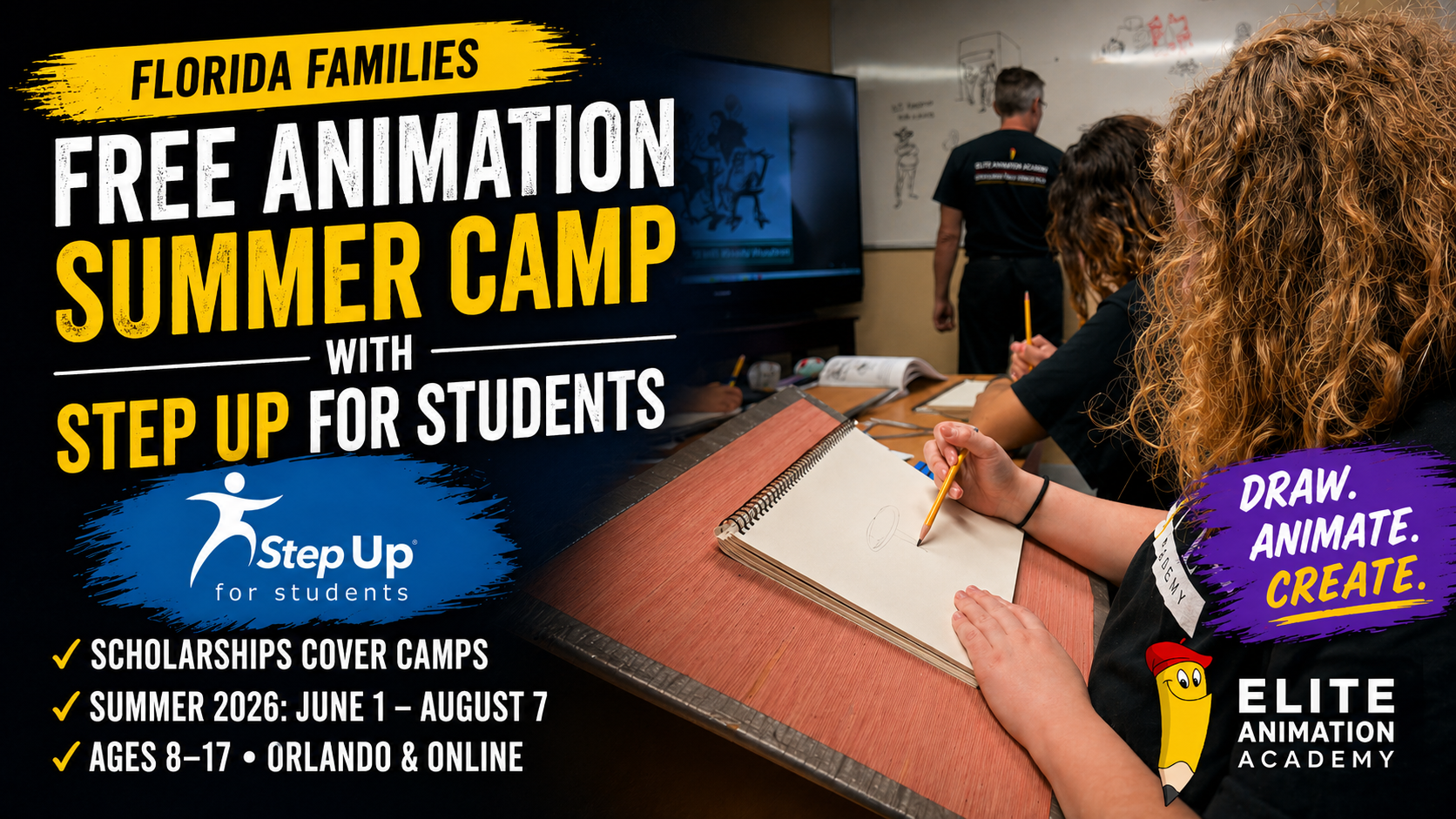
Time-sensitive: April 30 priority deadline for Step Up renewals
If you're a returning Step Up family, submit your renewal by April 30 to maintain priority funding. Camps start June 1 — earlier enrollment locks the weeks you want.
Elite Animation Academy is a registered Step Up for Students provider. Eligible Florida families can use FES-UA (averaging ~$10,000/year), FTC, FES-EO, or New Worlds Reading scholarship funds to cover summer camp tuition — including all 10 weeks at $500 each. Camps run June 1–August 7, 2026, ages 8–17 in-studio, all ages online. Below: who qualifies, how to apply, exact costs covered, and the camp subjects available each week.
What Step Up for Students actually covers
Most Florida parents who hold a Step Up for Students scholarship use it for tuition during the school year and stop there. That's leaving real money on the table. Florida's scholarship programs explicitly include educational summer camps and supplemental enrichment programs as approved expenses — provided the camp meets specific criteria around educational benefit and provider eligibility.[1]
Elite Animation Academy meets those criteria. We are a registered Step Up for Students provider for FES-UA, FES-EO, FTC, and New Worlds Reading scholarships. Eligible families have used these scholarships to cover summer camp tuition, year-round courses, and supplies for as long as we've offered programs.
For a typical Florida family on FES-UA — the Family Empowerment Scholarship for Students with Unique Abilities — the average award is around $10,000 per student per year, deposited quarterly into an Education Savings Account (ESA).[2] That's enough to cover all 10 weeks of EAA summer camp at $500/week ($5,000) and still leave half the award for the school year.
The point isn't that summer camp is "extra." It's that structured, instructor-led creative training over the summer is one of the highest-leverage uses of scholarship funds you can make — especially for kids whose interests fall outside the typical academic curriculum.
The 4 scholarships EAA accepts
Each Florida scholarship has its own eligibility rules, award amount, and approved-use list. Here's the short version. If any of these match your family, our camps are coverable.
FES-UA
Family Empowerment Scholarship for Students with Unique Abilities. ESA-style flexible spending across tuition, therapies, supplies, technology, and supplemental programs.
FES-EO & FTC
Family Empowerment Scholarship for Educational Options and the Florida Tax Credit. Income-eligible families can use remaining funds for approved supplemental services after tuition.
New Worlds Reading
For students reading below grade level. Funds purchased through MyScholarShop or EMA Marketplace, focused on programs that improve literacy or math skills.
Don't know which scholarship you'd qualify for? The 60-second eligibility check below will point you to the most likely match — or tell you that self-pay is your path, in which case the calculator will show you the actual cost.
The 2026 camp schedule — 10 weeks, 4 subjects each
Camps run Monday–Friday, 10:00 AM – 3:00 PM, June 1 through August 7, 2026. Every week, four different camp subjects run simultaneously, so siblings or friends can attend together but pursue different tracks. Pick one week, pick all ten — fully flexible.
Tuition: $500/week, all supplies included. No registration fees, no surprise add-ons. Step Up scholarship funds cover this directly when you select EAA as the provider in EMA, or via reimbursement after enrollment depending on your scholarship type.
What's typically offered (subjects rotate by week)
- Foundational Drawing — perspective, gesture, anatomy basics. The starting point for any kid new to art instruction.
- Character Design & Anime/Manga — silhouette, shape language, costume design, the Japanese-influenced style most kids are already drawn to.
- 2D Animation — the 12 principles, walk cycles, and short scene work in Adobe Animate. Disney-style, taught by people who shipped Disney films.
- 3D Animation & Game Design — Maya, Blender, Unity. Rigging, modeling, lighting. Ages 12+ recommended.
- Storyboarding & Sequential Art — visual storytelling, comics, the directors' track.
- Digital Art / Photoshop — professional digital workflows, photo manipulation, illustration techniques.
- Video Editing & VFX — Premiere Pro, After Effects, sound design fundamentals.
- Stop Motion — frame-by-frame photography, set building, the principles in physical form.
Specific weekly schedules are published on the Summer Camps page. For a deep comparison of EAA's camps vs. other Orlando programs (UCF CREATE, Full Sail Labs, etc.), our existing complete parent's guide to Summer 2026 camps covers the broader landscape.
For a family on FES-UA: 10 weeks of camp = $5,000 of tuition, fully covered by your scholarship, with $5,000+ still in the ESA for the school year.
Eligibility Quick-Check
Four quick questions will point you to the scholarship most likely to fit your family — or confirm that self-pay is your path. This is informational, not an official determination; only Step Up for Students can confirm eligibility, but this gets you to the right starting point fast.
Which scholarship path likely fits?
Honest answers get you the right answer.
1. Does your child have an IEP, 504 Plan, or a documented diagnosis (autism, ADHD, dyslexia, anxiety, or other qualifying condition)?
2. Is your child in K-5 in Florida public school AND reading below grade level?
3. Is your household income at or below ~$90,000 for a family of four (300% of federal poverty)?
4. None of the above apply — but you're considering EAA for your kid?
Cost calculator — see your scholarship coverage
Drag the slider to set how many weeks of camp you want. The calculator shows total tuition, what your scholarship covers, and what (if anything) is left out-of-pocket.
How many weeks of camp?
$500 per week · all supplies included · 10 weeks available
All supplies included. For a typical FES-UA family with ~$10,000/year, this is fully covered with $8,500 still available for the school year.
How to apply — step by step
If you're already a Step Up family, skip to step 4. If you're new to the program, start at step 1.
1. Create an EMA account
EMA (Education Market Assistant) is the secure platform Step Up uses to manage every scholarship. Visit stepupforstudents.org, click Apply, and create a parent profile. You'll need a valid email address and basic family information.
2. Gather required documents
For most scholarships, you'll need:
- Proof of Florida residency (driver's license, lease, or utility bill)
- Proof of your child's age (birth certificate)
- For FES-UA: diagnosis documentation (IEP, 504 Plan, or licensed-professional letter)
- For income-based scholarships (FTC/FES-EO): recent tax return or pay stubs
3. Submit your application
Complete the online application carefully. Double-check all uploaded documents. Processing typically takes 2–4 weeks. Returning families should submit by April 30 to maintain priority funding for the next school year. New applicants have until November 15.[3]
4. Choose Elite Animation Academy as your provider
Once your scholarship is awarded and accepted, log into EMA and search for "Elite Animation Academy" as a provider. We're verified for FES-UA, FES-EO, FTC, and New Worlds Reading. Then either:
- Direct billing (FES-UA): Tell EAA your child's Award ID; we'll enroll them in EMA at the agreed tuition rate. Funds transfer directly — you pay nothing out of pocket.
- Reimbursement (some scholarship types): You pay tuition up front, then submit reimbursement through your SFO platform. Save all receipts; processing takes 2–4 weeks.
5. Pick your camp weeks
Visit our enrollment page or call 407-459-7959. Tell us which weeks you want and which subjects. We'll handle the EMA-side enrollment from there.
Want to talk through it? We've helped hundreds of families set this up. Call the studio — it's faster than figuring out the paperwork solo.
Camp Match Quiz — what subjects fit your kid
With 10 weeks and 4 subjects per week, the question isn't "is there a camp" — it's "which one fits this kid right now?" Four questions about your child's interests will recommend the camp track most likely to click.
Q1 of 4 — When your kid sketches in their notebook, what comes out most often?
Q2 of 4 — What grabs their attention most?
Q3 of 4 — How old is your camper?
Q4 of 4 — What's the goal of summer camp for them?
Foundational Drawing
The starting point for any kid new to art. Builds proportion, perspective, and gesture — the foundation that makes every other subject click.
Out-of-state? The Animation Vacation works too
Roughly 30% of our summer campers are visiting Florida for vacation. The 10am–3pm schedule is intentionally designed for families combining camp weeks with Disney, Universal, and Orlando attractions — drop off in the morning, pick up mid-afternoon, head to the parks in time for the 4pm crowd thinning.
Out-of-state families pay the standard $500/week (Step Up scholarships only apply to Florida residents). Our College Park studio is in a quiet residential neighborhood about 20 minutes from Disney and Universal — much less traffic and parking stress than the tourist-corridor venues.
Visiting families have come from Texas, New York, California, Georgia, Tennessee, and as far as Saint Augustine driving in for a single week. No prior experience required, no pre-camp paperwork beyond standard registration.
Meet the instructors
Animation taught by people who've shipped real films
Woody Woodman — animator on Mulan, Tarzan, and Brother Bear — walks through a character-design demonstration. The kind of working-professional feedback your kid will get every day at camp.
Beyond Woody, our instructor roster includes working professionals from Disney, Marvel, and adjacent studios — combined ~50+ years of industry experience. Small class sizes (typically under 10 students per camp) mean every kid gets personal critique, not just lectures from a curriculum binder.


Ready to enroll? Camps fill fast — pick your weeks now.
Step Up family or self-pay, in-studio or online — we'll match you with the right weeks and subjects. Most families decide in one phone call.
Frequently asked questions
How does Step Up payment actually work for camp tuition?
Two paths. FES-UA direct billing is simplest: you provide EAA with your child's Award ID, we enroll them in EMA, and Step Up transfers funds directly — you pay nothing out of pocket. Reimbursement is the alternate path: you pay tuition up front, save the receipt, and submit a reimbursement request through your SFO platform. Reimbursements typically process within 2–4 weeks.
My kid is a beginner. Are camps appropriate?
Yes — most of our campers are beginners. Foundational Drawing is the standard starting subject for kids new to structured art instruction; it builds the eye, the hand, and the discipline that make every other subject click. Older or more experienced campers go directly into Character Design, 2D Animation, or 3D tracks. We'll help you pick when you call.
Can siblings attend together?
Yes. With 4 different camp subjects running each week, siblings can attend the same week without being in the same camp — older sibling in 3D, younger sibling in Foundational Drawing, both in the building together. Same drop-off, same pickup, same lunch break. Multi-week and sibling discount inquiries: call us.
What about online camps?
Yes — we run online camps in parallel with in-studio for families who can't travel to Orlando or prefer remote. Live, instructor-led, same curriculum. No age cap on online camps (we've taught adults), and Step Up scholarships apply equally to in-studio and virtual provided the program is approved by your SFO.
Is my autistic kid a good fit?
Yes — we have served autistic students across all programs since founding, and our 501(c)(3) sister organization Digital Arts for Autism serves autistic adults 18+ with vocational training in the same Orlando building. For school-age kids on FES-UA, our regular camps work well; small class sizes (under 10) and structured curriculum tend to suit kids who do better with predictability than chaos. Tell us about your child's specific needs when you call — we'll set up a curriculum that fits.
What happens if I miss the April 30 priority deadline?
For Step Up renewals, missing April 30 doesn't disqualify you — but priority funding goes to on-time renewals. New applicants have until November 15 for the following school year, but funds are first-come/first-served, so earlier is better. If you're applying right now for the 2026 summer, our recommendation is to apply immediately and call EAA simultaneously — we can hold camp weeks for you while your application processes.
Sources & further reading
- Florida Choice Scholarships Provider Handbook (FES-UA, FES-EO, FTC, PEP, NWSA). Step Up for Students. Outlines authorized uses of scholarship funds, including provisions covering specialized educational programs and approved supplemental services. PDF.
- Family Empowerment Scholarship for Students with Unique Abilities (FES-UA) — Award Amounts. Step Up for Students. Average award figures and county-level scholarship amounts. stepupforstudents.org.
- FES-UA Parent Handbook 2025–2026. Step Up for Students. Application deadlines (April 30 priority for renewals; November 15 for new applicants), EMA platform usage, and reimbursement processes. PDF.
- Florida Statute 1002.394 — Family Empowerment Scholarship Program. Statutory framework for FES-UA, including authorized uses of scholarship funds for educational services.
- Summer 2026 Animation Camps in Orlando: The Complete Parent's Guide. Elite Animation Academy, April 4, 2026. Comparison guide of EAA vs. other Orlando camps.
All scholarship policies and award amounts are subject to change by the Florida Legislature and by Step Up for Students. Always verify current eligibility and amounts on the official Step Up website before applying.
AI Can Generate 1,000 Images a Second. It Still Can’t Teach You to Draw – and That’s Never Mattered More
AI Can Generate 1,000 Images a Second. It Still Can't Teach You to Draw — and That's Never Mattered More
Drawing isn't just an art skill. It's a perceptual, cognitive, and motor practice that rewires the brain — confirmed by peer-reviewed research. Here's what AI tools can never replace, for kids, autistic adults entering the workforce, and the working pros sharpening their edge.
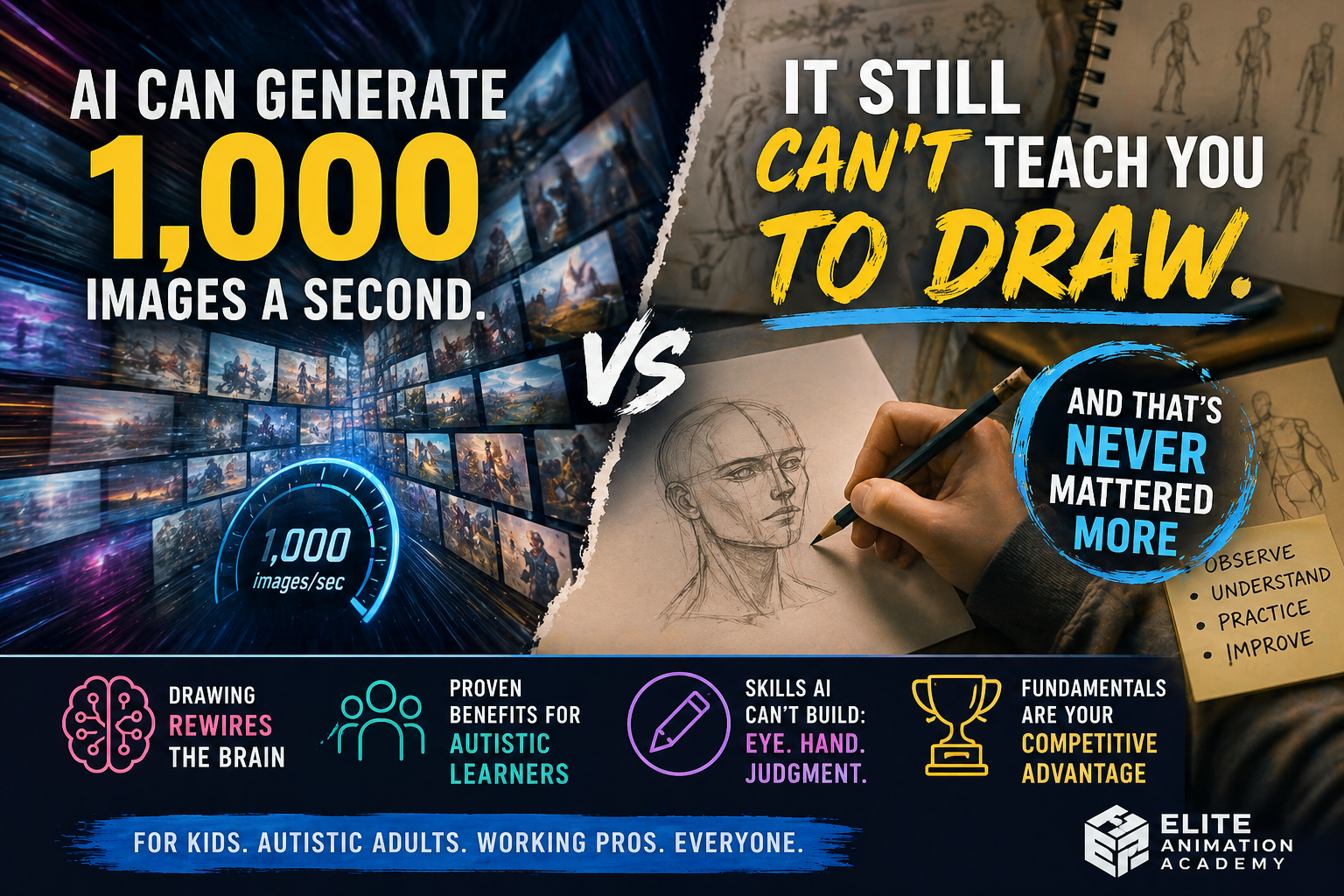
Generative AI now makes images in seconds. It does not develop your eye, your hand, or your judgment. Peer-reviewed research confirms drawing rewires the brain in ways AI tools can't simulate — with measurable benefits for autistic learners specifically.[1][2] For parents looking for kids' art programs, autistic adults entering the workforce, and working pros (tattoo artists, animators, designers), drawing fundamentals are no longer "old school." They're the moat.
The new reality every artist faces in 2026
Open Photoshop today. There's a generative fill button. Open your phone's photo app — there's an AI editor. Open a browser — there are thousands of AI image generators waiting for a prompt.[3] The cost-to-make floor for a usable image has crashed from "years of training" to "thirty seconds and a sentence."
This is genuinely good news for a lot of work. Mood boards, references, rapid iteration, asset variation — AI does these brilliantly and fast. Working artists who use AI well are now producing more, exploring more, and iterating more than they ever could before.
So what's still worth learning? If a machine can output a finished-looking image in seconds, why spend years studying anatomy, perspective, gesture, value, and composition?
Because output is not the same as skill. And as the world fills up with frictionless image generation, the people who can actually think through a visual problem — sketch through it, push past the first idea, judge what's working and what isn't — are getting more valuable, not less.
That's true whether you're a parent watching your eight-year-old fall in love with drawing, an autistic adult looking for a real career path, a tattoo artist building a portfolio, or a working professional in any visual industry. The fundamentals don't go away. They become the moat.
What AI is great at — and what it isn't
Let's be honest about both sides.
As a tool, it's powerful
- Speed & iteration — 50 versions in a minute
- Reference exploration — instant variations of a pose, mood, or style
- Asset library expansion — backgrounds, props, alts
- Style transfer — apply one look to existing work
- Brainstorming — break creative blocks, find unexpected angles
- Production tasks — clean-up, upscaling, simple comp
It cannot develop YOU
- Your eye — what's working, what isn't, why
- Your hand — the muscle memory of a confident line
- Your judgment — knowing what to push, what to cut
- Your weaknesses — the specific things only YOU need to practice
- Your standard — pushing past the first version
- Your finish — completing a piece you started
The right framing: AI is a brush. It is not a teacher. Procreate, the standard digital-illustration app on iPad, has publicly committed to keeping all generative-AI features out of the creative process — they make tools for human artists, not replacements.[4] Cara, the artist platform that grew rapidly through 2025, prohibits AI-generated work entirely; uploads have to reflect real, manually created art. The market is splitting — and one half of it is paying premiums for unmistakably human work.
Which is exactly why the artists positioned to win are the ones who can direct AI tools without being directed by them. That requires fundamentals. Real ones.
Drawing measurably rewires the brain — here's the research
This is the part most "AI vs artists" articles skip. It's the most important.
Drawing isn't simply a "creative activity." A 2024 special issue of Memory & Cognition — peer-reviewed psychology research — synthesized 25 cutting-edge studies and reached a clear conclusion: drawing engages perception, memory, motor learning, and metacognition simultaneously, and produces measurable cognitive gains across diverse populations.[1]
The research found that drawing improves both verbal recall (word lists) and visual recall (pictures) beyond what mere viewing produces. When researchers decomposed drawing into subtasks — tracing, viewing, imagining, drawing without seeing the output — performance dropped any time the visual, motor, or generative components were missing. It's the combination that works. Watching alone doesn't do it. Imagining alone doesn't do it. Generating an AI image absolutely doesn't do it.
For families with autistic children or autistic adult learners, this matters enormously. A separate 2025 mixed-methods study published in Frontiers in Psychology tracked autistic students through a structured drawing-therapy program and reported significant improvements in self-concept, social functioning, and quality of life across multiple validated measures.[5] A 2024 systematic review of 50 studies on drawing tasks in autism research confirmed drawing as one of the most useful tools researchers have for both studying and supporting cognitive function in autistic individuals.[6]
The takeaway is direct: drawing is not a hobby — it's a developmental practice with measurable brain effects. AI image generation, by contrast, has no documented cognitive or developmental benefit. None. They are not equivalent. They are not even comparable.
AI Tells Decoder — what trained eyes catch instantly
Anyone can be fooled by an AI image at thumbnail size. Trained artists almost never are at full size. Here are the six most reliable tells. Click any to learn what to look for — and why AI gets it consistently wrong.
Interactive · Click to Learn
Six AI Tells Every Trained Eye Catches
These come from real diffusion-model failure modes — the kind only fundamentals reveal.
Hands & Fingers
The classic AI tell. Look for extra fingers, fused digits, joints bending the wrong way, or hands "clipping" through other objects. AI models train on millions of hand images but never on the underlying anatomy — so they can copy surface texture but can't reason about structure. A trained artist learns hand construction from skeletal landmarks first; the AI never does.
Tool, or crutch? The line that matters
Here's the question that separates artists who keep growing from artists who quietly plateau:
When AI is unavailable, can I still produce work I'm proud of?
If yes, AI is your tool. If no, AI has become your crutch. The line is real, and it matters more every month.
Cognitive-skill research is consistent on this point: motor and visual learning combined produce gains that visual-only learning does not.[7] Translation: scrolling AI references can inspire you, but it does not develop your hand. Drawing through the references does. Generating fifty Midjourney variations of a pose teaches you nothing your hand can repeat tomorrow.
Five honest signals you've drifted toward crutch
- You can't finish a drawing without AI. If your workflow stalls the moment you can't generate, the AI isn't enhancing your skill — it's substituting for it.
- You haven't drawn from observation in 30+ days. Life drawing, gesture studies, drawing from reference photos by hand — these build the eye. AI doesn't.
- You generate, then trace. Tracing AI output isn't reference. It's outsourcing the constructive thinking that builds your skill.
- You've stopped being able to articulate why a pose works. Trained artists can name the mistake in 5 seconds. If you can't, the eye is atrophying.
- You feel anxious if you have to draw without tools. This is the loudest signal. Skill should feel like ground under your feet — not a performance you can only deliver in the right environment.
None of this means stop using AI. It means use it the way pros use it — for ideation, references, post-production, brainstorming, and exploration — not as a substitute for the daily practice that builds you.
AI Reliance Audit — 5 honest questions
Five quick questions. Answer honestly — there's no leaderboard, just useful feedback. Each question's "best answer" is explained after you choose, so you'll learn the principle whether you got it right or not.
Tool, or crutch?
No judgment — this is a diagnostic, not a verdict.
1. When you get stuck on a drawing, what's your first move?
2. Could you draw your favorite character from memory in 60 seconds — no reference, no AI?
3. When you generate an AI image you like, do you study why it works?
4. How often do you draw from observation (life, photo references, anatomy studies) by hand?
5. When was the last time you finished a drawing — start to "done" — by hand?
The fundamentals every visual professional now needs
Different visual industries look different on the surface. Underneath, they share the same drawing substrate.
For tattoo artists
Tattoo industry coverage is consistent: strong drawing skills are the foundation of professional tattooing.[8] Clean linework, controlled shading, anatomy understanding, and the ability to design tattoos that flow with the body's curves and age well over decades — all start on paper. AI can generate flash designs, but the artist has to translate them onto skin in real time, adjust for client anatomy, and execute with permanent ink. There's no undo button.
For animators
Gesture, timing, weight, and the 12 principles of animation. We covered this in our Disney layoffs analysis — Marvel's Visual Development team was laid off precisely because AI handles the mechanical layer. The creative judgment layer remains entirely human, and is paid accordingly.
For illustrators & concept artists
Composition, value, narrative sequence, and the ability to push past the first idea. AI generates lots of "first ideas." Editors, art directors, and audiences pay for the third, fourth, and fifteenth — the ones AI never reaches.
For graphic designers
Typography, hierarchy, ideation under client constraint. A designer who can sketch concepts in front of a client, on demand, is wildly more valuable than one who has to retreat to their workstation to "generate options."
AI shortcuts the output. It does not shortcut the judgment that decides whether output is good.
Across every visual industry, the same pattern holds: the floor on output rose (anyone can make something passable), and the ceiling on judgment also rose (the artists who can direct, finish, and commit are commanding more, not less). The gap between those two is widening. Drawing fundamentals are how you climb it.
Fundamentals Inventory — score yourself
Twelve drawing skills every trained artist has. Check the ones you're confident in. Your score will recommend a starting point — whether that's foundation building, sharpening an edge, or stepping into a specific track.
The 12-Skill Drawing Inventory
Be honest. The result tells you exactly where to start.
Each item is a fundamental that AI image tools cannot teach you. Your honest count tells you where to start.
A Disney animator teaches what AI can't
Woody Woodman — animator on Mulan, Tarzan, and Brother Bear — walks through how he stages a character. Pause anywhere and notice: every observation he makes is the kind no AI prompt produces. This is what one-on-one critique looks like.
Who this is for — three real paths forward
The case for fundamentals isn't theoretical. It maps directly to three audiences we serve every day at the Orlando studio.
Your kid doesn't need to be "talented" to start — they need structured fundamentals from instructors who've shipped real work. EAA's lead instructors animated on Mulan, Tarzan, and Brother Bear. Year-round courses run in-studio in Orlando and live online from anywhere. Summer 2026 camps run June 1 – August 7, ten weeks, four subjects per week. Step Up for Students provider — Florida families using FES-UA or New Worlds funds can cover full cost. Full course roadmap →
Roughly 90% of autistic adults are unemployed or underemployed, and around 500,000 autistic adults are entering the U.S. workforce this decade.[9] Our 501(c)(3) sister program, Digital Arts for Autism (DAFA), runs out of the same Orlando building. It's a 1-year vocational certificate program — Adobe Illustrator, Photoshop, InDesign, Animate — designed specifically for autistic adults who can function independently in a classroom or virtual setting. Graduates earn an industry-recognized Certificate of Completion. The next session starts September 14, 2026, and Step Up for Students scholarships are accepted.
Tattoo artists rebuilding linework and shading. Animators in adjacent fields adding new tracks. Illustrators sharpening composition. Designers wanting to integrate hand skills back into a stack that drifted entirely digital. EAA's adult tracks are flexible — you can take individual courses, build a custom curriculum, or pursue full progression. Online and in-studio both available.
Whichever path is yours — start with fundamentals.
EAA serves kids, teens, and working adults. DAFA serves autistic adults 18+. Same building, same phone number, same commitment to real human teaching.
Frequently asked questions
I already use AI for my work. Should I stop?
No — use AI well. Healthy AI use means treating it as a tool for ideation, references, mood exploration, post-production, and brainstorming. Unhealthy use means letting it substitute for the daily drawing practice that builds your eye, your hand, and your judgment. Take the audit above to gauge which side of that line you're on. Most working artists land somewhere in the middle and benefit from rebalancing toward fundamentals.
My kid only uses AI tools — they barely draw anymore. What should I do?
Don't take AI away — add structured drawing back in. Kids who use AI tools and also build solid fundamentals consistently outperform kids who do only one or the other. The fastest fix is putting them in front of an instructor who can give specific, immediate feedback on their drawing — something neither tutorials nor AI tools provide. Summer camps and weekly classes work especially well for this age group.
Does drawing really help kids and adults with autism?
Yes — and the research is recent and direct. A 2025 fNIRS study at Beijing Normal University measured significant improvements in drawing ability, emotional expression, cognitive skills, and prefrontal connectivity in school-age autistic children after a 9-week drawing intervention. A separate 2025 mixed-methods study reported significant improvements in self-concept, social functioning, and quality of life in autistic students through structured drawing therapy. Both are cited in the Sources section. For adults, our DAFA program is built on these findings — vocational creative training that works with the cognitive profile rather than against it.
I'm a tattoo artist. Do I really need formal drawing classes?
If your linework, shading, or anatomy is holding back your portfolio, yes. Industry guidance from tattoo apprenticeship programs and academies is consistent: drawing is the foundation of tattooing, and gaps in fundamentals show up in every piece you put on skin. EAA's adult courses cover linework precision, shading techniques, anatomy, and design that works with body flow — exactly what tattoo work requires. Take individual courses or build a custom track based on what you need to shore up.
How is DAFA different from regular EAA classes?
DAFA (Digital Arts for Autism) is a 501(c)(3) non-profit serving autistic adults 18 and over with a structured 1-year vocational certificate program. It's the same building as EAA, the same instructors, but a different curriculum: four sequential Adobe Creative Cloud courses (Illustrator → Photoshop → InDesign → Animate) culminating in an industry-recognized Certificate of Completion. EAA serves all ages 8+ across animation, drawing, character design, 3D, and game art. Many families use both — a kid in EAA general classes, an older sibling or adult relative in DAFA. DAFA homepage →
Sources & further reading
- Drawing as a versatile cognitive tool. Memory & Cognition, special issue review of 25 studies on drawing and cognition (2024). NIH PubMed Central: PMC11377027 · Springer Nature.
- Prefrontal blood flow activity during drawing intervention in school-age autistic children. fNIRS hyperscanning study, 2025. NIH PubMed Central: PMC12109799. Drawing intervention significantly enhanced drawing ability, emotional expression, and cognitive skills, with measurable changes in prefrontal connectivity to visual, motor, and language regions.
- The 2026 AI image-generation landscape. Industry analysis covering current models, hybrid creative workflows, and 36.1% CAGR market growth. Sources include Creative Bloq and AI-tool review coverage from early 2026.
- Procreate's anti-generative-AI position; Cara platform. Industry coverage of artist-tool companies maintaining no-AI policies, January 2026. Creative Bloq: 5 AI-free apps every artist needs to try in 2026.
- Drawing therapy based on embodied cognition theory in autistic students. Mixed-methods study, Frontiers in Psychology (2025). NIH PubMed Central: PMC12588921. Significant improvements in self-concept, social functioning, and quality of life via structured drawing therapy.
- The application of drawing tasks in studying cognitive functions in autism. Systematic review of 50 studies, 2024. NIH PubMed Central: PMC11660400.
- Common mechanisms of human perceptual and motor learning. Foundational neuroscience: motor + visual training combined produces gains visual-only training does not. NIH PubMed Central: PMC4880370.
- Drawing as the foundation of professional tattooing. Industry coverage including Alchemy Tattoo Apprenticeship, Florida Tattoo Academy, Tattooing 101, and 10 Masters.
- Autism employment statistics. Approximately 500,000 autistic adults entering the U.S. workforce this decade; ~90% are unemployed or underemployed; 1 in 36 children diagnosed. Source: Digital Arts for Autism program data, citing CDC and U.S. Bureau of Labor Statistics figures.
All external citations open in a new tab. Research links lead to peer-reviewed publications via NIH's PubMed Central archive.
Disney Just Laid Off 1,000 People – Why Real Animators Matter More Than Ever in 2026
Disney Just Laid Off 1,000 People — Why Real Animators Matter More Than Ever in 2026
The April 2026 cuts hit the artists who literally invent how Marvel films look. The headlines are scary. The lesson underneath them is the opposite of what most people think.
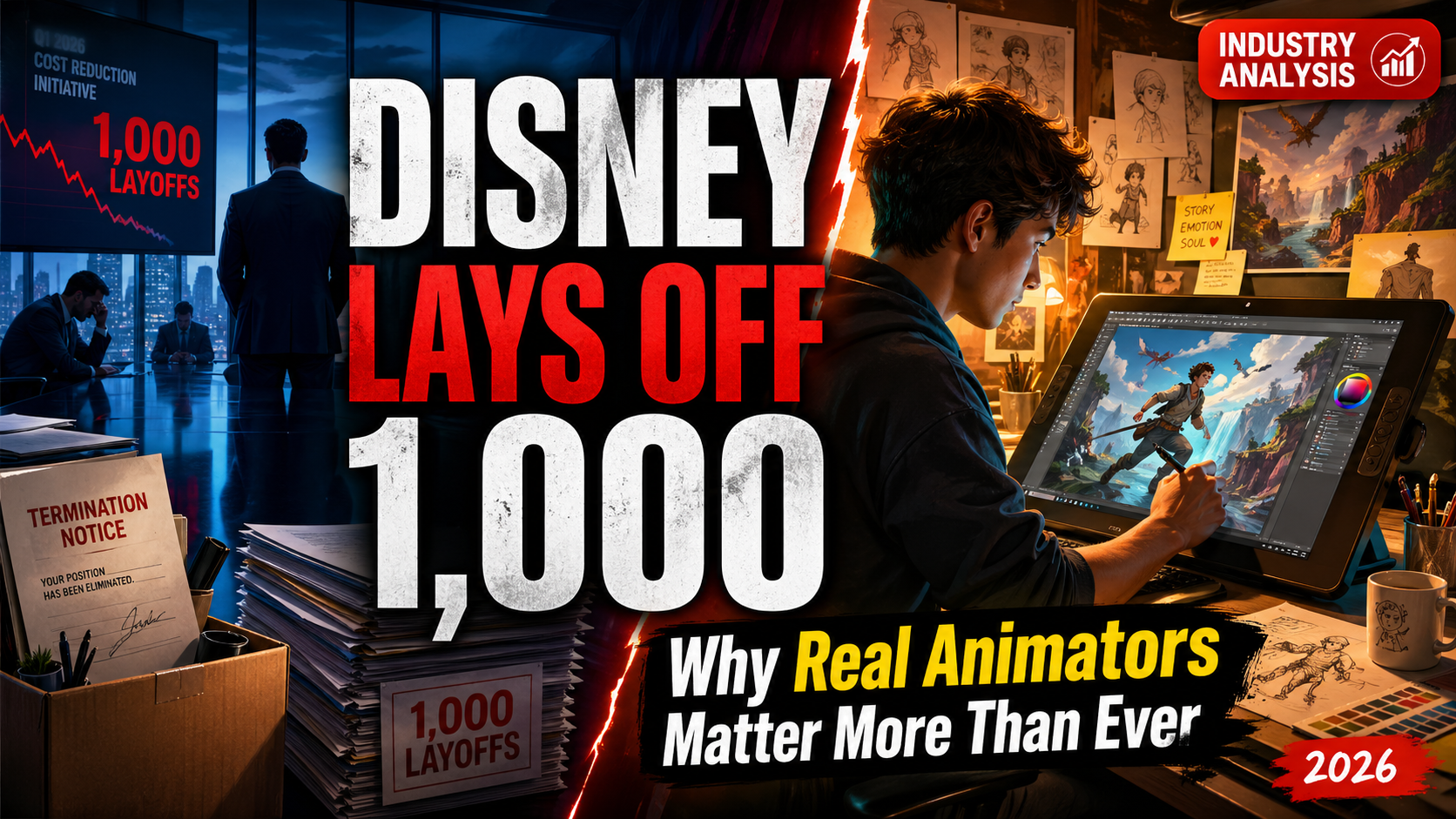
On April 15, 2026, Disney's new CEO Josh D'Amaro announced roughly 1,000 layoffs across the company — and Marvel Studios' Visual Development department, the artists who literally invent the look of every Marvel film, was hit hardest.[1] The headlines are scary. The lesson underneath them is the opposite: the fundamentals real animators teach are now more valuable than they have been in a generation. Here's why.
The headline shaking the creative world
Disney confirmed on April 15, 2026 that approximately 1,000 employees would be cut across film, television, ESPN, product, technology, and corporate functions.[1] Marvel Studios was reportedly hit hardest, with around 8% of staff let go, particularly in visual effects. Days later, Marvel's Director of Visual Development, Andy Park, departed after 16 years — a name many comic-and-film fans recognize from over a decade of Marvel concept art.[2]
These were not interns or temps. The cuts hit artists, illustrators, character designers, and environment designers — many with a decade or more at the company. In other words: the people who draw the worlds before the cameras ever roll.
CEO Josh D'Amaro framed the move as a step toward a more agile, technology-enabled workforce. The financial press read between the lines clearly: AI tools, real-time pipelines, and a shift from in-house teams to project-based freelancing.
If you are the parent of a kid who loves to draw, or a teen wondering whether to chase animation as a career, this news lands hard. It should also land honest — and the honest read is more hopeful than the headlines suggest.
This is not just a Disney story
To understand what is really happening, zoom out one frame.
In a single week in April 2026, three major entertainment companies announced sweeping cuts. Disney announced up to 1,000 cuts, Sony Pictures confirmed several hundred, and Bad Robot is downsizing across its operation. Snapchat slashed roles around the same time, citing AI directly. Artnet cut roughly a third of its newsroom and shifted toward AI-aggregated tools.
Different companies. Same week. Same underlying engine: AI is now woven into production pipelines, and studios are restructuring around what humans do that machines cannot.
This is the part the doom-headlines skip — and it is the part parents and students need to understand to make smart choices.
What is actually being automated (and what is not)
It helps to look inside an animation pipeline and ask, honestly, where AI is taking over.
The mechanical layer
- In-betweening — frames between key poses
- Rotoscoping & clean-up — tracing, isolating
- Standard look-dev — 2D refs to PBR 3D
- Routine VFX touch-ups — matte paint, simple comp, color
The creative layer
- Memorable character design — silhouette, shape, appeal
- Acting — timing of a blink, weight of a shoulder
- Composition — directing where the eye goes
- Storyboarding — making the emotion land
- Draftsmanship — gesture, anatomy under pressure
- Judgment — knowing why a shot works
These are real, paid jobs that used to fill 60–70% of a production schedule. According to industry coverage from VFX Voice and others, studios are using AI to handle roto, clean-up, and even some lookdev — not to replace artists, but to free them for creative work.[4]
AI is replacing the steps. It is not replacing the eye.
Test your animator's eye
Three quick scenarios. For each one, decide: is this the kind of work AI can handle, or does it still need a trained human?
Can you spot the difference?
No tricks. Just real distinctions every animator makes daily.
1. Filling in 23 frames of motion between two perfectly-drawn keyframe poses of a character mid-jump.
2. Designing a brand-new character whose silhouette is instantly recognizable when you see it as a black shape against a colored background.
3. Deciding whether a character's blink should happen before or after they turn their head — and how that choice changes whether the audience reads them as confident or nervous.
Why fundamentals just became the most valuable currency
Here is the counterintuitive twist studios are quietly betting on.
When AI handles the grunt-work, the artists who remain need to be better, not worse. They have to direct the tools instead of being directed by a senior. They have to make hundreds of small creative judgments per day — pose, shape, contrast, color, timing — that no prompt can specify.
That judgment is built on exactly the foundation animation schools have always taught:
The 12 principles, in motion
Click any principle below to see it animated. These are the rules every Disney animator learned — and the same rules our students learn at EAA, regardless of whether they're heading toward 2D, 3D, anime, or game design.[5]
Interactive · Click to Animate
The 12 Principles of Animation
Codified at Disney by Ollie Johnston & Frank Thomas — still the foundation of every studio pipeline today.
Squash & Stretch
The most fundamental principle. Objects deform on impact and elongate during fast motion — without it, animation feels stiff. Watch the ball flatten when it hits the ground and stretch as it rises.
How a Disney animator stages a character
Woody Woodman — animator on Mulan, Tarzan, and Brother Bear — walks through how he approaches the early sketch phase and decides where a character lives on the page. This is the kind of feedback that doesn't come out of a prompt.
These are the same principles taught at Disney for nearly a century. They are also the principles that decide whether an AI-assisted shot looks like a film or a stock asset.
A real-time engine like Unreal can render a photorealistic shot in seconds. It cannot tell you whether the shot is good. That is still on the artist. Which means the artist who can answer that question — quickly, reliably, defensibly — is exactly the one studios still need.
What this means for parents and teens making decisions right now
If your kid is eight years old and drawing dragons in the margins, do not pull them off the path. Adjust the path. Here is the practical version:
The students who will thrive in an AI-assisted industry are the ones whose drawing, observation, and storytelling skills are non-negotiable. That is not learned from YouTube tutorials. It is learned from a teacher who can look at a sketch and say the elbow is wrong, the weight is on the wrong foot, and here is why the pose feels stiff.
A degree on the wall is not the same as having animated a scene that 100 million people saw in a theater. The difference is in how feedback gets given — vague vs. specific, theoretical vs. earned.
Schools like Ringling, SCAD, CalArts, and Full Sail are increasingly looking for evidence that a student can think — composition choices, character ideation, sequential storytelling — not just polished single images. (We wrote a full guide on this: see Building a Portfolio at Any Age.)
Maya, Blender, Photoshop, Animate, Unreal — yes. But also pencil, paper, gesture practice, life drawing. The students winning right now are dual-fluent.
They are a verdict on a specific kind of role at a specific scale of company in a specific quarter. The animation industry itself, globally, is still growing. New jobs are being created; they just look different.
Find the right animation path for you
Everyone starts somewhere different. Answer four quick questions and we'll point you toward the EAA course track that fits your goals — whether you're a kid who just discovered drawing, a teen building a college portfolio, or an adult considering a creative second act.
What animation path is right for you?
Built by EAA's Disney-trained instructors.
Where are you in your journey today?
Which of these excites you most when you watch a movie?
Which style pulls you in most strongly?
What's your end goal?
Where to start in Orlando — or from anywhere
Elite Animation Academy was founded in Orlando in 2012 specifically to teach the fundamentals the way Disney teaches them. Our lead instructor Woody Woodman animated on Mulan, Tarzan, and Brother Bear. Our other instructors come from Marvel, Disney Feature Animation, and the broader Orlando-area pipeline that built the modern theme-park and animation industry.
Character design with a former Disney pro
A peek inside summer camp at EAA — Woody Woodman teaching character design to students. This is the kind of one-on-one critique you don't get from a tutorial.
What that means in practice for a student:
- Drawing fundamentals taught first. Every path — 2D, 3D, anime, character design, game art — starts with the same foundation, because it has to.
- Real critique from people who have shipped. Not "great job," but specific notes that move work forward.
- Both traditional and digital tracks. Pencil and Cintiq, side by side. Adobe, Maya, Blender, and Unity all in the curriculum.
- In-studio in Orlando or live online from anywhere. Same instructors, same roadmap.
- Step Up for Students provider. Florida families using FES-UA or New Worlds funds can cover the full cost of summer camps.
Summer 2026 camps run June 1 – August 7, ten weeks, four different subjects every week. Year-round courses run in-studio and online for ages 8 and up, including adults. The full course roadmap from beginner drawing to advanced 3D is laid out here.
If you are weighing whether to invest in your kid's creative path right now, in this exact news cycle, here is the short version: the world needs better-trained animators, not fewer. The students who learn the fundamentals from real animators today are the ones studios will be hiring — and the ones building the next generation of independent work — for the next twenty years.
Ready to start your child's animation path?
Spots in Summer 2026 camps fill weekly — some weeks are already at capacity.
Frequently asked questions
Is animation still a good career in 2026?
Yes — but the career looks different than it did ten years ago. Studio in-house roles are tightening; freelance, indie, YouTube-native, gaming, immersive media, and education-tech roles are expanding. Fundamental skills (drawing, story, character) plus tool fluency (Maya/Blender/Animate/Unreal) plus adaptability is the winning mix.
Will AI replace animators?
AI is replacing specific tasks inside the pipeline — in-betweening, roto, clean-up, some lookdev. It is not replacing the creative judgment that makes a shot, a character, or a story work. The animators who learn to direct AI tools instead of compete with them are the ones thriving.
What should my kid focus on right now?
Drawing fundamentals first, always. Then the 12 principles of animation. Then digital tools — Photoshop and either Animate (2D) or Maya / Blender (3D). And consistent portfolio work from the start, not just the year before college applications.
Does Elite Animation Academy accept Step Up for Students?
Yes. EAA is a registered Step Up for Students provider, including FES-UA and New Worlds Reading scholarships. Eligible Florida families can use scholarship funds to cover summer camps and year-round courses. Contact us before booking to verify your eligibility.
Are online classes as good as in-studio?
Yes — same instructors, same roadmap, same critique-based teaching style. Online students from across the U.S. and internationally have gone on to Ringling, SCAD, and Valencia/UCF. In-studio students get the studio environment and equipment; online students get flexibility and travel-time back.
Sources & further reading
- Disney announces ~1,000 layoffs across film, TV, ESPN, technology, and corporate. Coverage from major trade and financial press, April 15, 2026. See reporting at The Hollywood Reporter, Variety, and Fox Business.
- Marvel Studios reportedly hit hardest (~8% of staff); Director of Visual Development Andy Park departs after 16 years. April 2026. Reporting via Variety and Deseret News.
- Generative-AI animation market sizing: $2.37B (2025) → $3.23B (2026), 36.1% CAGR. Industry analyst reports including Grand View Research and Precedence Research.
- AI integration into VFX and animation pipelines (in-betweening, rotoscoping, clean-up, lookdev). Industry coverage by VFX Voice (publication of the Visual Effects Society) and related trade press.
- The 12 Principles of Animation — codified by Frank Thomas & Ollie Johnston in The Illusion of Life: Disney Animation (Abbeville Press, 1981). Foundational text taught at Disney, Pixar, and every major animation school today, including Elite Animation Academy.
All external citations open in a new tab. Coverage of breaking news evolves; figures and details reflect reporting as of the publish date above.
Summer 2026 Animation Camps in Orlando: The Complete Parent’s Guide
Summer 2026 Animation Camps in Orlando:
The Complete Parent's Guide
Orlando has more animation camp options than any city in Florida — but they are not all the same. Here's what to look for, what to avoid, how much they cost, and how to choose the right program for your child this summer.
📖 16 min read
Every year around this time, the same panic sets in.
School's ending. You need a plan. Your kid has been drawing characters in the margins of their homework since September, and you're wondering whether there's something out there that would actually feed that interest — not just babysit them for a week while you work.
If you're in Orlando, you're in the right city. We're home to Disney, Universal, Full Sail University, UCF's animation program, and more animation industry talent per square mile than almost anywhere outside of Los Angeles. That proximity has produced a summer camp landscape that offers genuine, career-relevant animation education — not just popsicle-stick crafts with a "digital art" label slapped on the brochure.
But here's the problem: not all of these camps are equal. Some are taught by working industry professionals. Others are staffed by college students with a week of training. Some send your child home with portfolio-quality work. Others send them home with a participation certificate and a vague memory of watching a YouTube tutorial.
This guide is designed to cut through the noise. We'll walk you through every animation-focused summer camp option in the Orlando area for 2026, what separates a great camp from a mediocre one, how much each costs, and — critically — what your child should actually walk away with at the end of the week.
Not All Summer Camps Are Created Equal
Let's start with the numbers that should shape every parent's thinking about summer.
According to a nationally representative Gallup survey conducted in partnership with the American Camp Association, 55% of U.S. children participate in at least one structured summer activity — and 45% do not. Among families whose children didn't participate, over half of parents said they wished their children could have attended a program but couldn't, with cost being the primary barrier.
summer programs
summer programming
self-esteem (ACA)
But here's what the top-level stats miss: the quality gap between camps is enormous. A child can attend a "summer camp" that amounts to supervised playground time with an iPad, or they can attend one where they're learning professional character design techniques from an artist who animated on a Disney feature film. Both count as "summer camp" in a survey. The experiences couldn't be more different.
The research consistently shows that camps deliver the most developmental benefit when they offer structured, skill-building activities led by knowledgeable instructors in areas the child is genuinely interested in. The American Camp Association's own data found that 76% of campers report learning something new, and 70% of parents observe heightened self-esteem in their children after attending camp.
What Makes an Animation Camp Different From an Art Camp
This is the distinction most parents miss — and it matters more than you'd think.
A general art camp typically covers a broad range of mediums: painting, sculpting, printmaking, collage, ceramics. These are wonderful experiences for kids who want creative exploration across many disciplines. If your child enjoys making things with their hands and isn't specifically drawn to animation, a general art camp might be exactly right.
An animation camp is fundamentally different. It teaches a specific set of industry-relevant skills that connect directly to careers in film, television, video games, advertising, and digital media. The curriculum typically includes foundational drawing (learning to see form, proportion, and perspective), character design (creating original characters with personality and visual identity), storyboarding (visual storytelling through sequential panels), and actual animation techniques — either traditional 2D, digital 2D, or 3D using professional software.
The other key difference is the instructor profile. At most general art camps, instructors are art teachers, art students, or creative generalists. At a serious animation camp, instructors should be — or should have been — working professionals in the animation industry. They should be able to tell your child what it's actually like to work at a studio, what admissions committees at top animation schools are looking for, and which skills translate directly to paid work.
That's not a luxury — it's the entire point. A child learning character design from someone who animated characters for a Disney feature film is a fundamentally different experience from learning it from a college sophomore who took one animation elective.
The Toy Story 5 Effect: Why Animation Interest Is Surging in 2026
If your child is suddenly even more obsessed with animation than usual, there's a reason. 2026 is shaping up to be one of the biggest years for animated content in recent memory.
Pixar's Toy Story 5 arrives in theaters on June 19 — right in the middle of summer camp season — with a premise that hits remarkably close to home for every parent reading this article. The film's tagline is "Toy Meets Tech," and the central conflict revolves around Bonnie's toys grappling with a tablet called Lilypad that's stealing all of her attention. The creative team has described it as exploring the realization that nobody's really playing with toys anymore — an existential problem that mirrors exactly what parents see happening with screens in their own homes.
releasing in 2026
market value 2026
views in 24 hours
But Toy Story 5 is just the headline. Animation Magazine profiled more than 26 animated feature films set for 2026 release, ranging from DreamWorks' Forgotten Island to Brad Bird's long-awaited adult animated detective film, to Netflix's animated Stranger Things series. The appetite for animated content — across every age group — has never been higher.
The industry numbers reflect this. The global animation market is projected to reach approximately $492 billion in 2026, on pace to surpass $953 billion by 2035. The generative AI in animation subsector alone grew to an estimated $3.23 billion this year. And in the U.S., the industry employs over 220,000 professionals with roughly 5,000 new openings projected annually over the next decade.
The 5 Things Every Parent Should Look For in an Animation Summer Camp
After over a decade of teaching animation to students of all ages — and after hearing thousands of parents describe what they were looking for versus what they actually found — here are the five non-negotiable questions to ask before enrolling your child in any animation camp.
2. What does my child take home at the end of the week? The best camps produce tangible, portfolio-quality work — original character designs, storyboard sequences, finished animations. If the answer is "a certificate of completion," keep looking.
3. Is the curriculum structured or freeform? Exploration has value, but a camp with a defined curriculum that builds skill progressively will produce dramatically better outcomes than one where kids just "explore" for five days. Ask for a daily schedule.
4. What's the student-to-instructor ratio? Animation instruction is inherently hands-on. Your child needs individual feedback on their drawings, their designs, their storytelling. If there are 25 kids and one instructor, the feedback loop doesn't exist. Look for small class sizes.
5. Does the camp connect to a longer learning path? A single week of camp is great — but the best programs offer a road map for what comes next. After-school classes, online courses, portfolio development, college prep. If the camp is a dead end with no path forward, your child's momentum will evaporate by September.
Now Enrolling
10 weeks of animation camps taught by former Disney and Marvel animators. 4 different subjects every week — mix and match all summer. Ages 8–17. In-studio in Orlando or online from anywhere.
View Summer Camp ScheduleJune 1 – August 7, 2026 · $500/week · All supplies included · (407) 459-7959
Orlando's Animation Camp Landscape: A Side-by-Side Look
Orlando is uniquely positioned for animation education because of its proximity to the theme park industry, Full Sail University, UCF's nationally ranked Character Animation program, and a deep bench of former studio artists who've settled here after careers at Disney, Marvel, and other major studios. Here's what's available for summer 2026:
Elite Animation Academy
Dates: June 1 – August 7, 2026 (10 weeks)
Hours: Monday–Friday, 10am–3pm
Ages: 8–17 (in-studio) · All ages (online)
Cost: $500/week (all supplies included)
Location: 3107 Edgewater Drive, Orlando FL 32804
Founded in 2012 by former Disney animators, Elite Animation Academy runs 4 different camp subjects simultaneously each week — allowing students to take one per week and enroll in as many weeks as they like. Subjects rotate through foundational drawing, character design, anime and manga, 2D animation, 3D animation, storyboarding, comics and cartooning, digital painting in Photoshop, and video editing. Lead instructor Woody Woodman animated on Disney's Mulan, Tarzan, and Brother Bear. All other instructors have professional studio backgrounds spanning Disney, Marvel, Blue Sky, Laika, Sony, and Fox. The academy also offers year-round after-school and weekend courses, online private instruction, and a dedicated portfolio development path with relationships to Ringling College, Full Sail, SCAD, and UCF.
UCF CREATE — Pre-College Animation Intensive
Dates: June 8–19 and July 13–24, 2026 (two separate 2-week sessions)
Hours: Monday–Friday, 9am–4pm
Ages: High school students (pre-college)
Cost: $1,065 + $35 registration fee per 2-week session
Location: UCF campus, Orlando
UCF's CREATE program is a pre-college intensive designed to simulate the experience of a college-level animation course. Students work in a professional computer lab with industry-standard software, mentored by UCF professors and former Disney animators. The program is fast-paced and structured like a college course — students collaborate in teams to produce a short animated film. This is best suited for serious teens who already have some drawing foundation and are considering animation as a college major or career path. Housing is not provided but Marriott hotel partnerships offer discounted rates. The June Intermediate session has already reached capacity with a waitlist.
Full Sail Labs
Dates: Summer 2026 (multiple weeks — schedule on website)
Hours: 8 hours/day (6.5 hours instructor-led + breaks)
Ages: Kids 7–12 and Teens 13–17
Cost: Varies by session
Location: 221 S Semoran Blvd, Winter Park
Full Sail Labs is the youth extension of Full Sail University and offers STEAM-based project camps. Their animation-adjacent offerings include stop-motion animation, graphic design, game design, and filmmaking. The focus is broader than pure animation — it's a technology-and-creativity program that includes topics like sound design, music production, and robotics alongside visual arts. The instructor-to-student ratio is approximately 1:10 with a cap of 20 students per session. This is a good fit for kids who are interested in creative technology generally but haven't zeroed in on animation specifically.
Florida Film & STEM Academy
Dates: June–August 2026
Hours: 9am–5pm
Ages: 7–18
Cost: Starting at approximately $395/week
Location: Winter Garden (with additional Central Florida venues)
Florida Film & STEM Academy has served Central Florida families for over 13 years with camps focused on filmmaking, acting, makeup FX, and animation. Students are grouped by age into small teams with dedicated instructors. The filmmaking focus means animation is one component within a broader media production experience. This is a strong option for kids interested in live-action filmmaking, video production, and storytelling across multiple mediums — not exclusively animation.
The Screen Time Paradox: From Consumer to Creator
Here's the irony every parent of an artistically inclined kid lives with: your child loves screens — but you're worried about screen time.
The latest research is landing in a much more nuanced place than the panic headlines suggest. The American Academy of Pediatrics updated its guidelines to move away from strict daily time limits and toward evaluating what your child is doing on screens. Their updated position explicitly supports screen use for creative activities and interactive learning, while maintaining concern about passive consumption, fast-paced entertainment, and solo social media scrolling.
A 2021 study published in Computers in Human Behavior found that children who spent time on creative digital activities — including digital art, coding, and video production — showed higher scores on spatial reasoning, creative problem-solving, and persistence compared to peers with equivalent total screen time but more passive usage patterns. A separate longitudinal study from the Joan Ganz Cooney Center found that children who used technology to create, rather than just consume, showed stronger school engagement overall.
Dr. Michael Rich of Harvard's Digital Wellness Lab put it plainly in a recent interview: the concept of measuring screen time in minutes is obsolete. Children now live in a continuous physical-digital environment. The productive question isn't "how much time are they on screens?" — it's "are screens replacing sleep, exercise, and face-to-face interaction, or are they enabling creative output?"
Animation camp answers that question definitively. Your child is in a studio with other kids, learning from a professional mentor, using tools to create something original. It checks every box the research says matters — creative engagement, expert guidance, social interaction, and tangible skill development — while using the exact medium your child is already drawn to.
What Your Child Actually Takes Home
This might be the most important section of this entire guide — because it's the question most parents forget to ask until the week is over.
What, specifically, does my child walk out with on Friday?
At a recreational camp, the answer is typically memories, a few crafts, maybe some photos. That's fine for a recreational experience. But if you're investing $400–$1,000 in a specialty camp, you should expect more. At a quality animation camp, your child should leave every single week with finished, tangible work that demonstrates a new skill.
Character Design week: 2–3 original characters with turnaround sheets, expression studies, and personality-driven action poses.
Storyboarding week: A complete storyboard sequence demonstrating camera angles, composition, pacing, and visual storytelling.
2D Animation week: A short animated sequence showing understanding of timing, spacing, and the principles of motion.
Anime & Manga week: Original characters and sequential panels in the manga style, with understanding of the genre's unique conventions.
Digital Painting week: Finished digital illustrations created in Adobe Photoshop using professional techniques.
3D Animation week: Introduction to Maya or equivalent software with a basic 3D model or animated scene.
This is why Elite Animation Academy's model of running 4 different camp subjects simultaneously each week for 10 weeks is so effective. A student who attends for 4 weeks — one each in Foundational Drawing, Character Design, Storyboarding, and 2D Animation — walks away from summer with a genuine starter portfolio. That's not a summer "activity." That's a summer investment that compounds over time.
And for students who are already thinking about college applications, this work connects directly to what art schools require. Programs like Ringling, Sheridan, CalArts, Full Sail, and UCF evaluate applicants primarily on their portfolio — not their GPA. Summer camp work can be the foundation of that portfolio if the instruction is professional-grade.
Summer 2 (Age 12–14): 2D Animation + Storyboarding → motion principles, visual storytelling.
Summer 3 (Age 14–16): Digital Painting + 3D Animation → professional software skills.
Year-round classes: Continued development, portfolio refinement, college prep.
Result: A student applying to art school at 17 with 3–5 years of structured instruction and a portfolio built under professional guidance.
The "Animation Vacation" — A New Kind of Family Trip
Here's something we see increasingly at Elite Animation Academy: families are building their Orlando vacations around camp weeks.
It makes logistical sense. You're already coming to Orlando for the theme parks — and now your artistically inclined kid can spend a week learning character design from a former Disney animator during the day, while the family hits the parks in the evenings and on the weekend. We've had families drive from Saint Augustine, fly in from out of state, and even travel internationally to attend summer sessions.
One parent reviewing the academy noted that the drive from Saint Augustine to Orlando and back was "no problem" for the quality of instruction their daughter received. Another family from 650 miles away relocated to Orlando for winter and summer sessions specifically because of the program. These aren't typical camp testimonials — they're signals that parents are treating animation education the way they'd treat a specialized sports camp or academic intensive: as a destination experience worth traveling for.
How to Choose the Right Camp for YOUR Kid
After everything we've covered, here's the honest framework. There is no single "best" camp — there's only the best camp for your child, at their current stage, with your family's goals and budget.
If your teen is 13–17 and serious about animation: They're ready for more intensive subjects — 2D or 3D animation, storyboarding, digital painting. Ask about portfolio development, college prep pathways, and instructor credentials. Both Elite Animation Academy and UCF's CREATE program serve this audience, at different price points and intensity levels.
If your child has broad creative interests (not specifically animation): A STEAM-oriented program like Full Sail Labs or Florida Film & STEM Academy will give them exposure to filmmaking, sound design, game design, and visual arts without narrowing the focus to animation specifically.
If budget is a primary concern: Day camp costs in Orlando range from $395–$1,065+ per week depending on the program. Many programs offer sibling discounts or multi-week pricing. Also note that day camp expenses may qualify for the Child and Dependent Care Tax Credit (up to $3,000 per dependent) and Dependent Care FSA contributions — check with your tax advisor.
If you're traveling from out of town: The "Animation Vacation" model works well — combine camp weeks with family activities. Elite Animation Academy's 10am–3pm schedule is specifically designed to accommodate this. No housing is provided at any Orlando day camp, so plan accommodations independently.
This Summer, Turn Inspiration Into Skill
Your child is going to spend this summer drawing whether you enroll them in a camp or not. The sketchbooks are already full. The YouTube tutorials are already bookmarked. The anime watch history is already three pages deep.
The question is whether that natural creative energy gets structured guidance from a professional who's been where your child wants to go — or whether it stays in the margins of their notebooks, unguided and undeveloped.
The animation industry is projected at $492 billion. Median salaries for animators sit near $100,000. There are 26+ animated feature films releasing this year. Toy Story 5 opens June 19 with a storyline about the tension between technology and creative play that every kid in America will relate to.
The timing could not be better. The options in Orlando have never been stronger. And the gap between a summer spent consuming content and a summer spent creating it has never been more consequential for a child's creative development.
Stop scrolling. Start drawing.

Disney Animators This Summer
Elite Animation Academy's Summer Camps run June 1 – August 7, 2026. Choose from 4 different subjects each week. All supplies included. Ages 8–17 in-studio, all ages online.
Enroll for Summer 20263107 Edgewater Drive, Orlando FL 32804 · (407) 459-7959 · [email protected]
FAQ
Building a Portfolio at Any Age: How Animation Students Go From Beginner to Art School Ready
Building a Portfolio at Any Age:
From Beginner to Art School Ready
Top animation programs accept as few as 1 in 10 applicants — and the portfolio is the single biggest factor. Here's what schools like Ringling, Full Sail, and CalArts actually want to see, why most applicants get it wrong, and how students at any age can start building one today.
📖 14 min read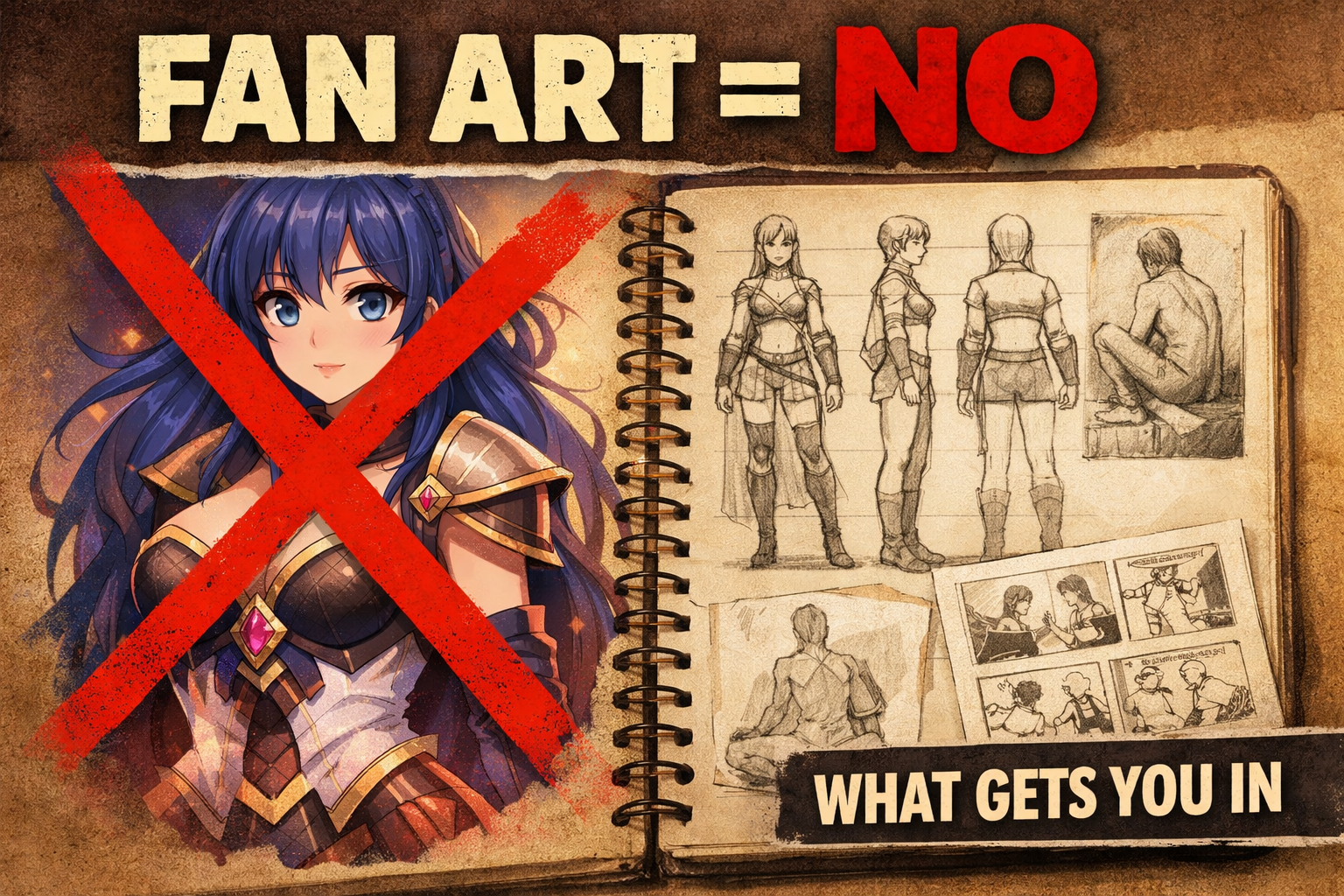
Let's get something out of the way immediately.
If you're a parent researching animation schools for your kid, or a teenager dreaming about making the next great animated film, or even an adult who's been sketching in notebooks for years and wondering if it's too late — there is one thing that matters more than your GPA, your test scores, or your extracurriculars when it comes to getting into a top animation program.
It's your portfolio.
At Sheridan College in Canada — widely considered the Harvard of animation programs — the acceptance rate for the animation track hovers around 10%. That's more competitive than most Ivy League schools. And the single biggest factor in whether you get in? Your portfolio score.
Here at Elite Animation Academy, our instructors — former Disney Feature Animation artists who worked on films like Mulan, Tarzan, and Brother Bear — have spent over a decade guiding students of all ages through this exact process. And the patterns are remarkably consistent: the students who succeed aren't necessarily the most "talented." They're the ones who start early, build the right foundational skills, and understand what admissions committees are actually looking for.
Here are 9 things we wish every aspiring animator — and their parents — understood about building a portfolio that actually gets you in.
Your Portfolio Matters More Than Your GPA
This surprises a lot of parents. At most competitive animation programs, the portfolio carries more weight than your academic transcript, your SAT scores, or your recommendation letters combined.
At Ringling College of Art and Design — consistently ranked among the top animation schools in the country — the admissions page is blunt about it: the portfolio helps determine your potential to succeed, and they evaluate your creativity as much as, if not more than, your technical skills. Their minimum GPA requirement? A 2.0. The portfolio is where the real selection happens.
Sheridan Animation
Animators (BLS 2024)
Ringling requires
At UCF's School of Visual Arts and Design, the portfolio review accounts for 50% of the evaluation to enter their Character Animation track. At Full Sail University, applicants to Computer Animation must submit art samples demonstrating observational art skills — and if your initial submission misses the mark, they'll give you feedback and two more chances to resubmit.
The #1 Mistake: Filling It With Fan Art
This is the single most common portfolio mistake, and it knocks out applicants every single year.
Students who love animation naturally spend years drawing their favorite characters — Goku, Naruto, Spider-Man, Disney princesses. They get really good at it. Then they fill their portfolio with those drawings and wonder why they got rejected.
Here's the problem: nearly every major animation program explicitly discourages or prohibits fan art.
Ringling says it directly on their portfolio prep page: avoid fan art of existing IP and show them who you are as an artist, storyteller, and designer. Pratt Institute warns applicants to avoid replicating anime drawings, cartoons, or video game character designs. Sheridan's requirements state clearly that the program does not accept any existing cartoon characters in any part of the portfolio.
This doesn't mean anime-inspired work is off limits. It means your original characters can be inspired by any style you love — but they need to come from your imagination. They need to have personalities, backstories, and designs that are uniquely yours. That's what admissions committees are looking for: creative voice, not copying ability.
Foundational Drawing Is the Gatekeeper
If there is one single theme that echoes across every major animation program's admissions page, it's this: we want to see that you can draw from life.
Not from photos. Not from screenshots. From real, three-dimensional life in front of your eyes.
Ringling's portfolio prep page emphasizes observational drawing repeatedly — draw your room, your desk, the outside of your house, buildings, cars, plants. They want to see evidence that you understand form, perspective, light, and proportion by working from the real world. Full Sail's Computer Animation program director puts it plainly: students need to understand that 3D art starts with observational art, and that foundations in sketching, sculpting, and painting are crucial to the 3D art creation process.
Before you animate anything, you need to understand the 12 Principles of Animation — developed by Disney's legendary "Nine Old Men" and codified in the 1981 book The Illusion of Life. These principles — squash and stretch, anticipation, staging, follow-through, timing — are the grammar of animation. Without them, even the most technically proficient software user creates lifeless work.
This is exactly why our curriculum at Elite Animation Academy begins with Foundational Drawing before students ever touch a digital tablet. Our instructors — trained by Glen Keane and other Disney legends — know from decades of experience that the students who build the strongest portfolios are the ones who master pencil and paper first.
What Top Animation Schools Actually Want to See
After reviewing the portfolio requirements from Ringling, Sheridan, CalArts, Full Sail, UCF, and Pratt, the required components boil down to a consistent core. Every serious animation portfolio should contain these elements:
Original Character Design: Characters from your imagination with turnaround sheets (front, side, back views), expression studies, and action poses. Show personality, not just anatomy.
Storyboard Sequences: A visual narrative that demonstrates your understanding of camera angles, pacing, composition, and storytelling flow.
Environment / Background Art: Interior and exterior spaces that demonstrate perspective drawing and the ability to create atmosphere.
Personal Creative Work: Paintings, illustrations, sketchbook pages, or short animations that show your unique interests and artistic voice.
Notice what's not on this list: mastery of Maya, proficiency in After Effects, or experience with Photoshop. Schools don't expect incoming students to know software — they teach that during the program. What they can't teach you is how to see, how to think visually, and how to tell a story with images. That's what your portfolio proves.
Character Design: Show Personality, Not Just Skill
Character design is where most students either make or break their portfolio. And the mistake is almost always the same: they design characters that look technically competent but feel dead.
A strong character design isn't just a well-proportioned figure. It's a person (or creature, or object) with a visible personality. Their posture should tell you something about their confidence. Their clothing should hint at their lifestyle. Their expression should make you curious about their story.
As Escape Studios puts it: don't just design characters — give them personalities, emotions, and stories. Let your drawings suggest who they are before they say a word. A shy character should be visible in their hunched posture and averted gaze. A battle-worn warrior should show it in their scars and stance.
For your portfolio, aim to present 1–3 original characters with turnaround sheets (front, 3/4, side, and back views), a range of facial expressions, and multiple action poses that show the character moving in ways consistent with their personality. This is the format professional animation studios use — and demonstrating that you understand it signals to admissions committees that you're thinking like a working artist.
Your Portfolio?
Elite Animation Academy's Portfolio Class is taught by former Disney animators who've helped students get accepted into Ringling, Full Sail, and beyond. Online and in-studio options available.
Explore Our CoursesIn-Studio (Orlando) & Online · Ages 8–Adult · (407) 459-7959 · [email protected]
Storyboarding: The Skill Nobody Expects to Need
Most aspiring animators think about characters and movement. Very few think about storytelling through sequential images — and that's exactly why storyboarding catches so many applicants off guard.
At Sheridan, storyboarding is a required portfolio section. You're given a scenario and asked to draw a series of panels that tell a visual story — demonstrating your understanding of camera angles, composition, pacing, and emotional flow. Your drawings don't need to be polished. The storytelling skill is what they're evaluating, not the rendering quality.
This is also one of the most in-demand skills in the professional animation industry. Every animated film and series begins with thousands of storyboard panels before a single frame is animated. Sony Pictures Animation's own portfolio tips page includes a dedicated storyboarding checklist for applicants.
Start Earlier Than You Think (Way Earlier)
This one is specifically for parents of younger students, and it might be the most important section of this entire article.
According to The Animation Tutor — a portfolio prep organization with years of data on successful applicants — many of the students who score perfect marks started taking their learning seriously for at least a year prior to submitting their portfolio. Students who decide to apply less than 6 months out typically don't produce competitive work.
for top portfolio scores
competitive programs
training can begin
But here's the good news: you don't have to wait until high school to start building portfolio-ready skills. Our youngest students at Elite Animation Academy start at age 8. They aren't building portfolios yet — they're developing the foundational drawing skills, creative thinking habits, and observational abilities that will make portfolio creation natural when the time comes.
A 14-year-old who's been drawing from life for three years has a massive advantage over a 17-year-old who just discovered they want to pursue animation six months before applications are due. The former has thousands of hours of visual problem-solving stored in their hands and brain. The latter is scrambling to learn fundamentals while simultaneously trying to produce portfolio-quality work.
Ages 13–15: Character design, storyboarding, figure drawing, developing artistic voice.
Ages 16–17: Focused portfolio development, school-specific requirements, demo reel creation.
Adults: Accelerated path — same skills, compressed timeline, often with more life experience to draw from.
AI Won't Build Your Portfolio for You
This needs to be said clearly in 2026, because the temptation is everywhere: AI-generated artwork is not accepted in animation portfolios.
Sheridan's 2024-25 portfolio requirements explicitly state that applicants are not allowed to use AI or machine learning tools for written or visual components of portfolio submissions. Any breach results in a zero grade for the entire portfolio. This isn't a suggestion — it's an academic integrity policy with real consequences.
And this isn't just a Sheridan rule. The broader animation industry is navigating a massive conversation about AI right now. A study commissioned by the Animation Guild found that roughly 21% of film, television, and animation jobs — approximately 118,500 positions — could be consolidated, replaced, or eliminated by generative AI in the U.S. by 2026.
of AI disruption by 2026
market value 2026
in school portfolios
But here's the counterpoint that every credible source in the industry is making: AI replaces tasks, not artists. It automates in-betweening, rotoscoping, and other repetitive technical work. What it cannot do is conceive an original character, tell an emotionally resonant story, or make the creative decisions that give animation its soul.
As one industry analysis from 2026 puts it: by now, fundamentals separate operators from creators. The industry no longer rewards just knowing a tool really well — it rewards artistic vision, storytelling instinct, and the kind of deep foundational skill that only comes from years of drawing, observing, and creating by hand.
This is exactly why learning traditional animation fundamentals has become more valuable, not less. The students who will thrive in a world of AI tools are the ones who understand the principles underneath — and can direct, supervise, and elevate what AI produces.
The Guided Path: Why Portfolio Classes Change Everything
Here's what we see consistently at Elite Animation Academy — and what the data from portfolio prep organizations confirms: students who receive structured guidance and professional feedback produce dramatically stronger portfolios than those who go it alone.
The Animation Tutor's analysis of successful applicants found several consistent traits among high scorers: they showed up consistently, they prioritized portfolio work over less relevant extracurriculars, they sought feedback regularly, and they thought less about what kind of art they personally liked making and more about what kind of artwork an animated production actually needs.
That shift in thinking — from "what do I want to draw?" to "what does the industry need me to be able to draw?" — is one of the biggest mindset jumps students can make. And it's hard to make it alone. You need someone who's been on the other side of the admissions table, or better yet, someone who's been on the production floor of a major studio.
At Elite Animation Academy, that's exactly who teaches. Our lead instructor, Woody Woodman, animated on Disney's Mulan, Tarzan, and Brother Bear. Our founder, Todd West, developed the curriculum specifically to build the path from beginner to portfolio-ready. And our relationships with schools like Ringling College of Art and Design, Full Sail University, and the DAVE School mean our instructors know exactly what those programs are looking for — because they've trained artists who are working there now.
Step 2 — Character Design: Create original characters with personality, backstory, and visual identity.
Step 3 — Storyboarding: Learn visual storytelling, camera language, and narrative pacing.
Step 4 — Digital Skills: Adobe Photoshop, Maya, digital painting — applied to the foundation you've already built.
Step 5 — Portfolio Assembly: Curate, refine, and present your best work in a cohesive, professional package.
Your Portfolio Is Your Superpower
The animation industry is projected to be worth $492 billion in 2026. Median salaries for animators sit just under $100K. Studios like Disney, Pixar, DreamWorks, Sony, Netflix, and dozens of game studios are hiring constantly. And Toy Story 5 — releasing June 19, 2026 — carries the tagline "Toy meets Tech," a reminder that even in a world of advancing technology, the human creative spark is what makes the magic happen.
Getting into this industry starts with one thing: a portfolio that proves you can see, think, create, and tell stories with images. It doesn't matter if you're 10 or 40. The fundamentals are the same. The path is the same. What matters is that you start — and that you start with guidance from people who've already walked it.
Stop waiting. Start drawing.
Disney Animators
Whether you're 10 or 40 — Elite Animation Academy's curriculum takes you from first pencil stroke to portfolio-ready. In-studio in Orlando or online from anywhere.
Start Your Journey3107 Edgewater Drive, Orlando FL 32804 · (407) 459-7959 · [email protected]
FAQ

Beyond the Theme Parks: Mastering the “Animation Vacation” in Orlando
Beyond the Theme Parks: Mastering the "Animation Vacation" in Orlando
As Orlando evolves into a global hub for digital arts, families are seeking more than just rollercoasters. Discover how to turn a Florida trip into a career-starting Animation Vacation.
Pipcast Reaction: Why creative families are choosing studio-time over park-lines this summer.
Creative Ecosystem & Skills
The New Trend in Florida Travel: Creative Tourism
With Orlando's "Creative Village" recently hitting new milestones, the city has become a destination for makers. While millions flock to the parks, savvy parents are discovering that the best things to do in Orlando involve giving their children the tools to build the next generation of entertainment.
Learn from the Legends: Disney & Marvel Mentorship
Elite Animation Academy is the only studio in the Southeast where students work directly with former Disney and Marvel animators. This isn't just a summer camp in Orlando; it's a 5-day mentorship program using the same Wacom Cintiq technology used in professional Hollywood studios.
Orlando Summer Session: Q&A
Are there animation camps for tourists in Orlando?
Yes. Our "Animation Vacation" program allows families visiting Florida to enroll their students for 1 or 2-week intensives. It is one of the most productive things to do in Orlando for creative youth.
Is this a Disney Camp?
While not run by the theme park, our camps are led by former Disney animators. Students learn the authentic "Disney Way" of animation, making it the most professional Disney camp style experience available in Florida.
A Professional Studio Environment


Photoshop AI Just Leveled Up: What Beginners Should Learn First (and What Pros Do Differently)
Elite Animation Academy • Photoshop • AI
Photoshop AI Just Leveled Up: What Beginners Should Learn First (and What Pros Do Differently)
Photoshop’s latest generative updates are making results cleaner and iteration faster—so students learn smarter, and pros polish with fewer detours.
The quick take
- Generative Fill / Expand continues improving for realism and control, with stronger quality and more usable results.
- Generate Similar helps you explore variations quickly—great for concepting, scene problem-solving, and design exploration.
- Photoshop supports model choice within Generative Fill workflows (Firefly and partner model options), which can affect how results look and behave.
- Best output still depends on fundamentals: selections, masking, lighting logic, and cleanup.
PipCast (listen)
Press play for the under-3-minute audio summary.
Why this update matters (and why it’s trending)
The conversation around Photoshop AI has shifted from “Can it do it?” to “Can it do it cleanly, at usable resolution, and with consistent control?” Recent Adobe updates emphasize improved quality and faster iteration in generative workflows, which matters most when artists need believable detail, fewer artifacts, and repeatable results.
Here’s the learning takeaway: AI doesn’t replace fundamentals—it makes fundamentals more valuable. The stronger your selections, masking, and visual logic, the more professional your AI-assisted work looks and feels.
Pip Tip: Don’t chase “perfect prompts.” Chase perfect control—clean selections and lighting logic beat clever wording every time.
A learning path: early learners → seasoned pros
1) Early learners & first-timers: control before creativity
If you’re new (or teaching a young artist), the goal isn’t to generate the coolest image—it’s to build habits that keep results clean, safe, and easy to improve.
- Selections + masks: start with Quick Selection or Lasso, then refine edges.
- Layer discipline: keep edits non-destructive, name layers, and save versions.
- Prompt clarity: describe materials, lighting, and camera angle in simple terms.
Outcome: edits blend naturally instead of looking “pasted on.”
2) Intermediate creators: iterate fast, then clean it up
This is where Generate Similar becomes a real advantage: you can explore multiple believable directions, pick the best, and then polish with traditional tools.
- Variation loops: generate 4–8 options, choose 1, refine selection, repeat.
- Artifact cleanup: repair seams, shadows, and texture breaks manually.
- Consistency checks: match grain/noise, light direction, and edge softness.
Outcome: your work stops looking “AI-ish” and starts looking intentional.
3) Seasoned pros: choose the model, choose the purpose
Pros treat AI like a production tool: they choose the workflow that matches the job—concept, matte painting support, texture work, cleanup, or revision speed—then they finish with fundamentals so the output meets a professional standard. With model choice appearing in Generative Fill workflows, experienced artists can test different model behaviors depending on the look they need.
- Model intent: select based on realism, stylization, or consistency requirements.
- Resolution + compositing: prioritize usable detail, then integrate with classic retouch/paint.
- Documentation: keep layered files and track changes for clean revisions.
Outcome: faster ideation without sacrificing quality control.
Mini-workshop: a clean Generative Fill workflow
Try this short exercise. It scales from beginner control practice to pro-level iteration speed.
Pip Tip: If the result looks off, refine the selection and fix the lighting mismatch before you regenerate.
Watch: what’s new (fast overview)
If you want a quick visual rundown of the upgrade conversation, this explainer is a solid starting point.
Responsible AI (especially for students)
- Use AI for drafts and exploration, then build originality through decisions, design, and fundamentals.
- Avoid copying living artists’ signature styles for commercial work; develop your own visual identity.
- Keep layered files so revisions and improvements are transparent and teachable.
Keep creating with confidence
Elite Animation Academy helps students build real animation-driven digital art skills through fundamentals, creativity, and guided practice—online and in-studio.
Elite Animation Academy • Developing Young Minds Through The Art of Animation
Questions?
[email protected]
•
1.407.459.7959
FAQ
Is Photoshop AI “good enough” for real projects?
It can be—when paired with strong fundamentals. The best workflows use generative tools for ideation and targeted edits, then rely on classic Photoshop skills such as masking, cleanup, and lighting consistency to reach professional polish.
What should beginners learn before Generative Fill?
Clean selections and masking. If you can’t control the boundary of an edit, AI outputs will look messy. Learn to refine edges and keep edits non-destructive with layers.
What is Generate Similar used for?
It’s for fast variations—exploring multiple directions from a similar edit so you can pick the strongest option, then refine it with traditional tools.
Do different AI models change results?
Yes. Different models can produce different textures, realism, and stylistic tendencies. Model choice matters most when you’re aiming for a consistent look across multiple edits.
References & learning resources
- New Photoshop innovations (Adobe Blog, Jan 27, 2026): View source
- Get new variations with Generate Similar (Adobe Help, updated Feb 27, 2026): View source
- Edit images with Generative Fill (Adobe Help): View source
- Photoshop Generative Fill product page (Adobe): View source
- Video explainer: Watch
Pond Rules: What Pixar’s Hoppers Can Teach Young Animators About Building Unforgettable Worlds
Pond Rules: What Pixar’s Hoppers Can Teach Young Animators About Building Unforgettable Worlds
A trend-anchored breakdown for parents and students: rules-based worldbuilding, clean stakes, and visual clarity that become portfolio-ready work — in-studio or online at Elite Animation Academy.
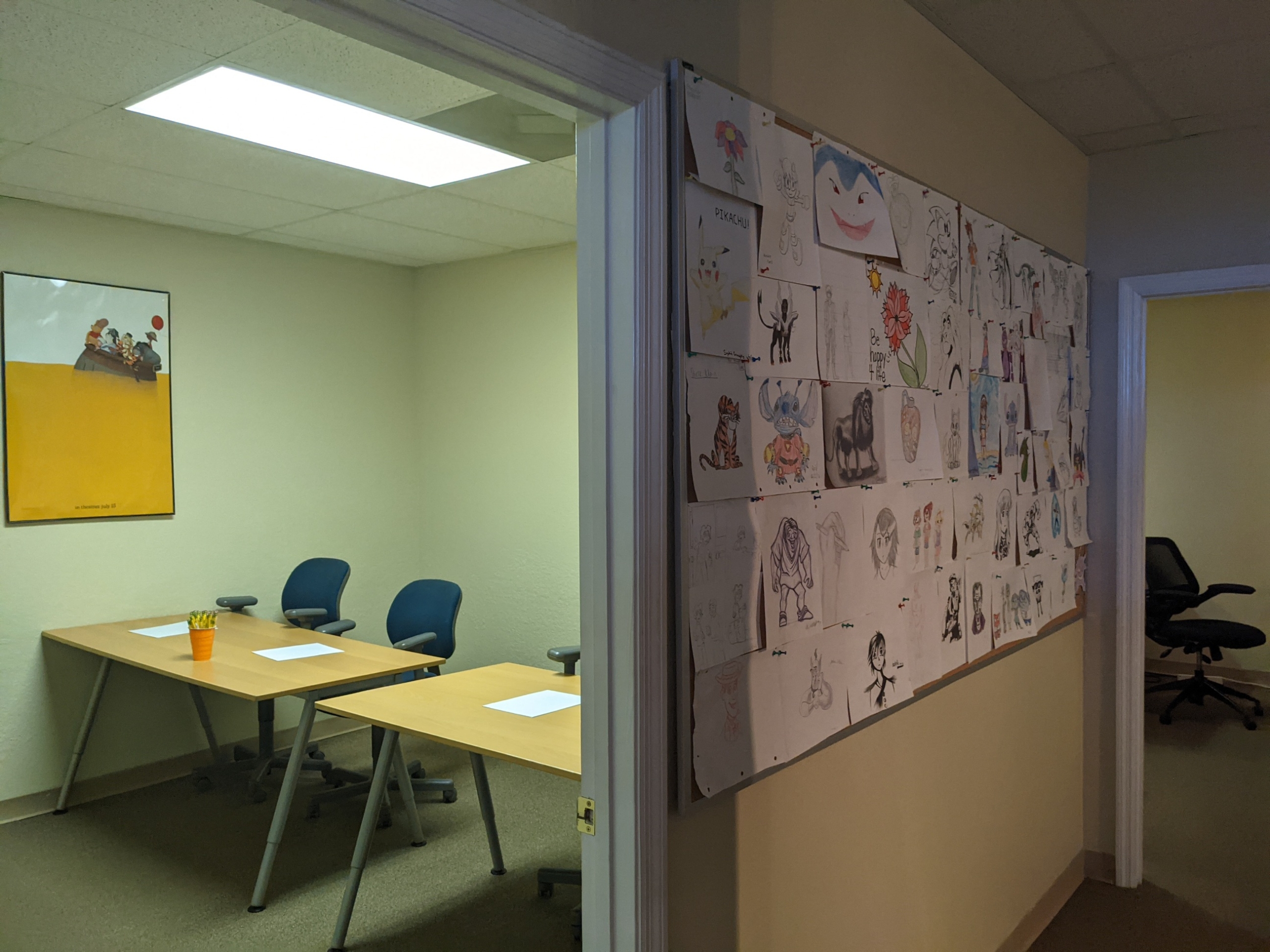
Why this topic is trending (and why it matters for student artists)
1) “Pond Rules” worldbuilding = instant readability
A single world rule makes every scene a game: follow it, break it, bend it, weaponize it. That’s how you get clarity fast — and clarity is the #1 portfolio advantage for beginners.
Context: coverage of Hoppers and its rules-based pond society.
2) Original animation is fighting for attention
Industry framing around 2026 highlights pressure on studios to make new IP land. That trickles down to what artists must show: strong ideas communicated visually, quickly.
Context: TheWrap analysis on original animated films in 2026.
3) Small projects can look “pro” with the right structure
Students don’t need a feature film. They need one readable rule, one clear objective, and one 6–10 second shot that sells it with acting + timing.
Below: a challenge you can do this week.
The “Pond Rules” framework: a pro shortcut for students
When a story world has rules, audiences lean in — because every scene becomes a test: Will the character break the rule? Bend it? Weaponize it? Rules also help young animators decide faster: posing, acting, timing, camera, even sound design.
Step 1: Write one rule (then write one exception)
- Rule: “When you gotta eat, you gotta eat.” (Nature is honest.)
- Exception: “Unless it’s during the Spring Festival.” (Now you have comedy + conflict.)
Step 2: Use “two lenses” (human view vs. creature view)
Humans see a pond as background. Creatures see it as civilization. For students, that becomes two practical skills: camera language (scale, POV, motion) and acting choices (fear, swagger, curiosity, guilt).
Step 3: Build a one-page mini story bible
- World Rule + Exception
- Hero Want (save the glade / win the race / protect the friend)
- Pressure (deadline, rival, storm, “mayor,” etc.)
- One shot that proves the rule visually
The 10-second test
Pros start clear. Your student’s goal: make a stranger understand the rule in 10 seconds. Timing, posing, and readability are the core.
Try it at Elite Animation Academy
Elite Animation Academy offers in-studio and online classes taught by professionals including former Disney and Marvel animators — with real-time demos, feedback, and a fun, confidence-building environment.
PipCast: “Pond Rules” — Story Worlds Kids Can Animate This Week
A quick episode tying trending animation worldbuilding to a student-ready challenge.
Episode Transcript
PIP: Hey animators — Pip here. Quick question: what makes a world feel real in seconds?
PIP: Rules. Not boring rules — story rules. Like “Pond Rules,” the idea floating around Pixar’s upcoming Hoppers: a pond society where everyone tries to get along… even though nature still has teeth.
PIP: Here’s the trick: when you give a world one clear rule, every scene becomes a game the audience can play.
PIP: Today’s challenge: write one rule, then one exception, and animate a six-to-ten second shot that shows the rule without dialogue.
PIP: Want pro feedback? Elite Animation Academy runs in-studio and online classes taught by former Disney and Marvel animators.
Ready to level up with pro feedback (without the pressure)?
Structured paths for beginner → advanced. Strong fundamentals: storyboarding, acting, timing, and portfolio-ready shots.
What students learn
- 2D & 3D animation fundamentals
- Storyboarding, acting, timing
- Editing/VFX options
- Portfolio-ready projects
Why Elite
- Former Disney & Marvel instructors
- Real-time demos + feedback
- Small classes, high attention
- Fun, confidence-building environment
FAQ: Parents & Students
Do you offer both in-studio and online classes?
Yes. Elite Animation Academy offers in-studio programs and online/virtual options, depending on the active schedule.
Who teaches the classes?
Instructors include professionals with experience at major studios (including Disney and Marvel), with live demos and feedback.
What ages or levels can join?
Programs range from beginner through advanced, with options for different ages and goals (including portfolio building).
How do I see the current schedule?
Use the schedules page to view the currently active schedule links for in-studio and online sessions.
References
Animation Skills to Learn in 2026: AI + Real-Time 3D + Portfolio Fundamentals
2026 Is the “Convergence Era” for Creators: What Students Should Learn Now (AI + Real-Time 3D + Fundamentals)
Real-time 3D, immersive delivery, and AI tools are converging fast. The opportunity is huge—but only for students who build the right foundation and learn how modern pipelines work. Here’s a clear, parent-friendly roadmap from Elite Animation Academy.
Tip: If you embed this post in an iframe or narrow container, this layout stays single-column until the snippet container itself is wide enough for multi-column.
Why everyone is talking about “convergence” right now
“Convergence” is what happens when real-time 3D, AI tooling, and immersive / interactive delivery stop being separate tracks and start becoming one production reality. For students, that changes what “entry-level ready” looks like: you still need fundamentals, but you also need to show you can create inside modern pipelines.
What this means for animation and game design students
1) Real-time skills increasingly differentiate students
Students who can assemble scenes, block shots, light, and iterate quickly in a real-time engine have more doors open across games, previs, interactive media, and rapid visualization.
- Build a simple room or street scene.
- Place 3 cameras (wide / medium / close).
- Make one lighting change and re-render.
2) AI literacy is becoming a baseline professional skill
Not “replace the craft,” but use AI responsibly for ideation, reference exploration, iteration, and communication—then finish with strong fundamentals and clean presentation.
- Generate 5 concept variations (shapes/silhouettes).
- Pick 1 and redraw it from scratch.
- Write a 1-sentence “design intent.”
3) Fundamentals still decide who stands out
Great posing, acting, timing, composition, and clear storytelling are what make reels memorable. Tools accelerate the process—but fundamentals define the result.
- Draw 10 gesture poses (30–45 sec each).
- Pick 1 and push the silhouette.
- Add a clear line-of-action.
The 2026 skill stack (what to learn, in order)
If you’re a teen building a portfolio (or a parent supporting one), use this order to avoid wasted effort.
1) Fundamentals (the portfolio multiplier)
- Drawing & design: shape language, appeal, perspective, anatomy basics
- Storytelling: staging, shot clarity, camera, emotional beats
- Animation principles: timing, spacing, arcs, weight, acting
2) Production skills (what makes work look “real”)
- Storyboarding & animatics: turn ideas into clear sequences
- 3D character animation: posing + performance + polish
- Editing & presentation: clean exports, simple cuts, strong titles
3) Modern accelerators (how students move faster)
- Real-time 3D workflow: scene assembly, cameras, lighting, iteration
- Responsible AI workflows: ideation, variations, reference discovery
- Pipeline habits: naming, versioning, organization, deliverables
Why mentorship matters more than ever
The consistent theme across serious creative training pipelines is simple: students develop faster when they have feedback loops and learn how to work toward real deliverables. That’s why we focus on reps + critique + finished work—so students don’t just “learn tools,” they learn to ship.
A quick self-check for parents
If your student is “busy” but not improving, it’s usually one of these:
- No consistent practice schedule
- No deadlines (projects never finish)
- No targeted feedback (same mistakes repeat)
- Too many tools, not enough fundamentals
A simple “start this week” plan for students
FAQ
Does my student need AI to start?
No—fundamentals come first. But basic AI literacy is increasingly useful for ideation and iteration.
Is real-time 3D only for games?
No. Real-time workflows show up in previs, virtual production, interactive media, and rapid visualization.
What matters most in a student portfolio?
Clarity and completion. One polished piece beats multiple unfinished projects.
Next step
Option A: Structured classes with feedback
Pick a track (in-studio or virtual), then bring your sketches/clips for targeted critique and a plan for the next deliverable.
Option B: High-momentum summer camps
Week-long camps are a focused way for kids/teens to build skills quickly—and leave with finished work.
Sources (industry signals)
- Unity (Jan 12, 2026) — Top trends redefining the industry in 2026 (“convergence era”)
- Unity — 2026 Industry Trends Report
- Disney Animation — Apprenticeships / talent development pathways
- Disney Careers — Animation-related postings (signal: portfolio expectations + roles)
- Economic Times — Adobe initiative expanding student access (AI + creative tooling in education)
Reusing media from sources: only use images/video that are explicitly licensed for reuse or provided as official press assets/embeds. The safest path is to upload your own original EAA media (classroom photos, student work with permission) or use properly licensed stock/press images.
Super Mario Galaxy Movie Super Bowl Trailer Breakdown: 5 Animation Skills You Can Practice Today
Super Mario Galaxy Movie Super Bowl Trailer Breakdown: 5 Animation Skills You Can Practice Today
A fast, practical breakdown you can turn into a 20-minute skills workout—plus the next step if you want pro feedback and a clear learning path at Elite Animation Academy.
Media credits: Official promotional art used below is from the film’s official site. All trademarks and copyrighted materials belong to their respective owners.
Watch the Super Bowl Spot (Official)
If you’re watching as an artist, this isn’t “just a trailer.” It’s a compressed lesson in readability, staging, acting, and timing.
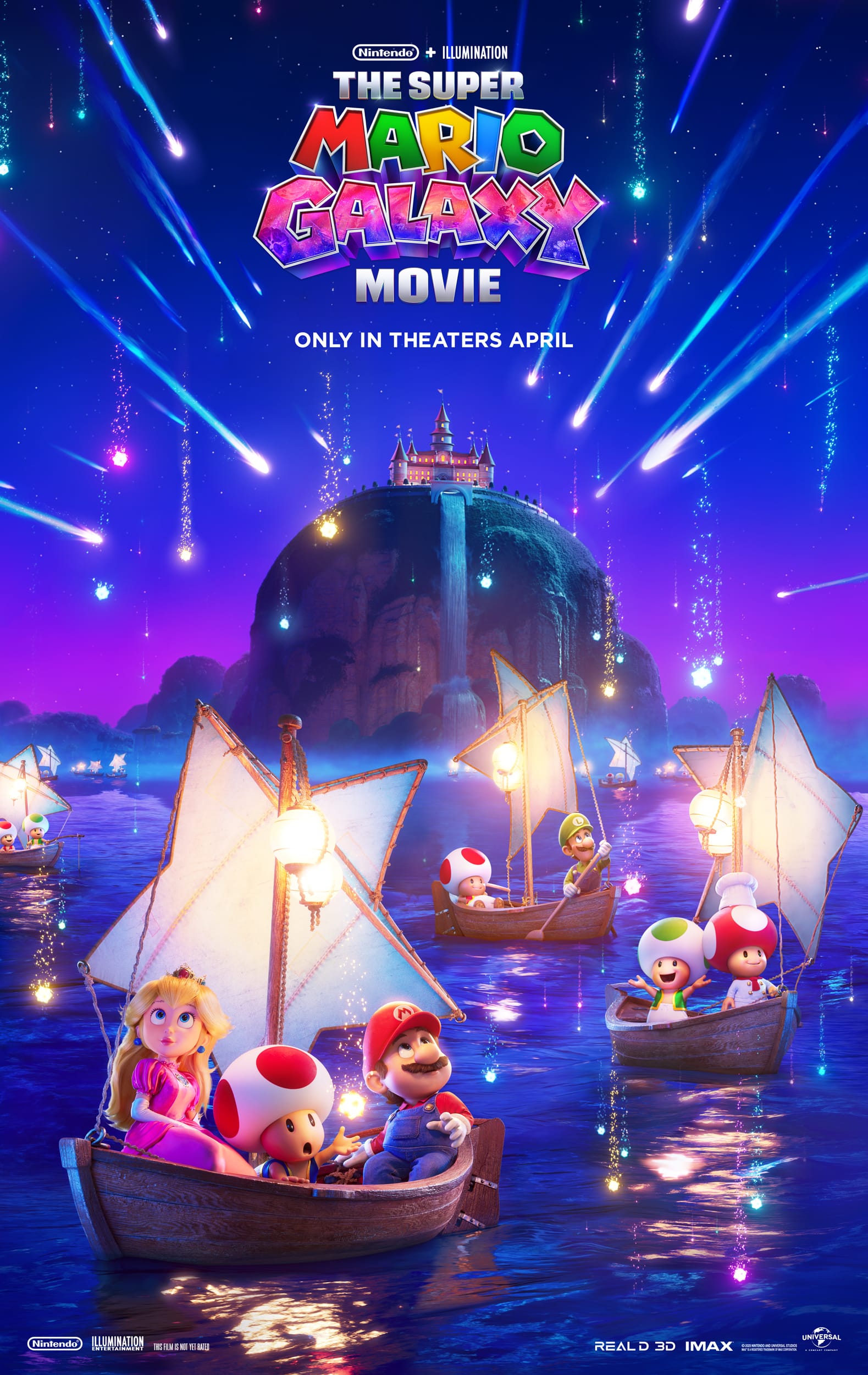
5 Skills Hiding in That Trailer (And How to Practice Each One)
These are the exact fundamentals we train in drawing, character design, storyboarding/animatics, and animation—especially for teens and beginners.
1) Clear silhouettes (readability in 1 second)
Trailers move fast. A pose that reads instantly is the difference between “impact” and “confusion.”
- Pause any action frame.
- Sketch 10 quick gesture poses.
- Fill one in as a black silhouette—if it’s unclear, simplify.
2) Acting choices (why the moment is funny)
Comedy lands when the character’s reaction is staged clearly: thought → decision → payoff.
- Draw 6 tiny faces: neutral → suspicious → alarmed → determined → smug → relief.
- Keep it simple. Prioritize readability.
3) Timing + spacing (why the beat lands)
Your “timing” starts in thumbnails and boards—before you animate a single frame.
- Storyboard 6 panels: establish → realize → decide → action → impact → reaction/tag.
- Make panel 6 your strongest “button.”
4) Shot choice + staging (storyboarding fundamentals)
If the audience can’t track the threat, the hero, and the joke instantly, the scene falls apart.
- Redo the same 6 panels as wide shots only (clarity version).
- Redo again with closer shots (emotion version).
5) World props + “deep cut” design
When props feel “real,” the world feels believable—even in a cartoony style.
- Design 3 props for your character (tool, gadget, vehicle).
- Assign each a shape family: circles, squares, triangles.


Classroom examples from Elite Animation Academy (Orlando + virtual options available).
The 20-Minute Trailer Challenge (Save This)
Do this 2–3 times a week and you’ll build stronger fundamentals fast—especially if you’re a teen building a portfolio, or a parent helping a young artist level up.
Want Pro Feedback? Here’s the Fastest Next Step
Option A (fastest): View schedules and enroll
Pick a track (in-studio or virtual), then bring your Trailer Challenge sketches to class for guided feedback.
Option B (parents): 2026 Summer Camps (Orlando)
Week-long camps are a high-momentum way to build skills quickly and keep kids engaged.

Gift option (easy conversion)
If someone’s obsessed with animation, a gift voucher removes the friction—then you upsell into a full course path later.
Gift VoucherSources (news hook)
- ComicBook.com — “Super Mario Galaxy Movie Super Bowl Trailer…” (news coverage)
- The Hollywood Reporter — Super Bowl trailer coverage
- Official film site — trailer + promotional art
Tip: For best performance, download any externally hosted images and re-upload to your WordPress Media Library, then replace the src URLs.
Prime Video’s New Ghost in the Shell Anime (2026): 6 Skills to Learn If You Want to Make Work Like This
Prime Video’s new Ghost in the Shell anime (2026): 6 skills to learn if you want to make work like this
Prime Video is signaling a bigger anime strategy—headlined by a new Ghost in the Shell adaptation. Instead of scrolling past the headline, use it as a portfolio prompt: here’s what the news implies about the craft—and what to practice next.
What the news actually says (fast recap)
- Prime Video wants to become a major global anime destination (positioning against Crunchyroll/Netflix).
- Ghost in the Shell is a flagship title, with Science SARU attached and global distribution rights described (with stated exceptions in some regions).
- Other slate callouts include a Fist of the North Star reboot (blending CGI + hand-drawn) and additional returning series.
6 skill buckets to practice (and why they convert to portfolio work)
- Perspective + environment layout i — believable streets, interiors, props, and scale.
- Lighting / value design i — readable silhouettes in night/neon scenes.
- Material rendering i — reflective surfaces, texture, and believable edges.
- Shape language + silhouette i — iconic readability and design consistency.
- Storyboarding + cinematics i — shot choices, staging, and flow.
- Animation fundamentals i — posing, arcs, spacing, timing.
⏱️ 15–30 minute “news-to-portfolio” mini-assignment
- Pick 1 reference: cyberpunk street, interior, or tech lab.
- Lay down structure: simple 1- or 2-point perspective grid (don’t overbuild).
- Do a 3-value pass: dark / mid / light before you detail.
- Render 1 material: choose metal or glass and finish only a small area cleanly.
- Optional upgrade: storyboard 3 shots that enter → reveal → exit the space.
🎧 Podcast-ready talking points (solo voice)
- Hook: “Prime Video is openly chasing the ‘preferred anime destination’ label—what does that mean for artists?”
- Bridge: “Whenever streamers fight for slates, the real winners are creators who can ship clean fundamentals fast.”
- Teach: Walk through the 6 skill buckets and give one practical example for each.
- Action: Read the mini-assignment step-by-step so listeners can do it today.
- Close: “If you want structure, pick a schedule window and enroll—don’t wait for motivation; build a plan.”
Record Step Up Scholarship Demand for 2026–27: How Florida Families Can Use Funds for Animation & Digital Art
Florida scholarship news • Step Up for Students • 2026–27
Record Step Up Scholarship Demand Is Here — Here’s How Families Can Turn It Into Real Skills
Step Up For Students opened 2026–27 applications on Feb. 1, and the surge was immediate. If your family has scholarship funds (or is applying now), the smartest move is to plan your learning path early—before preferred weeks and time slots fill.
What the latest reporting says (and why it matters)
Source: Step Up For Students’ NextSteps blog update: “Demand for Florida education choice scholarships soars for second straight year” (Feb 2026).
— NextSteps (Step Up For Students), Feb 2026 update: read the full post
Translation for parents: when demand spikes, families who plan early usually get better schedule choices. Waiting often means settling for leftover weeks, times, or tracks that don’t match your student’s goals.
Where Elite Animation Academy fits into this moment
Elite Animation Academy states that students may qualify for Step Up For Students scholarships to help pay for courses, and describes Step Up as a scholarship that can be used to purchase approved services or products. Award amounts vary by student circumstances.
References: Elite Animation Academy scholarships page and Step Up For Students (official site).
A simple plan to convert scholarship urgency into skill-building
Fast track suggestions (by age and intent)
- Ages 8–12: foundations + creativity; build confidence with guided projects.
- Ages 13–17: stronger fundamentals + storytelling + early portfolio habits.
- Adults: structured pathway toward employable skills (design, storytelling, digital workflow).
Deadlines families should note
The NextSteps update also notes timing items such as April 30 for current scholarship families to renew for the next school year, and that certain applications are available later in the year. Always confirm your specific scholarship timeline inside official Step Up resources and your portal.
Source: NextSteps update (Step Up For Students): deadlines and application windows referenced in the Feb 2026 post .
Next step: pick your camp or course, then enroll
If you already have Step Up funds (or you’re applying now), the best next action is to choose the program that matches the student’s goals and reserve a spot. Elite Animation Academy posts camp and course options and provides online enrollment.
Want a quick recommendation? Tell the team the student’s age and interests (animation, character design, storyboarding, digital illustration), and they’ll point you to the best starting track. Contact Elite Animation Academy here.
Optional: Tuition transparency (for families comparing options)
Elite Animation Academy publishes a tuition rates / payment options PDF (including Step Up billing references for certain course formats). 2026 Tuition Rates & Payment Options (PDF) .
Disclosure: This post is informational and summarizes publicly available statements from Step Up For Students’ official channels and Elite Animation Academy’s website. Scholarship rules and eligible expenses can change—confirm current requirements through Step Up For Students and your scholarship portal before purchasing.
Super Bowl Trailer Breakdown: How Minions & Monsters Nails Comedy Timing (With a 20-Min Exercise)
Minions & Monsters Trailer Drops During Super Bowl — Quick Report + Pip’s Animator Breakdown
The first Minions & Monsters trailer ran during the 2026 Super Bowl and sets up a Hollywood-fame spiral where the Minions become stars, lose it, and unleash monsters they now have to stop. Here’s the clean recap, then Pip’s “steal-this” animation notes.
Release: Jul 1, 2026
- What’s happening: Hollywood stardom → crash → monsters get loose → “fix what we broke” mission.
- Trailer promise: big readable gags, huge stakes, and clean story turns made for mass audiences.
- Animator takeaway: clarity stays king even when everything’s exploding.
- Staging: one idea per shot—your viewer never asks “what am I looking at?”
- The hold: the pause before impact is the joke (anticipation → hit → reaction).
- Spacing: speed changes the punchline; quick hits + controlled settles = clarity.
- Silhouette: readable poses at thumbnail size—instant comprehension.
- Beats: setup → hit → reaction keeps timing tight and character loud.
- Eye-lines: attention is directed by looks, not just motion.
- Polish with restraint: energy stays high, but clarity never dies.
Train with critique (not just tutorials)
Pick what’s currently running:



Happy New Year! Start 2026 with Elite Animation Academy
|
DAFA for 2026
|








WINTER 2026 VIRTUAL and IN STUDIO COURSES
|

A Season of Thanks & Creativity at Elite Animation Academy!
|

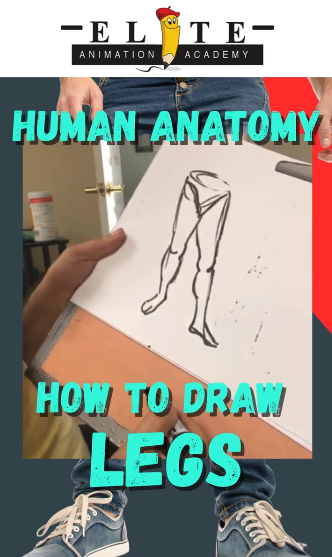
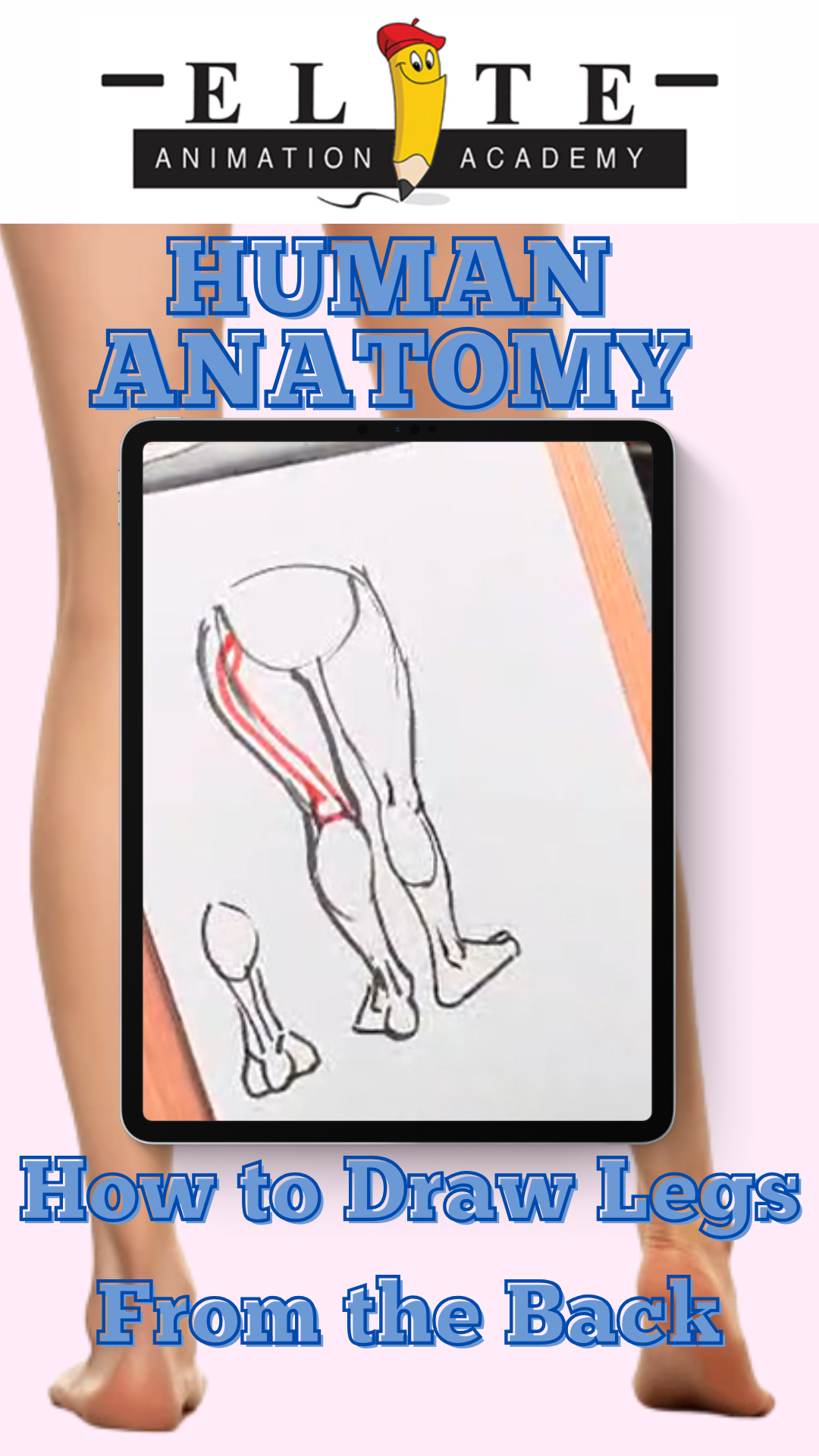




2025 – 2026 Digital Arts for Autism
|
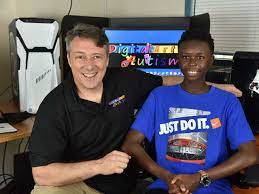
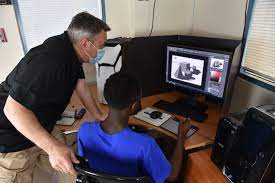
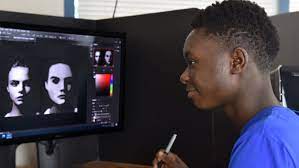
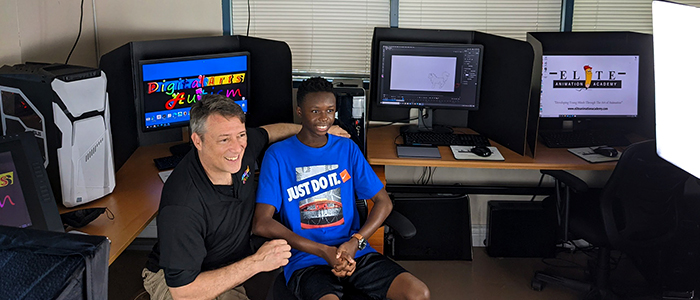



Fall Schedule and DAFA
|

NEW GAME DEVELOPMENT and ANIMATION COURSES
|



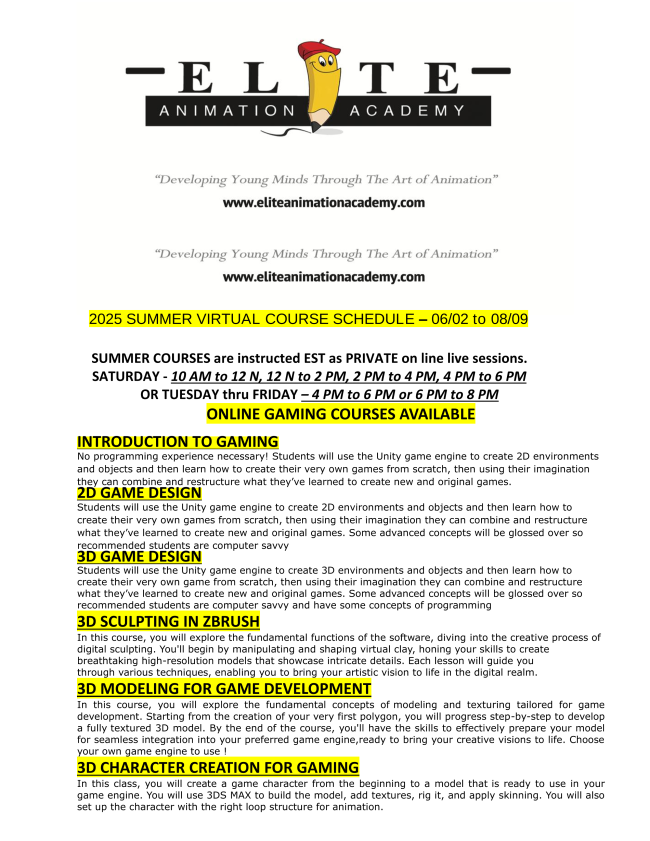

2025 Saturday Summer Courses in Orlando
|



SPRING INTO SUMMER CAMP SAVINGS!
|



SPRING 2025 – ENROLL NOW – STARTS MARCH 15th
|

2025 SUMMER CAMPS & COURSES IN ORLANDO ARE HERE !
|

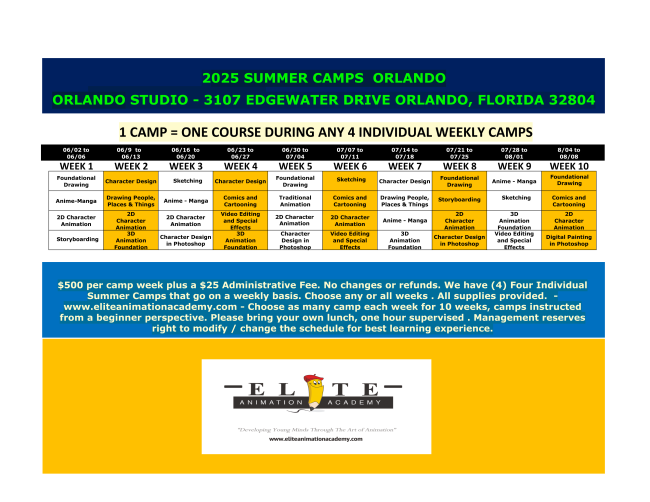



FINAL WORKSHOP OF THE YEAR
|


NEW FOR 2025 – ENROLL NOW – STARTS SOON
|
NEW AFTER SCHOOL CLASSES – TUESDAY & THURSDAY’S
|


Why Should The Kids Have All The Fun?
|


2024 FALL COURSES – NEW ADULT AND AFTER SCHOOL COURSES !
|
ELITE ANIMATION ACADEMY OFFERS SUMMER CAMP ANIMATION SERIES FOR STUDENTS AROUND THE WORLD

For Immediate Release: Media Advisory
Contact: Todd West, 407.459.7959
Elite Animation Academy, Director
ELITE ANIMATION ACADEMY OFFERS SUMMER CAMP ANIMATION SERIES FOR STUDENTS AROUND THE WORLD
“Summer camps available online and in-studio for KIDS wanting to collaborate with Disney Animators to share artistry, ideas,
and engage in traditional and digital animation learning.”
May 19, 2024 (Orlando, Florida) Well known, Orlando-based Elite Animation
Academy has announced their 10th annual Summer Animation Camp Series. The weekly sessions will run from Monday, June 3, through Friday, August 9, from 10 am to 3pm, EST.
On-line and in-studio classes are taught by Disney Animators and other professionals in the field, to include Traditional Animation, Foundational Drawing, Character Design, Gesture Drawing & Sketching, and Anime - Manga, (Japanese animation comics). Additional modules offer Comics and Cartooning; Animatics Storyboarding; Video Editing and Special Effects; 2D Character Animation, and 3D Animation Foundation.
“Summer is a fun time for students to recharge, but also an opportunity to hone new skills; especially those young minds who are imaginative, artistic, and innovatively visionary. Our international Academy is the perfect opportunity for students looking to enhance skills in design, animation, and even storyboarding,” said Todd West, Elite Animation Academy Summer Camp Series, director.
“Elite’s summer camps provide a myriad of creative disciplines and instruction, which are comprehensively designed to teach, the ‘art of animation. Instructors are industry professionals having expansive backgrounds with major movie studios such as Disney, Marvel, BlueSky, Laika, Sony, Fox, and more.” added West.
In advance of the summer camps, Elite will offer a Summer Camp Open House for those who wish to tour our studio, meet instructors, and review camp offerings. The Open House events will be held on Saturday, June 1; June 8; and June 15; from 1 pm to 4 pm, at 3107 Edgewater Drive, Orlando, Florida. Students need not be present at Open House events to participate in summer camps.
The cost for each camp series (1-week) is $475 per student, plus a small administrative fee. Elite Animation will provide all supplies. For more information, contact Todd West, Summer Camp Series director, at 407.459.7959, or [email protected].
Elite Animation Academy has experienced remarkable growth in the Central Florida region, serving more than four hundred full-time, in-studio, students annually, with thousands of online students from around the globe.
The founders, Todd and Gladys West envisioned a vibrant design studio with a noble mission: “Developing Young Minds through the Art of Animation.” In a little more than a decade, Elite Animation Academy has grown to include an expansive lineup of summer camps, in-studio courses, and virtual course opportunities where students can acquire vital design skills while developing top-notch portfolios to support future college or university enrollment in the arts, and/or career enhancement credentials as artists.
About Elite Animation Academy: Founded in 2012 by former Disney animators,
Elite Animation Academy provides art and animation training. Bringing students
together with experienced animation instructors to maximize marketability and
opportunities. Our vision is to become the best Animation Academy in the world. Elite Animation also hosts the Digital Arts for Autism (DAFA) school for adults with autism. DAFA is a program partner for the Florida Gardiner Scholarship StepUp program, a statewide initiative designed for children with special needs.
Location:
Elite Animation Academy, 3107 Edgewater Drive Orlando, FL 32804 | eliteanimationacademy.com
Kicking off the Summer Camp Season!
|
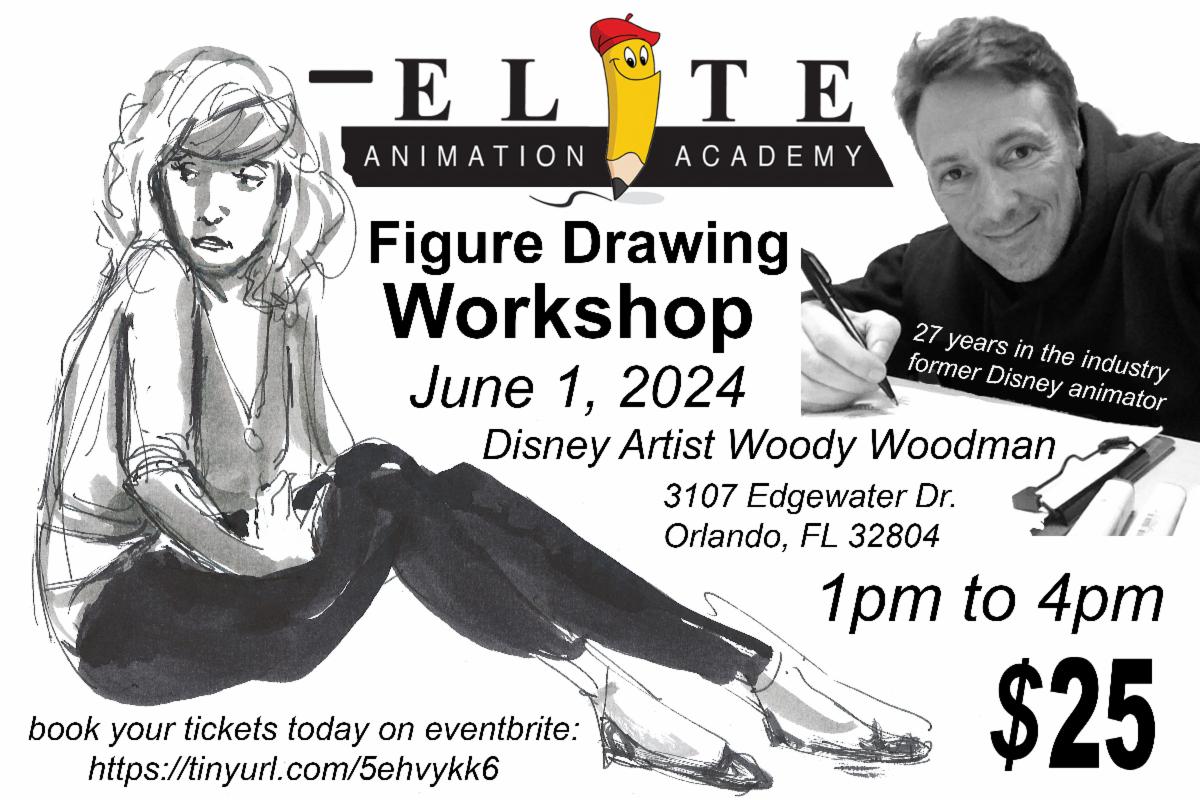
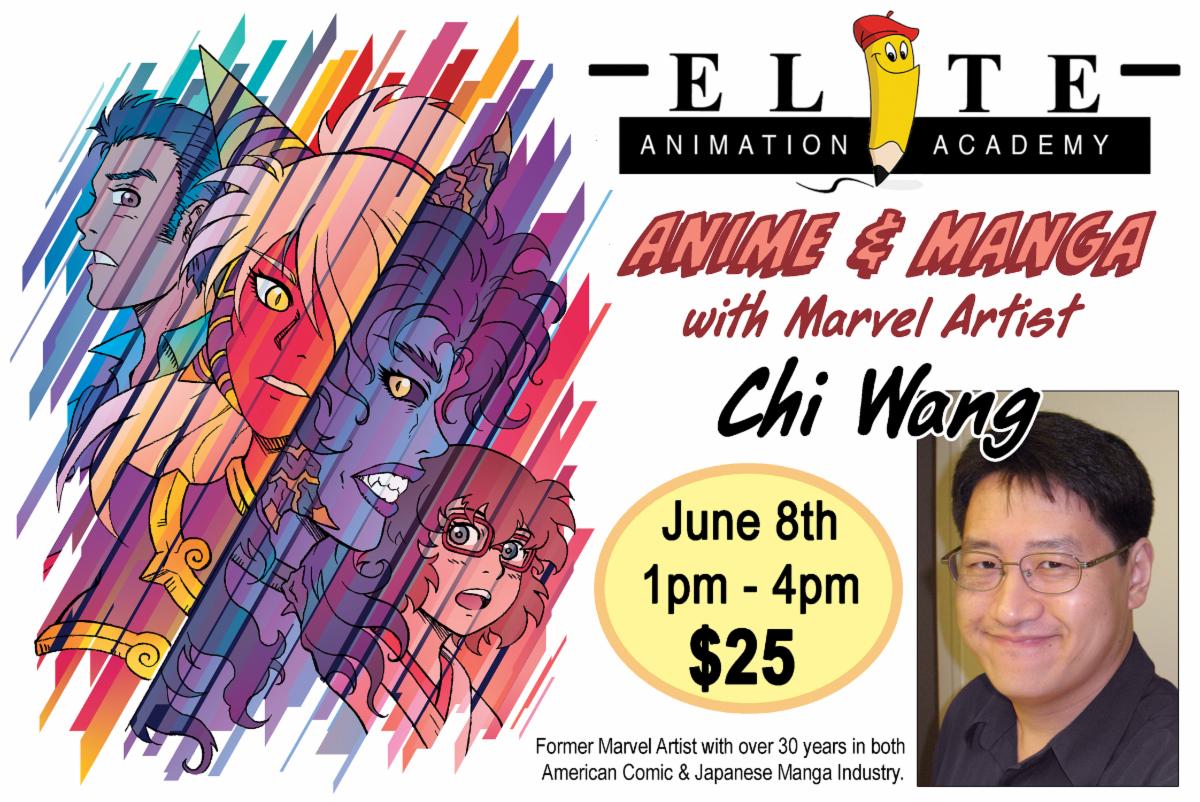
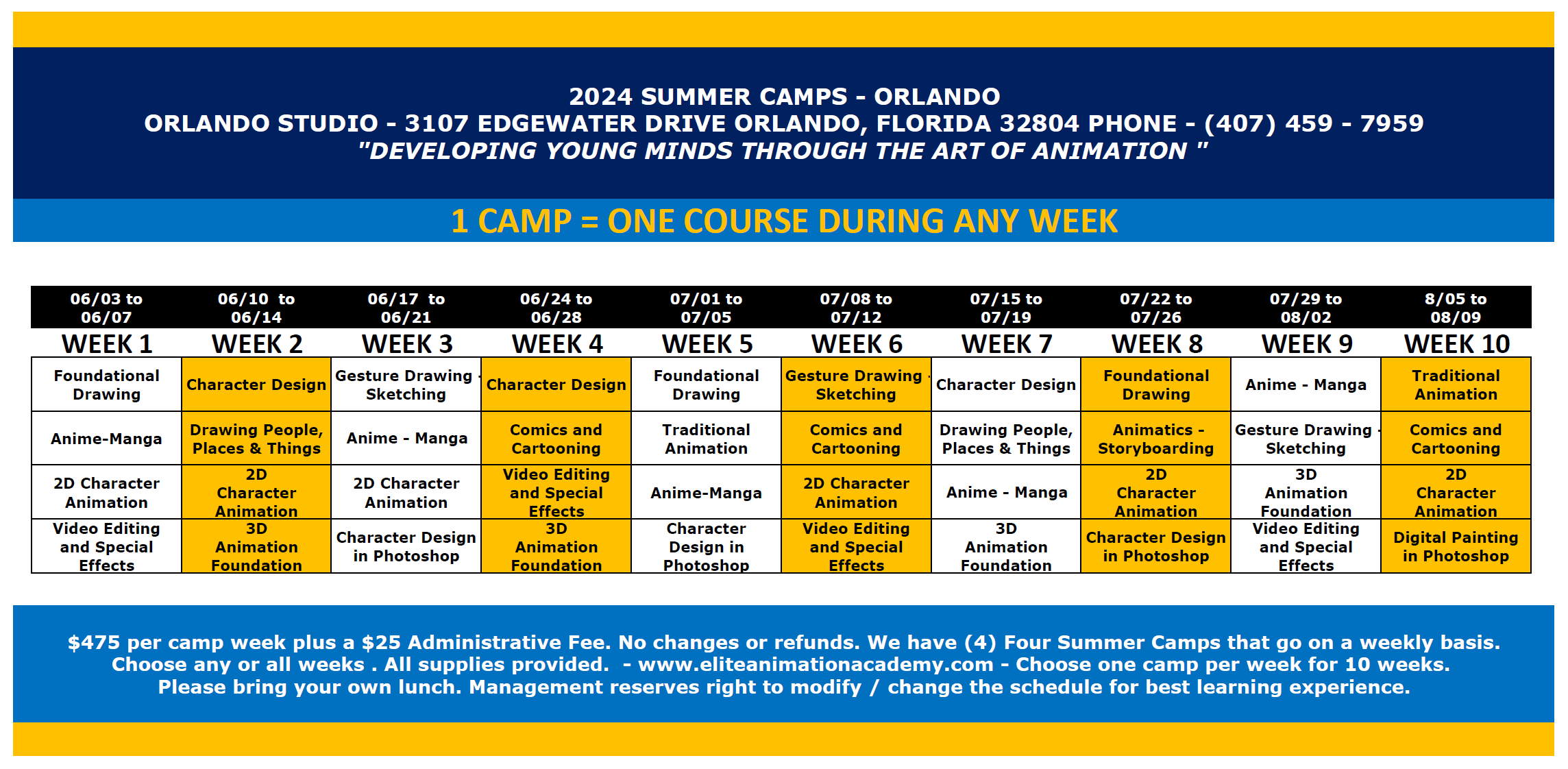
MAY 18th – STORYBOARDING WORKSHOP
|
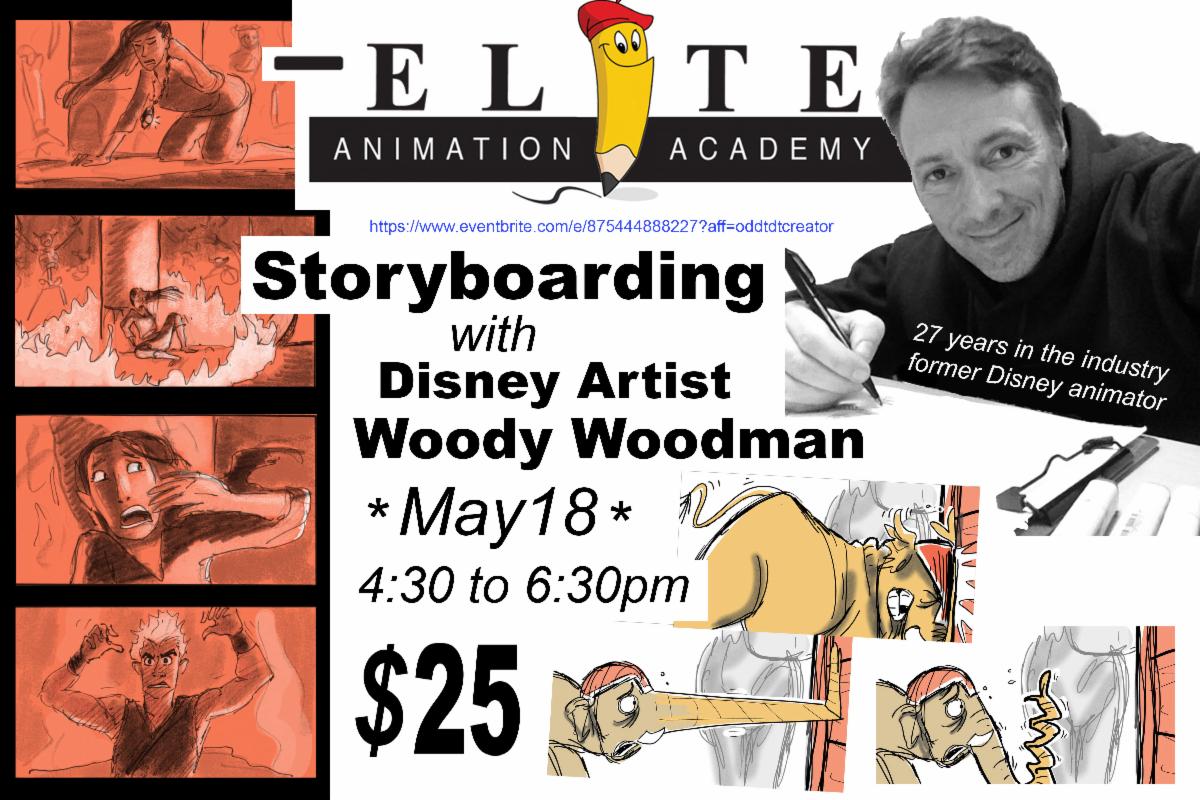

FEEL THE HEAT – SUMMER CAMPS ARE COMING
| ||||||||||||||||||||||||

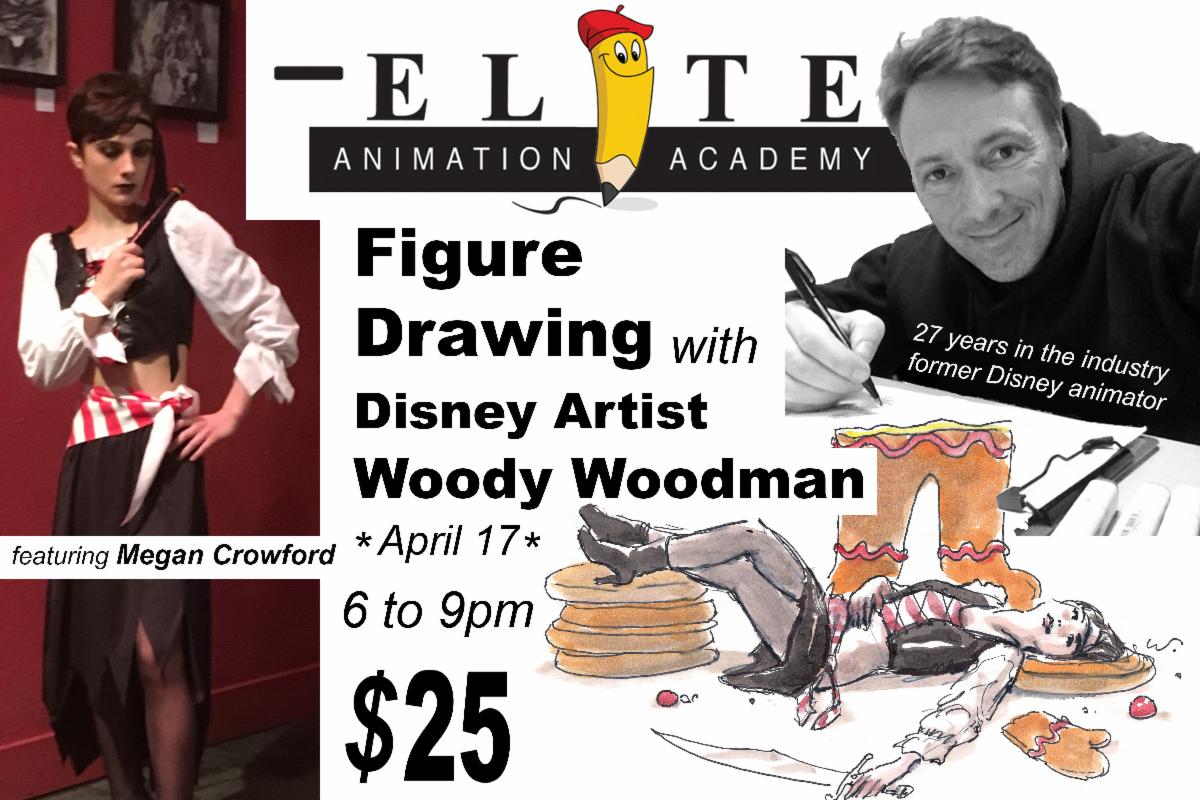
APRIL 17th – FIGURE DRAWING WORKSHOP
|
Let’s make 2024 the best with Elite Animation Academy
|


2024 SUMMER CAMPS & COURSES
|


2024 WINTER COURSES – Do You Like Group or One On One Courses?
|


FINAL WEEK TO ENROLL
|
ENROLL EARLY – 2023 FALL COURSES
|

CAN’T TRAVEL TO ORLANDO? LEARN ONLINE!
|



READY TO HAVE THE BEST SUMMER EVER ?
|
2023 SUMMER CAMPS & COURSES
|
SPRING INTO ELITE ANIMATION ACADEMY !
|


2023 SPRING COURSES – ONLINE & IN STUDIO
|
PLAN AHEAD – 2023 SUMMER CAMPS ARE AVAILABLE
|
Happy Holidays from Elite Animation Academy!
|

2023 WINTER COURSES – ONLINE & IN STUDIO
|

FALL STARTS SEPTEMBER 10th ! – COURSES
|

2022 FALL COURSES – ORLANDO & VIRTUAL – ENROLL NOW !
|
2022 SUMMER COURSES & CAMPS – FILLING UP FAST !
| ||||||||||||||||||||||||||


2022 NEW APRIL COURSES & SUMMER CAMPS – ELITE ANIMATION ACADEMY
|

2022 NEW APRIL COURSES – ELITE ANIMATION ACADEMY
|
FOUR NEW COURSES ADDED – NEW STUDIO INVITE
|


2022 SUMMER CAMPS – ELITE ANIMATION ACADEMY
|
ALL 2022 WINTER VIRTUAL COURSES AVAILABLE – ENROLL NOW
|
NEW FALL 2021 SCHEDULE – ENROLL NOW !
|
PARTICIPATE IN SUMMER CAMPS & COURSE THREE DIFFER ENT WAYS!
| |||||||||||||||||||||||||


ENROLLING FOR SUMMER CAMPS & VIRTUAL COURSES
| |||||||||||||||||||||||||
BOOK NOW ! – 2021 SPRING VIRTUAL & STUDIO COURSES – ELITE ANIMATION ACADEMY
| ||||||||||||||||||||||||||||
ENROLLING FOR SUMMER CAMPS & VIRTUAL COURSES
| |||||||||||||||||||||||||
2021 SPRING VIRTUAL & STUDIO COURSES – ELITE ANIMATION ACADEMY
|
2021 SUMMER ONLINE CAMPS & COURSES – ELITE ANIMATION ACADEMY
|
2021 WINTER – VIRTUAL & STUDIO COURSES
|

2021 WINTER COURSES – ELITE ANIMATION ACADEMY – ENROLL NOW
|
STARTS THIS MONTH ! – VIRTUAL & STUDIO COURSES
|
2020 FALL COURSES VIRTUAL & STUDIO COURSES – ELITE ANIMATION ACADEMY
|

SUMMER CAMPS in Orlando start June 22nd!
|
CORONAVIRUS UPDATE
|
MARCH 2020 NEWSLETTER – ELITE ANIMATION ACADEMY
|

2020 SUMMER CAMPS – ENROLL NOW – SAVE $75 ! expired
|

NEW HAPPY HOLIDAYS – ELITE ANIMATION ACADEMY
|
NOVEMBER NEWSLETTER – ELITE ANIMATION ACADEMY
|


OCTOBER NEWSLETTER – CHECK OUT OUR BRAND NEW WEBSITE !
|

AUGUST 2019 – ELITE ANIMATION ACADEMY NEWSLETTER
 2019 ORLANDO - VIRTUAL (ONLINE) & COURSES NOW ENROLLING! - STARTING SEPTEMBER 14th |
2019 FALL COURSES SEPTEMBER 14 th, 2019 to NOVEMBER 10, 2019 Saturday's - 10 WEEKS NEW FALL COURSES IN ORLANDO INTRODUCTION TO STORYBOARDING ( BEGINNER) Storyboarding is an essential way to plan out any video media. Through storyboarding we plan the sequence of events, and the camera's placement. We use storyboarding to make sure that your audience understands what's happening, and helps you tell your story to its fullest. In the industry, final storyboards are put together in a booklet called Visual Treatments, as well as video slideshows with accompanying sound, called Animatics. This class will focus on sequential art communicating an idea through a sequence of images, the importance being on the group of images as a whole - through pencil drawings. GAME DESIGN FUNDAMENTALS (BEGINNER) No programming experience necessary ! Students will use the Unity game engine to create 2D/3D environments and objects and then learn how to create their very own games from scratch, then using their imagination they can combine and restructure what they've learned to create new and original games. Some advanced concepts will be glossed over so recommended students are computer savvy. Unity is a cross platform game engine developed by Unity Technologies which is primarily used to develop video games, simulations for computer consoles and mobile devices. VIDEO DESIGN & SPECIAL EFFECTS FOR YOU TUBE (BEGINNER) Do you like to publish videos to YouTube or create your own videos ? Our instructor will show students using Adobe Premier how to edit videos professionally. Turn raw footage into flawless productions with the industry-leading video editing software. Our professional video editing app features powerful creative tools for color, graphics, and audio, providing efficient workflows for creating original video content for film, broadcast, web, and more. After creating professional videos , you will want to add Special Effects. Use the power of Adobe Premiere and After Effects to edit clips into your own visionary experience, then add custom-made animations and special effects. It's time to take your videos to the next level. 2019 VIRTUAL (ONLINE) COURSES SEPTEMBER 10 th, 2019 to NOVEMBER 16th, 2019 Tues, Wed, Thurs, Fri - 10 WEEKS "Developing Young Minds Through the Art of Animation®" |

SUMMER CAMPS – ELITE ANIMATION ACADEMY
 JUNE 3rd to AUGUST 9th 2019 JUNE 3rd to AUGUST 9th 2019
Can't decide which Summer Camps ? click below Hours are 10 am to 3 pm - Monday thru Friday - COST - $375 per camp SUMMER VIRTUAL COURSES Can't join us this summer for Camp ? How about taking one of our many online VIRTUAL courses ! |


APRIL 2019 – NEWSLETTER – ELITE ANIMATION ACADEMY
|

|
 |
2019 SUMMER CAMPS - ENROLL NOW !
JUNE 3rd to AUGUST 9th Orlando & Tampa  Summer Camp Schedules Summer Camp Descriptions Hours are 10 am to 3 pm - Monday thru Friday - COST - $375 per camp "Developing Young Minds Through the Art of Animation®" |


MARCH 2019 NEWSLETTER – ELITE ANIMATION ACADEMY

|
|
ONE, TWO, THREE ... ENROLL NOW !
If you are still trying to decide which Course or Summer Camp's ......... CONSIDER THIS ... 1.) Popular Courses & Summer Camps, filling up fast ! Elite Courses, especially Drawing, fill up very quickly and the best Summer Camps for the last 5 years always sell out, don't be disappointed ! 2.) Check out our videos and read our descriptions. The hardest part of choosing a Course, Summer Camp or Training Program is which to start with ? We have made that simple to choose, review these videos and your prospective student will tell you ! 3.) The Animation Job Field is growing and we can help (read our reviews) With technology becoming more advanced across all mediums and the demand for content growing, work abounds for those in the animation job market.There are many offshoots of animation work to pick from in the industry. Film production studios need animators, whether it be for full-on animated films, or for CGI and special effects on live-action movies. The video game industry needs animators to help render concepts both inside and outside of their games. There are even jobs in scientific and technical industries. READ OUR GOOGLE REVIEWS
MARCH 30th TO JUNE 1st 2019 10 WEEKS TAMPA / ORLANDO
JUNE 3rd to AUGUST 9th 2019 10 WEEKS TAMPA / ORLANDO
"Developing Young Minds Through the Art of Animation®" |



FEBRUARY 2019 NEWSLETTER – ELITE ANIMATION ACADEMY

 |
 |
 |
ANIMATION - DRAWING - GAMING COURSES
 |
AUTISM TRAINING PROGRAMS START ON FEB 18th !
|
COURSES START SATURDAY – NEW COURSES ADDED FOR 2019 !

 |
|
 |
|
JANUARY 2019 ELITE ANIMATION ACADEMY NEWSLETTER
|

2019 SUMMER CAMPS NOW ENROLLING – ELITE ANIMATION ACADEMY
|
 |

DECEMBER 2018 ELITE ANIMATION ACADEMY NEWSLETTER

 |
 | |
|  |
|
|

NOVEMBER 2018 – ELITE ANIMATION ACADEMY NEWSLETTER

| |
| |
 |
 |
OCTOBER 2018 – ELITE ANIMATION ACADEMY NEWSLETTER

 |
|
|

NEW TRAINING PROGRAM FROM ELITE ANIMATION ACADEMY

 |

SEPTEMBER 2018 – ELITE ANIMATION ACADEMY NEWSLETTER
 |
 |
AUGUST 2018 – ELITE ANIMATION ACADEMY NEWSLETTER

|
|

JULY 2018 – ELITE ANIMATION ACADEMY ACADEMY NEWSLETTER

 |
 |
|
|
JUNE 2018 – ELITE ANIMATION ACADEMY NEWSLETTER
|
|
 | |
|  |
 | |
|  |
|
MAY 2018 – ELITE ANIMATION ACADEMY NEWSLETTER

|
 Newly Added Summer Camps for 2018 ! 2D & 3D Fundamentals and Game Design You play the video games. Why not learn how to make them ? Design and build your own maze or shooter type game !
Summer Camps for Ages 8 to 17 - Enroll Now for best selection. Summer Camps in Basic Foundational Drawing to Advanced 3D Animation - all levels accepted - based on skill and interest.
Click Link below to PRINT Studio Schedules - Descriptions "Developing Young Minds Through the Art of Animation®" |

APRIL 2018 – ELITE ANIMATION ACADEMY NEWSLETTER


NEW LOCATION IN TAMPA !
WESTSHORE BUSINESS DISTRICT
5215 WEST LAUREL STREET
TAMPA, FL. 33607
DOWNTOWN CENTRAL LOCATION
NEARBY TAMPA INTERNATIONAL AIRPORT
VARIETY OF HOTELS
MANY RESTAURANTS
MARCH 2018 – ELITE ANIMATION ACADEMY NEWSLETTER

TUITION and COURSE DESCRIPTIONS
 |
FEBRUARY 2018 – ELITE ANIMATION ACADEMY NEWSLETTER

|
 |
TUITION and COURSE DECRIPTIONS IN STUDIO - ORLANDO and TAMPA Saturday's - 10 am to 6 pm March 31, 2018 to June 2, 2018 VIRTUAL COURSES AFTER SCHOOL - VIRTUAL - (Once per week) Tuesday's - Friday's 4:30 pm to 6:30 pm March 27th, 2018 to June 1, 2018 Management reserves the right to modify this schedule at any time, or cancel classes for unforeseen circumstances or in studio classes with fewer than 4 registrations. Students will be notified at least 12 hours prior to class time and refunds will be processed. *Requires the prerequisite Foundational Drawing 1 and 2D Animation I . ALL SUMMER CAMPS ARE AVAILABLE TO ENROLL JUNE 4th to AUGUST 10th - 10 WEEKS - 50 SUMMER CAMPS !
"Developing Young Minds Through the Art of Animation®" |
JANUARY 2018 – ELITE ANIMATION ACADEMY NEWSLETTER

2018 COURSES STARTING NEXT SATURDAY - JANUARY 6th ! GET TO KNOW ELITE ANIMATION ACADEMY ! CLICK ON VIDEO BELOW
CLICK TO BOOK ONLINE
MONTHLY PAYMENT TUTION PLANS AVAILABLE SAVE $75 WITH FULL TUITION PAYMENT USE PROMO CODE - "FULL-PAYMENT" AT CHECK OUT IN STUDIO - ORLANDO and TAMPA Saturday's - 10 am to 6 pm January 6th, 2018 to March 10th, 2018 VIRTUAL COURSES AFTER SCHOOL - VIRTUAL - (Once per week) Tuesday's - Friday's 4:30 pm to 6:30 pm January 9 th , 2018 to March 16, 2017 ALL NEW COURSES FOR WINTER 2018 Anime-Manga Foundational Drawing II* 2D Animation II* Cartooning and Comic Books Human Anatomy (Life Drawing) 3D Game Development Management reserves the right to modify this schedule at any time, or cancel classes for unforeseen circumstances or in studio classes with fewer than 4 registrations. Students will be notified at least 12 hours prior to class time and refunds will be processed. *Requires the prerequisite Foundational Drawing 1 and 2D Animation I . "Developing Young Minds Through the Art of Animation®" |

DECEMBER 2017 – ELITE ANIMATION ACADEMY NEWSLETTER

 |
MONTHLY PAYMENT TUTION PLANS ALSO AVAILABLE
2018 SUMMER CAMP SCHEDULE JUST RELEASED !

2018 - SUMMER CAMPS - ORLANDO
2018 - SUMMER CAMPS - TAMPA
NOVEMBER 2017 NEWSLETTER – ELITE ANIMATION ACADEMY
MONTHLY PAYMENT TUTION PLANS ALSO AVAILABLE
THIS SUNDAY – YOGA / SKETCH WORKSHOP 1 PM to 3 PM
 |
 |
MARK YOUR CALENDAR ! SEPTEMBER 10th WORKSHOP – 1 PM to 3 pm
|
|
AUGUST 2017 – NEWSLETTER – ELITE ANIMATION ACADEMY
 |
|
JULY 2017 – NEWSLETTER – ELITE ANIMATION ACADEMY
|
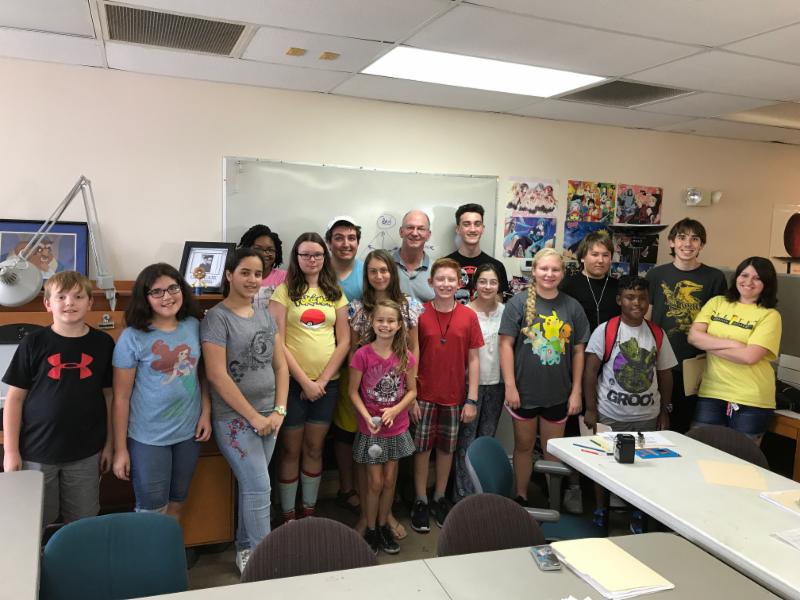 |
 |
|  |
JUNE 2017 – NEWSLETTER – ELITE ANIMATION ACADEMY
|
| |
MAY 2017 NEWSLETTER – ELITE ANIMATION ACADEMY
|
| |
APRIL 2017 NEWSLETTER – ELITE ANIMATION ACADEMY
|
| |
MARCH 2017 NEWSLETTER – ELITE ANIMATION ACADEMY

 |
FEBRUARY 2017 – ELITE ANIMATION ACADEMY NEWSLETTER
 |
| WHY YOUR CHILD SHOULD CHOOSE ELITE ANIMATION ACADEMY ! |
|
2017 SUMMER CAMPS - ORLANDO / TAMPA / VIRTUAL
JANUARY 2017 NEWSLETTER – SUMMER CAMPS NOW AVAILABLE !

HAPPY NEW YEAR FROM ELITE ANIMATION ACADEMY !
DECEMBER 2016 NEWSLETTER

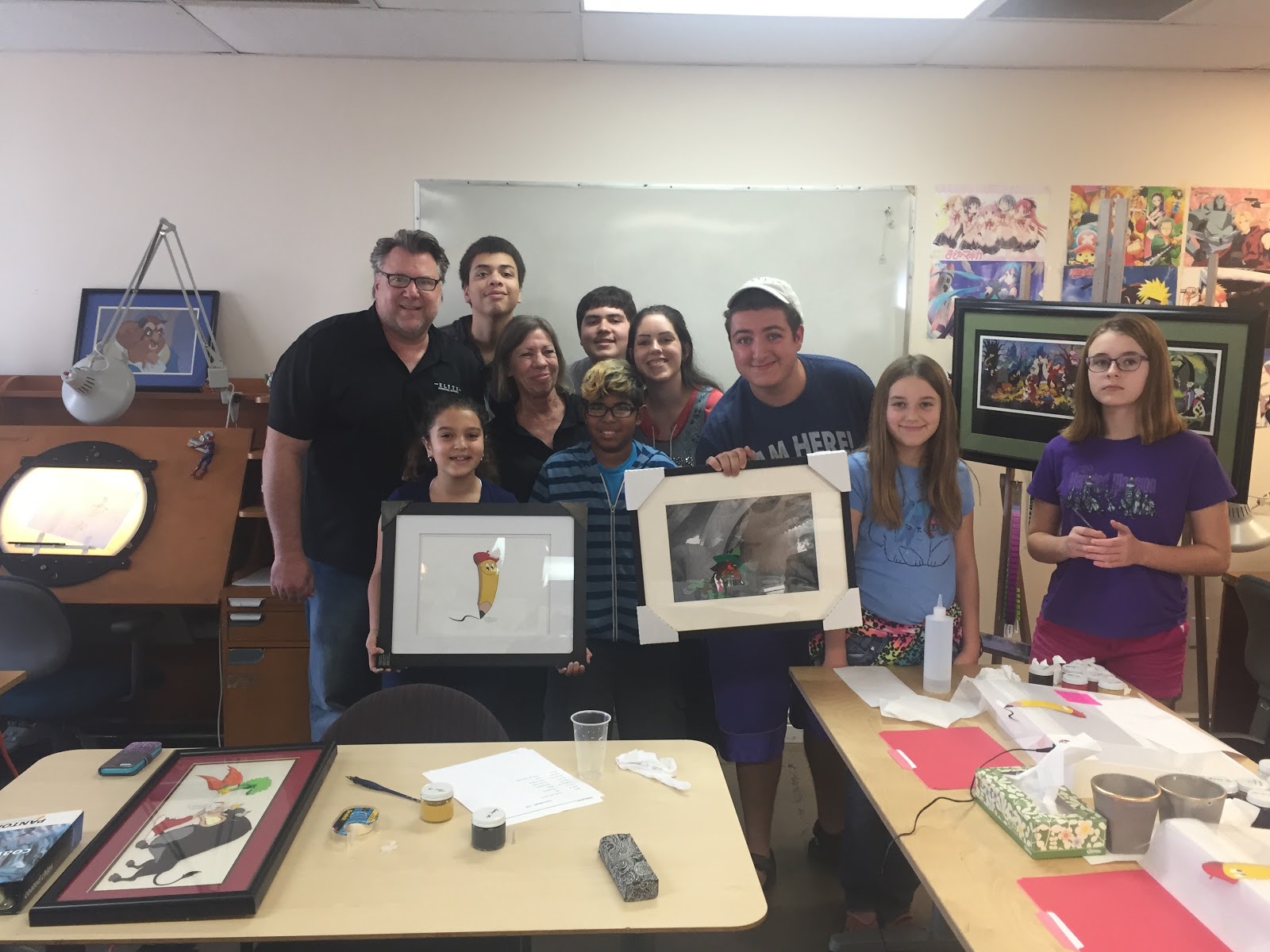
LAST WORKSHOP OF THE YEAR ! - INK AND PAINT - DECEMBER 10th - COUPLE SPOTS LEFT - JOIN US
Sharon Vincent is a Disney Veteran join her as we explore the colorful world of Ink & Paint cel animation. I’ll be dipping into my over 30 years of experience in film making, with Disney and other major producers, where I have worked on such films as “Oliver & Co.”and “The Little Mermaid”. I will be sharing traditional painting techniques, production processes, history, and a few tricks of the trade. This art is perfect for beginners as well as professional artists. You will have loads of fun, as I assist you in painting your own animation cel.
TO BOOK FOR WORKSHOP ONLINE PLEASE GO TO : BOOK ONLINE FOR THE WORKSHOP IN DECEMBER
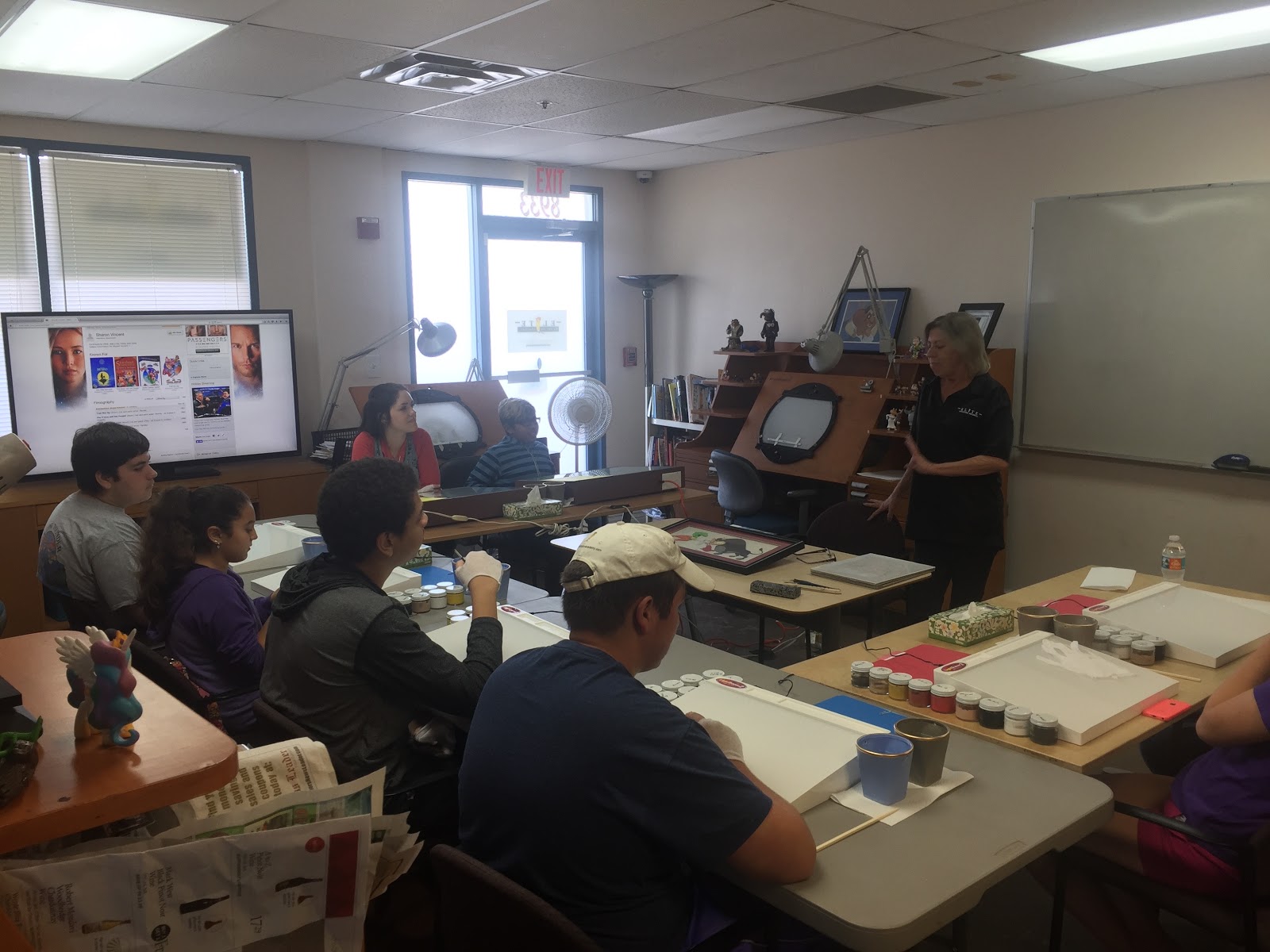
Learn how to Ink and Paint your own Animation Cel!
Take what you create home with you (All Supplies Provided) !
Instructed by a Disney Ink and Paint professional with over 30 years experience ! BOOK NOW
DEADLINE TO ENROLL IN JANUARY 2017 COURSES HAS BEEN EXTENDED TO DECEMBER 15, 2016 - LAST CHANCE !
"Give the Gift of Animation" - Holiday Certificates Available !
01/07/2017 to 03/25/2017 - 11 WEEKS (closed for SPRING BREAK from 03/12/17 to 03/18/17)
Testimonials and Instructor Interviews from Elite Animation Academy
|
Testimonials and Instructor Interviews from Elite Animation Academy |
Coming in January ! - The 2017 Summer Camp Schedule
"Developing Young Minds Through The Art of Animation®"
IMPORTANT DEADLINE – NOVEMBER 2016 NEWSLETTER
ENROLLMENT DEADLINE FOR ALL 2017 WINTER COURSES AND 2016 DECEMBER WORKSHOP'S IS THURSDAY , DECEMBER 1st , 2016

NEW 2017 WINTER SCHEDULE ! |
|
Testimonials and Instructor Interviews from Elite Animation Academy |
2016 DECEMBER WORKSHOP'S
ABOUT THE INSTRUCTOR
Sharon Vincent is a Disney Veteran join her as we explore the colorful world of Ink & Paint cel animation. I’ll be dipping into my over 30 years of experience in film making, with Disney and other major producers, where I have worked on such films as “Oliver & Co.”and “The Little Mermaid”. I will be sharing traditional painting techniques, production processes, history, and a few tricks of the trade. This art is perfect for beginners as well as professional artists. You will have loads of fun, as I assist you in painting your own animation cel.
ABOUT THE WORKSHOPS


2016 DECEMBER WORKSHOPS AT ELITE ANIMATION ACADEMY
2016 DECEMBER INK AND PAINT WORKSHOPS

Sharon Vincent is a Disney Veteran join her as we explore the colorful world of Ink & Paint cel animation. I’ll be dipping into my over 30 years of experience in film making, with Disney and other major producers, where I have worked on such films as “Oliver & Co.”and “The Little Mermaid”. I will be sharing traditional painting techniques, production processes, history, and a few tricks of the trade. This art is perfect for beginners as well as professional artists. You will have loads of fun, as I assist you in painting your own animation cel.
TO BOOK FOR WORKSHOP ONLINE PLEASE GO TO : BOOK ONLINE FOR THE WORKSHOP IN DECEMBER
ABOUT THE WORKSHOP
Join us either December 3rd or December 10th for a INK and PAINT Workshop from Sharon Vincent , 30 Year Ink and Paint Professional Artist. This 4 Hour Workshop (10am to 2pm) will cover how to paint your own animation cel and you will be able to take your own hand painted cel home with you ! Cost for the workshop is $100 per person and a $25 Art Supply fee. Don't miss this opportunity BOOK NOW !


OCTOBER 2016 NEWSLETTER
 NEW 2017 WINTER SCHEDULE ! |
|
| Testimonials and Instructor Interviews from Elite Animation Academy |
SEPTEMBER 2016 NEWSLETTER
ELITE ANIMATION ON FOX 13 IN TAMPA / EXTENDED OPEN ENROLLMENT UNTIL 09/17

AUGUST 2016 NEWSLETTER


JUNE / JULY 2016 NEWSLETTER

FALL STUDIO COURSES - ORLANDO & TAMPA
MAY 2016 NEWSLETTER
SUMMER CAMPS FILLING UP FAST !
International Students , Home Schooled , Not in Florida ? We can instruct you !
2D ANIMATION 3D ANIMATION,CHARACTER DESIGN IN PHOTOSHOP (DIGITAL) , CHARACTER DESIGN (TRADITIONAL) DIGITAL PAINTING, DRAWING DISNEY CHARACTERS, CHARACTER DESIGN (TRADITIONAL) AND DRAWING FUNDAMENTALS.
APRIL 2016 NEWSLETTER
VIRTUAL SUMMER COURSES ADDED AT ELITE ANIMATION ACADEMY

“DEVELOPING YOUNG MINDS THROUGH THE ART OF ANIMATION®”
MARCH 2016 NEWSLETTER

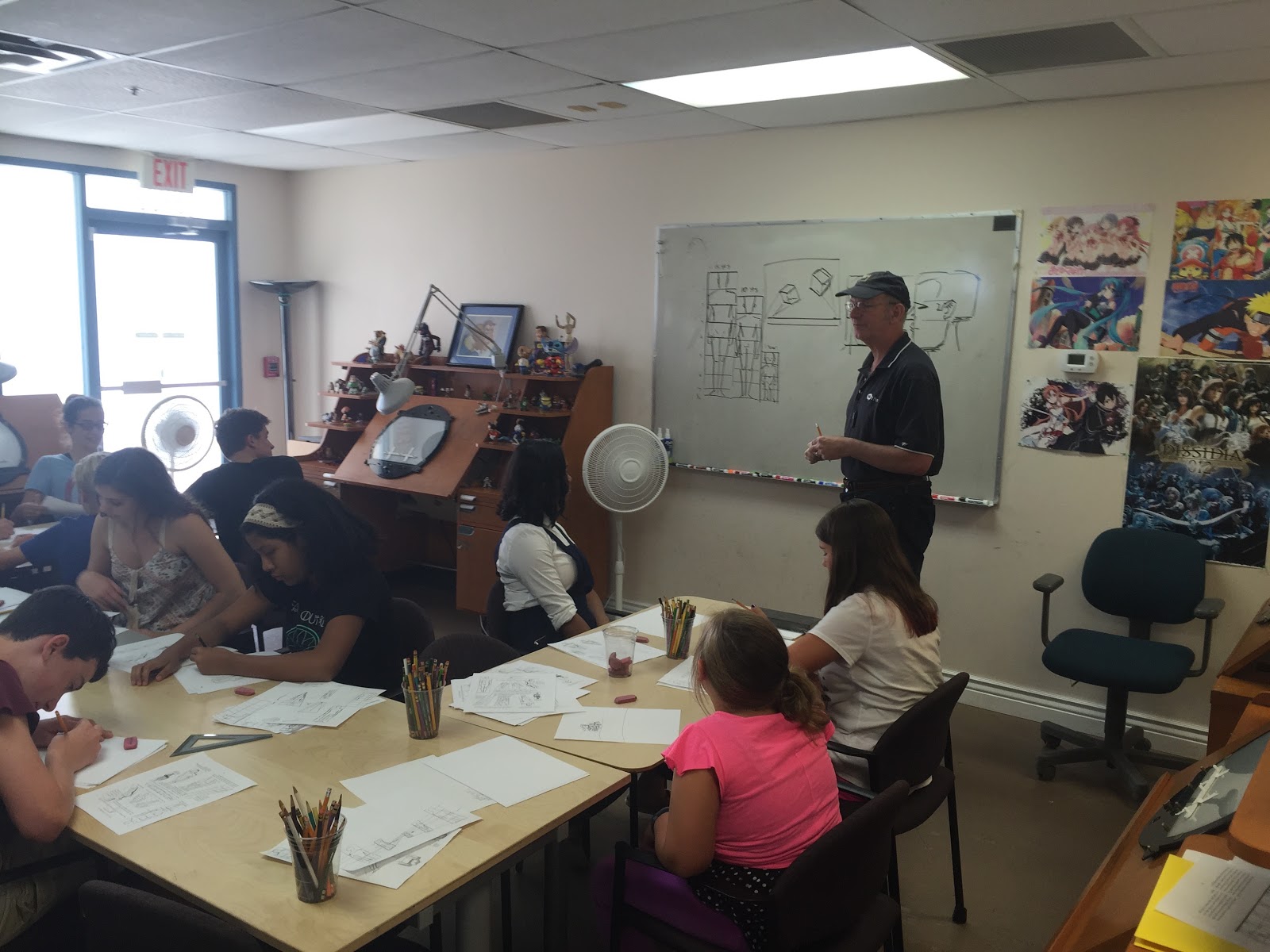

ENROLLMENT DEADLINE- MARCH 15
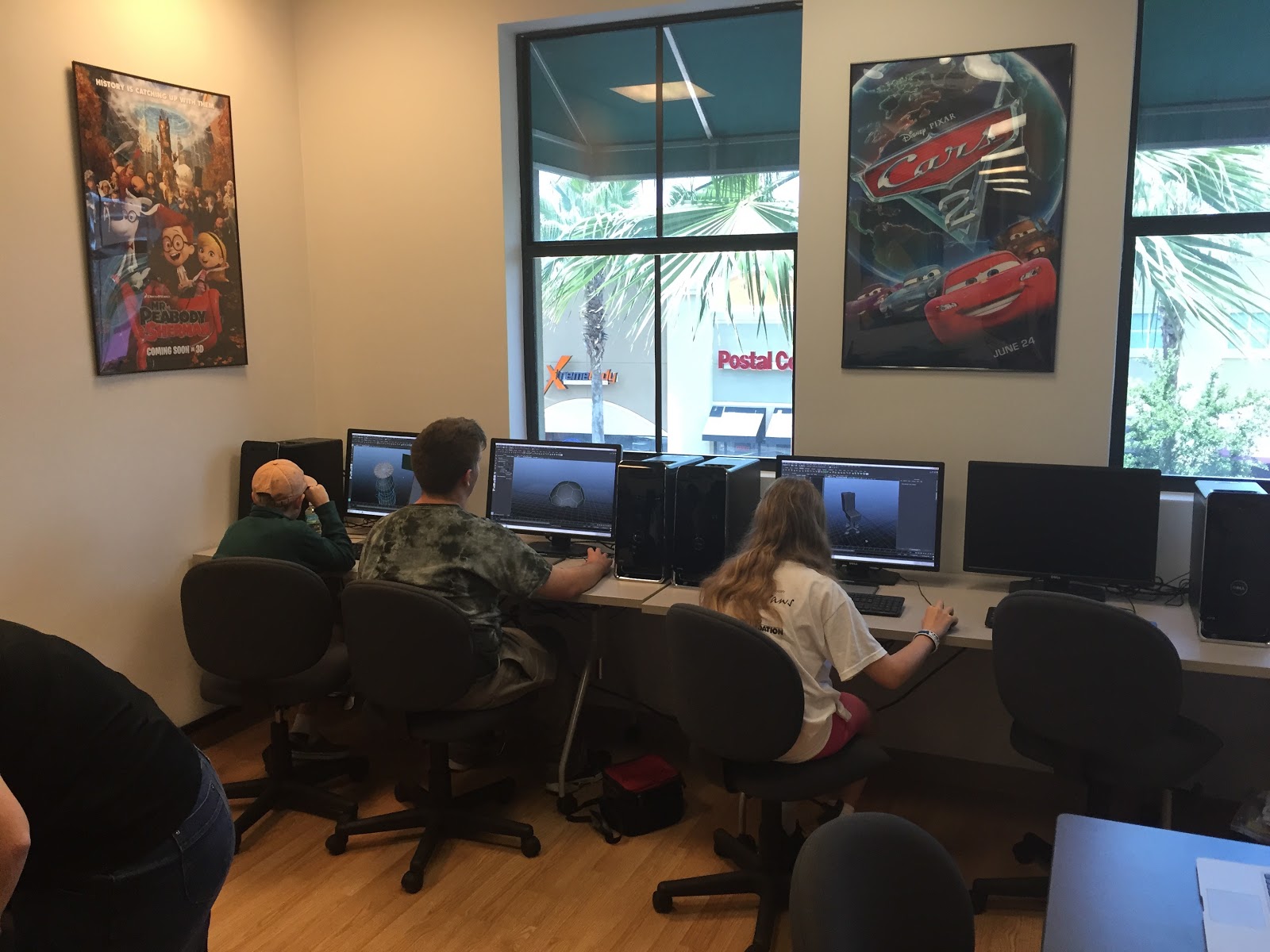
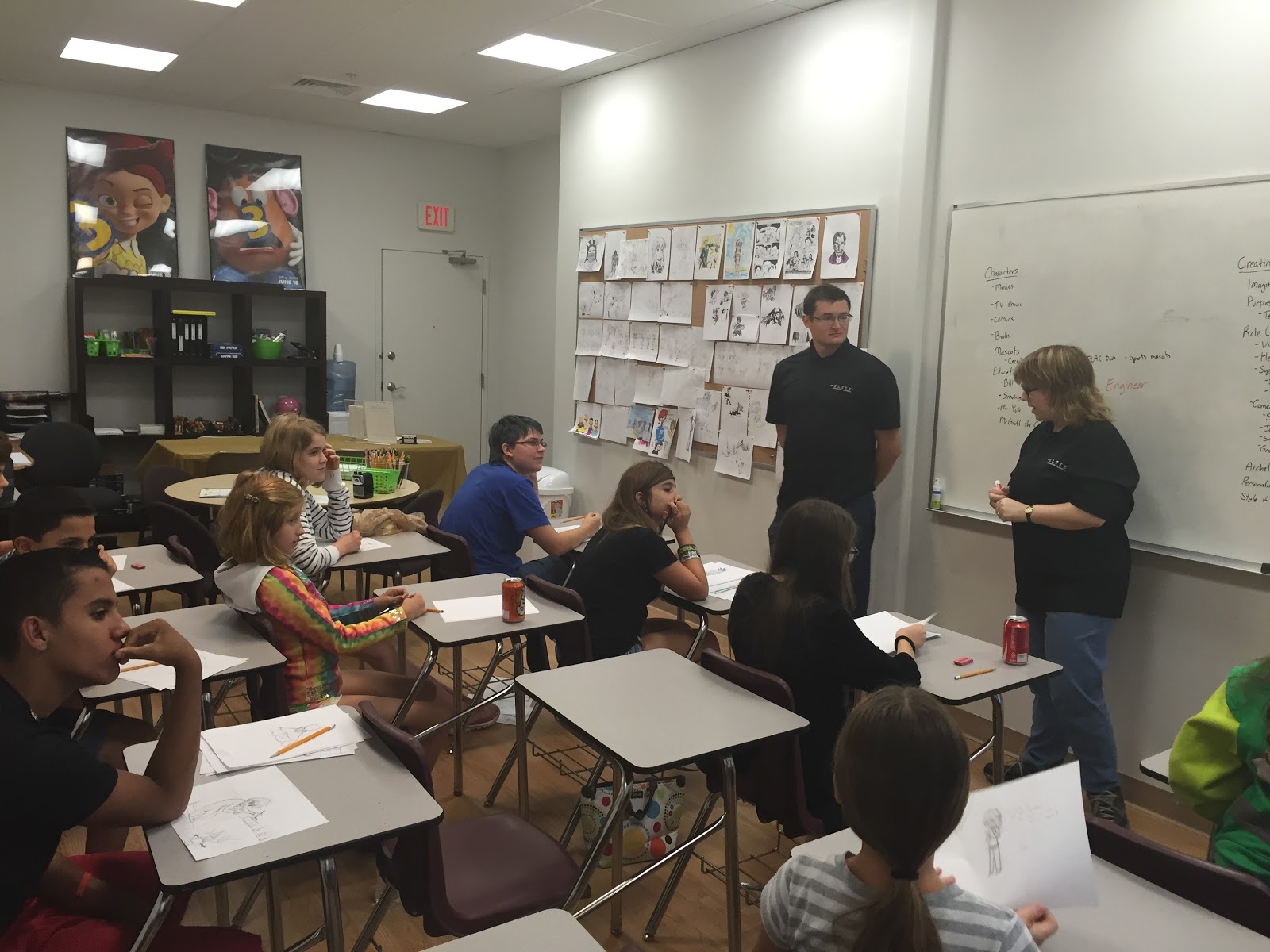
SPRING 2016 SCHEDULE
NEW FEATURED COURSE – STORYBOARDING – ELITE ANIMATION ACADEMY – TAMPA


SPRING VIRTUAL COURSES IN SPANISH – ELITE ANIMATION ACADEMY
Pintura digital en Photoshop (español) – – sábado 12 del mediodía hasta las 2 pm EST
Pintura digital en Photoshop (español) – – sábado 12 del mediodía hasta las 2 pm EST

FEBRUARY 2016 NEWSLETTER
Latest Ad and Student Testimonials -Elite Animation Academy LLC
We will provide FREE monthly updates and information about us. As Always, we appreciate your support of our schools. Tell your friends , family and whomever they can sign up for our newsletter with valuable information including the latest updates with a valid e-mail address at our website.
Todd & Gladys West - Co-Founders & Owners - Elite Animation Academy.
VISIT OUR WEBSITE
JUST RELEASED ! - NEW SPRING 2016 SCHEDULE
MARCH 28 TO JUNE 11, 2016 (11 WEEKS)
SPRING COURSES - ORLANDO
SPRING COURSES - TAMPA
We have also added SIX VIRTUAL classes for students not near our studios, click to view below .
SPRING COURSES - VIRTUAL

Booking Now for ALL Summer Camps in Tampa and Orlando
Our Summer Camps are all online. Starting making your plans and make sure your child enrolls in the Summer Camps of there choosing ! In 2015, we completely sold out. The Summer Camp Sessions start June 6, 2016 to August 12, 2016 for ten weeks.
SUMMER CAMPS - TAMPA
SUMMER CAMPS - ORLANDO
NEW 2016 SPRING COURSES – ELITE ANIMATION ACADEMY – TAMPA
NEW SPRING COURSES - TAMPA
MARCH 28 through JUNE 11, 2016 (11 WEEKS)
NEW 2016 SPRING COURSES – ELITE ANIMATION ACADEMY – ORLANDO
NEW SPRING COURSES - ORLANDO

MARCH 28 through JUNE 11, 2016 (11 WEEKS)
NEW VIRTUAL CLASSES FROM ELITE ANIMATION ACADEMY
NEW VIRTUAL CLASSES STARTING MARCH 28, 2016 !
Classes are designed for students who do not live close to our studios. We can offer Virtual Courses to Homeschooled , International Students, and anyone else across all 50 States in the United States. These courses are available and instructed as PRIVATE LESSONS (student is one and one with instructor) or GROUP LESSONS (more than two students with instructor) These classes are “live” sessions with the instructor and interaction / communication is both ways , you will need a reliable High Speed Internet Connection and possibly additional software to participate. The cost for PRIVATE lessons is $400 per month and the cost for GROUP LESSONS is $200 per month, billed to a credit card kept on file.
CLICK HERE TO ENROLL IN SPRING VIRTUAL CLASSES
CLICK HERE TO VIEW COURSE DESCRIPTIONS
NEW INSTRUCTORS ADDED IN TAMPA AND ORLANDO !
We are happy to announce two new additions to the Elite Animation Academy Family, Brittany Sprouse and Ricardo Reyes. Brittany will be teaching a number of classes at our Tampa Studio - This Winter she is teaching Anime Manga on Saturdays. Ricardo will be teaching Digital Animation classes in our Orlando Studio.
Please Welcome Brittany and Ricardo!


NEW FEATURED COURSE – ELITE ANIMATION ACADEMY – URBAN SKETCHING
Every Month we will feature a NEW COURSE and INSTRUCTOR at Elite Animation Academy for January 2016 it is former Disney Animator - Thomas "Thor" Thorspecken.
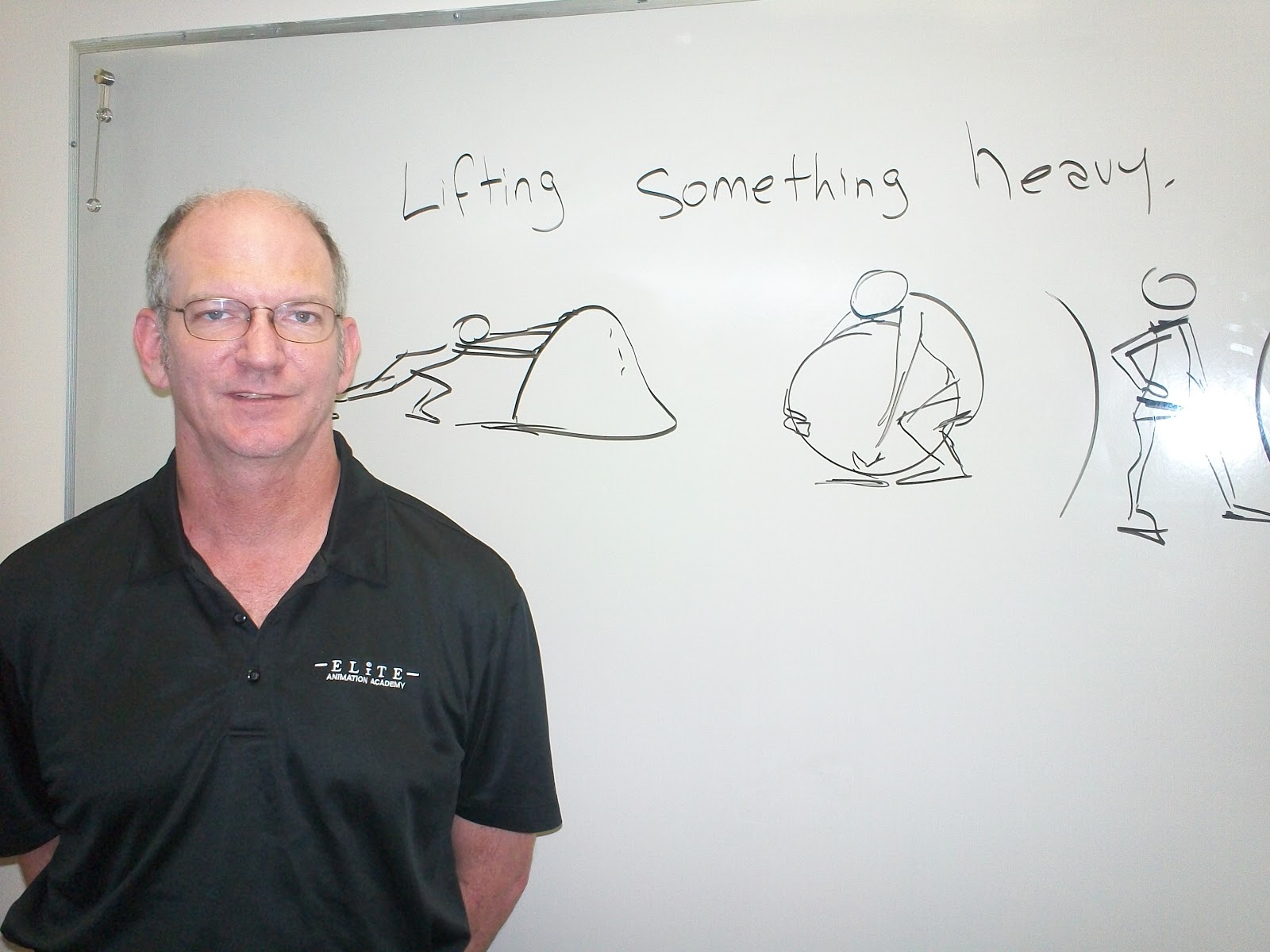
 |
| This is a Urban Sketch Thor did of Elite Animation Academy - |
We are currently booking for the Urban Sketching course at eliteanimationacademy.com for more information. Course is on Saturday's 2 PM to 4 PM starting on January 16, 2016.
WELCOME TO THE ELITE ANIMATION ACADEMY BLOG
Happy New Year ! We will begin this blog to post newsletters, updates, and more exciting news about Elite Animation Academy. We hope you enjoy this informative blog and join us for your journey into the wonderful learning of Digital and Traditional Animation .
Todd & Gladys West - Founders and Owners - Elite Animation AcademyWant to learn from Animation Professionals with a combined over 50 years of Animation Industry experience ? Our instructors are former Walt Disney Feature Animation, Warner Brothers TV, Marvel Comic Book Artists, and other industry professionals. We can help you develop your portfolio or increase your skills in Traditional Animation and Digital Animation


