Summer 2026 Animation Camps in Orlando:
The Complete Parent's Guide
Orlando has more animation camp options than any city in Florida — but they are not all the same. Here's what to look for, what to avoid, how much they cost, and how to choose the right program for your child this summer.
📖 16 min read
Every year around this time, the same panic sets in.
School's ending. You need a plan. Your kid has been drawing characters in the margins of their homework since September, and you're wondering whether there's something out there that would actually feed that interest — not just babysit them for a week while you work.
If you're in Orlando, you're in the right city. We're home to Disney, Universal, Full Sail University, UCF's animation program, and more animation industry talent per square mile than almost anywhere outside of Los Angeles. That proximity has produced a summer camp landscape that offers genuine, career-relevant animation education — not just popsicle-stick crafts with a "digital art" label slapped on the brochure.
But here's the problem: not all of these camps are equal. Some are taught by working industry professionals. Others are staffed by college students with a week of training. Some send your child home with portfolio-quality work. Others send them home with a participation certificate and a vague memory of watching a YouTube tutorial.
This guide is designed to cut through the noise. We'll walk you through every animation-focused summer camp option in the Orlando area for 2026, what separates a great camp from a mediocre one, how much each costs, and — critically — what your child should actually walk away with at the end of the week.
Not All Summer Camps Are Created Equal
Let's start with the numbers that should shape every parent's thinking about summer.
According to a nationally representative Gallup survey conducted in partnership with the American Camp Association, 55% of U.S. children participate in at least one structured summer activity — and 45% do not. Among families whose children didn't participate, over half of parents said they wished their children could have attended a program but couldn't, with cost being the primary barrier.
summer programs
summer programming
self-esteem (ACA)
But here's what the top-level stats miss: the quality gap between camps is enormous. A child can attend a "summer camp" that amounts to supervised playground time with an iPad, or they can attend one where they're learning professional character design techniques from an artist who animated on a Disney feature film. Both count as "summer camp" in a survey. The experiences couldn't be more different.
The research consistently shows that camps deliver the most developmental benefit when they offer structured, skill-building activities led by knowledgeable instructors in areas the child is genuinely interested in. The American Camp Association's own data found that 76% of campers report learning something new, and 70% of parents observe heightened self-esteem in their children after attending camp.
What Makes an Animation Camp Different From an Art Camp
This is the distinction most parents miss — and it matters more than you'd think.
A general art camp typically covers a broad range of mediums: painting, sculpting, printmaking, collage, ceramics. These are wonderful experiences for kids who want creative exploration across many disciplines. If your child enjoys making things with their hands and isn't specifically drawn to animation, a general art camp might be exactly right.
An animation camp is fundamentally different. It teaches a specific set of industry-relevant skills that connect directly to careers in film, television, video games, advertising, and digital media. The curriculum typically includes foundational drawing (learning to see form, proportion, and perspective), character design (creating original characters with personality and visual identity), storyboarding (visual storytelling through sequential panels), and actual animation techniques — either traditional 2D, digital 2D, or 3D using professional software.
The other key difference is the instructor profile. At most general art camps, instructors are art teachers, art students, or creative generalists. At a serious animation camp, instructors should be — or should have been — working professionals in the animation industry. They should be able to tell your child what it's actually like to work at a studio, what admissions committees at top animation schools are looking for, and which skills translate directly to paid work.
That's not a luxury — it's the entire point. A child learning character design from someone who animated characters for a Disney feature film is a fundamentally different experience from learning it from a college sophomore who took one animation elective.
The Toy Story 5 Effect: Why Animation Interest Is Surging in 2026
If your child is suddenly even more obsessed with animation than usual, there's a reason. 2026 is shaping up to be one of the biggest years for animated content in recent memory.
Pixar's Toy Story 5 arrives in theaters on June 19 — right in the middle of summer camp season — with a premise that hits remarkably close to home for every parent reading this article. The film's tagline is "Toy Meets Tech," and the central conflict revolves around Bonnie's toys grappling with a tablet called Lilypad that's stealing all of her attention. The creative team has described it as exploring the realization that nobody's really playing with toys anymore — an existential problem that mirrors exactly what parents see happening with screens in their own homes.
releasing in 2026
market value 2026
views in 24 hours
But Toy Story 5 is just the headline. Animation Magazine profiled more than 26 animated feature films set for 2026 release, ranging from DreamWorks' Forgotten Island to Brad Bird's long-awaited adult animated detective film, to Netflix's animated Stranger Things series. The appetite for animated content — across every age group — has never been higher.
The industry numbers reflect this. The global animation market is projected to reach approximately $492 billion in 2026, on pace to surpass $953 billion by 2035. The generative AI in animation subsector alone grew to an estimated $3.23 billion this year. And in the U.S., the industry employs over 220,000 professionals with roughly 5,000 new openings projected annually over the next decade.
The 5 Things Every Parent Should Look For in an Animation Summer Camp
After over a decade of teaching animation to students of all ages — and after hearing thousands of parents describe what they were looking for versus what they actually found — here are the five non-negotiable questions to ask before enrolling your child in any animation camp.
2. What does my child take home at the end of the week? The best camps produce tangible, portfolio-quality work — original character designs, storyboard sequences, finished animations. If the answer is "a certificate of completion," keep looking.
3. Is the curriculum structured or freeform? Exploration has value, but a camp with a defined curriculum that builds skill progressively will produce dramatically better outcomes than one where kids just "explore" for five days. Ask for a daily schedule.
4. What's the student-to-instructor ratio? Animation instruction is inherently hands-on. Your child needs individual feedback on their drawings, their designs, their storytelling. If there are 25 kids and one instructor, the feedback loop doesn't exist. Look for small class sizes.
5. Does the camp connect to a longer learning path? A single week of camp is great — but the best programs offer a road map for what comes next. After-school classes, online courses, portfolio development, college prep. If the camp is a dead end with no path forward, your child's momentum will evaporate by September.
Now Enrolling
10 weeks of animation camps taught by former Disney and Marvel animators. 4 different subjects every week — mix and match all summer. Ages 8–17. In-studio in Orlando or online from anywhere.
View Summer Camp ScheduleJune 1 – August 7, 2026 · $500/week · All supplies included · (407) 459-7959
Orlando's Animation Camp Landscape: A Side-by-Side Look
Orlando is uniquely positioned for animation education because of its proximity to the theme park industry, Full Sail University, UCF's nationally ranked Character Animation program, and a deep bench of former studio artists who've settled here after careers at Disney, Marvel, and other major studios. Here's what's available for summer 2026:
Elite Animation Academy
Dates: June 1 – August 7, 2026 (10 weeks)
Hours: Monday–Friday, 10am–3pm
Ages: 8–17 (in-studio) · All ages (online)
Cost: $500/week (all supplies included)
Location: 3107 Edgewater Drive, Orlando FL 32804
Founded in 2012 by former Disney animators, Elite Animation Academy runs 4 different camp subjects simultaneously each week — allowing students to take one per week and enroll in as many weeks as they like. Subjects rotate through foundational drawing, character design, anime and manga, 2D animation, 3D animation, storyboarding, comics and cartooning, digital painting in Photoshop, and video editing. Lead instructor Woody Woodman animated on Disney's Mulan, Tarzan, and Brother Bear. All other instructors have professional studio backgrounds spanning Disney, Marvel, Blue Sky, Laika, Sony, and Fox. The academy also offers year-round after-school and weekend courses, online private instruction, and a dedicated portfolio development path with relationships to Ringling College, Full Sail, SCAD, and UCF.
UCF CREATE — Pre-College Animation Intensive
Dates: June 8–19 and July 13–24, 2026 (two separate 2-week sessions)
Hours: Monday–Friday, 9am–4pm
Ages: High school students (pre-college)
Cost: $1,065 + $35 registration fee per 2-week session
Location: UCF campus, Orlando
UCF's CREATE program is a pre-college intensive designed to simulate the experience of a college-level animation course. Students work in a professional computer lab with industry-standard software, mentored by UCF professors and former Disney animators. The program is fast-paced and structured like a college course — students collaborate in teams to produce a short animated film. This is best suited for serious teens who already have some drawing foundation and are considering animation as a college major or career path. Housing is not provided but Marriott hotel partnerships offer discounted rates. The June Intermediate session has already reached capacity with a waitlist.
Full Sail Labs
Dates: Summer 2026 (multiple weeks — schedule on website)
Hours: 8 hours/day (6.5 hours instructor-led + breaks)
Ages: Kids 7–12 and Teens 13–17
Cost: Varies by session
Location: 221 S Semoran Blvd, Winter Park
Full Sail Labs is the youth extension of Full Sail University and offers STEAM-based project camps. Their animation-adjacent offerings include stop-motion animation, graphic design, game design, and filmmaking. The focus is broader than pure animation — it's a technology-and-creativity program that includes topics like sound design, music production, and robotics alongside visual arts. The instructor-to-student ratio is approximately 1:10 with a cap of 20 students per session. This is a good fit for kids who are interested in creative technology generally but haven't zeroed in on animation specifically.
Florida Film & STEM Academy
Dates: June–August 2026
Hours: 9am–5pm
Ages: 7–18
Cost: Starting at approximately $395/week
Location: Winter Garden (with additional Central Florida venues)
Florida Film & STEM Academy has served Central Florida families for over 13 years with camps focused on filmmaking, acting, makeup FX, and animation. Students are grouped by age into small teams with dedicated instructors. The filmmaking focus means animation is one component within a broader media production experience. This is a strong option for kids interested in live-action filmmaking, video production, and storytelling across multiple mediums — not exclusively animation.
The Screen Time Paradox: From Consumer to Creator
Here's the irony every parent of an artistically inclined kid lives with: your child loves screens — but you're worried about screen time.
The latest research is landing in a much more nuanced place than the panic headlines suggest. The American Academy of Pediatrics updated its guidelines to move away from strict daily time limits and toward evaluating what your child is doing on screens. Their updated position explicitly supports screen use for creative activities and interactive learning, while maintaining concern about passive consumption, fast-paced entertainment, and solo social media scrolling.
A 2021 study published in Computers in Human Behavior found that children who spent time on creative digital activities — including digital art, coding, and video production — showed higher scores on spatial reasoning, creative problem-solving, and persistence compared to peers with equivalent total screen time but more passive usage patterns. A separate longitudinal study from the Joan Ganz Cooney Center found that children who used technology to create, rather than just consume, showed stronger school engagement overall.
Dr. Michael Rich of Harvard's Digital Wellness Lab put it plainly in a recent interview: the concept of measuring screen time in minutes is obsolete. Children now live in a continuous physical-digital environment. The productive question isn't "how much time are they on screens?" — it's "are screens replacing sleep, exercise, and face-to-face interaction, or are they enabling creative output?"
Animation camp answers that question definitively. Your child is in a studio with other kids, learning from a professional mentor, using tools to create something original. It checks every box the research says matters — creative engagement, expert guidance, social interaction, and tangible skill development — while using the exact medium your child is already drawn to.
What Your Child Actually Takes Home
This might be the most important section of this entire guide — because it's the question most parents forget to ask until the week is over.
What, specifically, does my child walk out with on Friday?
At a recreational camp, the answer is typically memories, a few crafts, maybe some photos. That's fine for a recreational experience. But if you're investing $400–$1,000 in a specialty camp, you should expect more. At a quality animation camp, your child should leave every single week with finished, tangible work that demonstrates a new skill.
Character Design week: 2–3 original characters with turnaround sheets, expression studies, and personality-driven action poses.
Storyboarding week: A complete storyboard sequence demonstrating camera angles, composition, pacing, and visual storytelling.
2D Animation week: A short animated sequence showing understanding of timing, spacing, and the principles of motion.
Anime & Manga week: Original characters and sequential panels in the manga style, with understanding of the genre's unique conventions.
Digital Painting week: Finished digital illustrations created in Adobe Photoshop using professional techniques.
3D Animation week: Introduction to Maya or equivalent software with a basic 3D model or animated scene.
This is why Elite Animation Academy's model of running 4 different camp subjects simultaneously each week for 10 weeks is so effective. A student who attends for 4 weeks — one each in Foundational Drawing, Character Design, Storyboarding, and 2D Animation — walks away from summer with a genuine starter portfolio. That's not a summer "activity." That's a summer investment that compounds over time.
And for students who are already thinking about college applications, this work connects directly to what art schools require. Programs like Ringling, Sheridan, CalArts, Full Sail, and UCF evaluate applicants primarily on their portfolio — not their GPA. Summer camp work can be the foundation of that portfolio if the instruction is professional-grade.
Summer 2 (Age 12–14): 2D Animation + Storyboarding → motion principles, visual storytelling.
Summer 3 (Age 14–16): Digital Painting + 3D Animation → professional software skills.
Year-round classes: Continued development, portfolio refinement, college prep.
Result: A student applying to art school at 17 with 3–5 years of structured instruction and a portfolio built under professional guidance.
The "Animation Vacation" — A New Kind of Family Trip
Here's something we see increasingly at Elite Animation Academy: families are building their Orlando vacations around camp weeks.
It makes logistical sense. You're already coming to Orlando for the theme parks — and now your artistically inclined kid can spend a week learning character design from a former Disney animator during the day, while the family hits the parks in the evenings and on the weekend. We've had families drive from Saint Augustine, fly in from out of state, and even travel internationally to attend summer sessions.
One parent reviewing the academy noted that the drive from Saint Augustine to Orlando and back was "no problem" for the quality of instruction their daughter received. Another family from 650 miles away relocated to Orlando for winter and summer sessions specifically because of the program. These aren't typical camp testimonials — they're signals that parents are treating animation education the way they'd treat a specialized sports camp or academic intensive: as a destination experience worth traveling for.
How to Choose the Right Camp for YOUR Kid
After everything we've covered, here's the honest framework. There is no single "best" camp — there's only the best camp for your child, at their current stage, with your family's goals and budget.
If your teen is 13–17 and serious about animation: They're ready for more intensive subjects — 2D or 3D animation, storyboarding, digital painting. Ask about portfolio development, college prep pathways, and instructor credentials. Both Elite Animation Academy and UCF's CREATE program serve this audience, at different price points and intensity levels.
If your child has broad creative interests (not specifically animation): A STEAM-oriented program like Full Sail Labs or Florida Film & STEM Academy will give them exposure to filmmaking, sound design, game design, and visual arts without narrowing the focus to animation specifically.
If budget is a primary concern: Day camp costs in Orlando range from $395–$1,065+ per week depending on the program. Many programs offer sibling discounts or multi-week pricing. Also note that day camp expenses may qualify for the Child and Dependent Care Tax Credit (up to $3,000 per dependent) and Dependent Care FSA contributions — check with your tax advisor.
If you're traveling from out of town: The "Animation Vacation" model works well — combine camp weeks with family activities. Elite Animation Academy's 10am–3pm schedule is specifically designed to accommodate this. No housing is provided at any Orlando day camp, so plan accommodations independently.
This Summer, Turn Inspiration Into Skill
Your child is going to spend this summer drawing whether you enroll them in a camp or not. The sketchbooks are already full. The YouTube tutorials are already bookmarked. The anime watch history is already three pages deep.
The question is whether that natural creative energy gets structured guidance from a professional who's been where your child wants to go — or whether it stays in the margins of their notebooks, unguided and undeveloped.
The animation industry is projected at $492 billion. Median salaries for animators sit near $100,000. There are 26+ animated feature films releasing this year. Toy Story 5 opens June 19 with a storyline about the tension between technology and creative play that every kid in America will relate to.
The timing could not be better. The options in Orlando have never been stronger. And the gap between a summer spent consuming content and a summer spent creating it has never been more consequential for a child's creative development.
Stop scrolling. Start drawing.
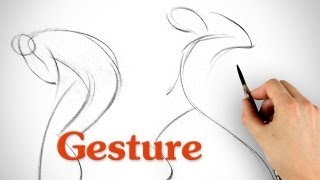

Disney Animators This Summer
Elite Animation Academy's Summer Camps run June 1 – August 7, 2026. Choose from 4 different subjects each week. All supplies included. Ages 8–17 in-studio, all ages online.
Enroll for Summer 20263107 Edgewater Drive, Orlando FL 32804 · (407) 459-7959 · [email protected]


